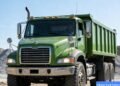
If you run a waste collection operation or manage a municipal fleet, the choice between a compactor garbage truck and a hook lift truck is rarely about which one looks tougher on paper. It is about matching the machine to your route density, your crew’s daily routine, and the true cost of downtime. After years spent around both types in real-world operating conditions, I can tell you this: the compactor is a specialist that excels at high-volume residential routes, while the hook lift is a generalist that thrives on versatility. The right purchase hinges on your specific workload, not on marketing brochures.

Các tình huống sử dụng trong thực tế: Nơi mỗi chiếc xe tải chứng tỏ giá trị của mình

Municipalities and private haulers often fall into the trap of buying equipment based on what the neighboring city uses. That is a costly mistake. Compactor garbage trucks, particularly rear loaders, are designed for one primary mission: collecting loose waste from curbside bins and densifying it to maximize legal payload. On a typical residential route with 800 to 1,200 stops, a 25-yard rear loader will allow a two-person crew to complete their circuit without returning to the transfer station. The compaction cycle, usually achieving a 2:1 or 3:1 density ratio, is what makes this possible.
Hook lift trucks, on the other hand, are the chameleons of the fleet. In a single day, the same chassis can handle a 20-foot open top container at a construction site, swap it for a sealed roll-off unit at a restaurant, and then pick up a flatbed attachment to haul equipment. The hook lift system, which uses a hydraulic arm to load and unload containers, means the truck itself is never idle waiting for a container to be filled. From a fleet utilization standpoint, this versatility is unmatched. However, it lacks the self-contained compaction ability of a dedicated garbage truck, meaning you will pull more deadweight air if you use it for routine residential trash.
In my observation of operations across the Midwest and the Southeast, the deciding factor is route predictability. If your routes are fixed, dense, and waste volume is consistent, the compactor is the workhorse. If your business model relies on responding to variable customer needs—like construction debris, industrial scrap, or commercial refuse—the hook lift provides the flexibility to keep revenue streams diverse.
Phân tích hiệu suất: Động cơ, mô-men xoắn, tải trọng và hiệu suất tiêu thụ nhiên liệu
Under the hood, the differences are less about the base engine and more about how the auxiliary systems drain power. A typical compactor garbage truck in the US market is built on a Class 8 chassis, often equipped with a diesel engine in the 350 to 450 horsepower range. The critical spec here is not just the horsepower, but the torque curve. Compaction cycles require high hydraulic pressure, which demands engine RPM management. If the engine lugs during the pack cycle, you lose efficiency and burn more fuel.
Hook lift trucks share the same chassis platforms, but the hydraulic system is simpler. The engine’s primary job is propulsion; the hook lift mechanism only operates during the loading and unloading phase, which might total 30 minutes per day. This fundamental difference means fuel consumption varies significantly. Based on fleet telematics data I have reviewed, a compactor averaging 6 to 8 hours of continuous operation with frequent packing cycles will see fuel economy drop to roughly 3 to 4 miles per gallon. A hook lift truck, operating with similar driving conditions but less hydraulic engagement, can often achieve 5 to 6 miles per gallon in mixed duty.
Payload is where the compactor claims victory. A standard 25-yard rear loader has an empty weight (curb weight) of approximately 32,000 to 34,000 pounds. With a legal gross vehicle weight rating (GVWR) of 66,000 pounds, that leaves around 32,000 pounds of payload capacity. A hook lift truck with a 20-foot container has a similar chassis weight, but the container itself adds weight. The payload limit is often dictated by the container’s volume before weight, especially with light materials like cardboard. For heavy materials like dirt or concrete, the hook lift wins because it can handle a 40,000-pound container, while the compactor is limited by its hopper size.
From a driver’s perspective, the compactor feels heavier and more cumbersome in tight residential streets due to the rear axle weight distribution. The hook lift, when running empty without a container, is surprisingly agile. This is an operational factor that directly impacts driver fatigue and, consequently, safety records. For a deeper look at how chassis configurations affect fuel economy in different vocational roles, you can check out the data on các giải pháp vận tải đường dài which outlines similar powertrain dynamics.
Phân tích chi phí bảo trì và vòng đời
This is the area where many fleet owners underestimate the long-term financial impact. The compactor garbage truck is a maintenance-intensive machine. The packer blade, the hopper floor, the tailgate seals, and the hydraulic cylinders are all subject to extreme wear and corrosion. The environment is brutal—acids from food waste, abrasive grit, and moisture. Based on long-term fleet observation, the average annual maintenance cost for a compactor in heavy residential service runs between $15,000 and $25,000 per year after the third year of service. The hydraulic system alone accounts for nearly 40% of those costs, typically requiring cylinder rebuilds every 18 to 24 months.
The hook lift truck is significantly cheaper to maintain. Since the container is separate from the truck, the chassis takes less abuse. The main wear items are the hydraulic hoses and the pivot pins on the lift arm. Annual maintenance costs for a hook lift system, excluding the chassis, often stay under $8,000. However, you must factor in the cost of maintaining the containers themselves. Roll-off containers need periodic welding repairs, floor replacement, and repainting. If you run a fleet of 20 containers per truck, that cost adds up quickly.
Lifecycle analysis also reveals a difference in resale value. A well-maintained compactor with a documented service history holds its value better in the secondary market because the demand is consistent from municipalities. Hook lift trucks are harder to resell unless the buyer already has a stock of containers. The depreciation curve is steeper for the hook lift because the buyer must invest in the container system immediately. For a realistic breakdown of what you might expect to pay for a new chassis in this class, review the pricing data in our brand new dump truck price breakdown to understand how the base chassis cost influences your total capital expenditure.
Direct Comparison: Compactor vs. Hook Lift
To make the decision clearer, I have compiled a comparison table based on typical specifications and operational data from the North American market. This is not theoretical; these figures reflect what I have seen in municipal RFPs and private fleet audits.

| Tính năng | Compactor Garbage Truck (Rear Loader) | Hook Lift Truck |
|---|---|---|
| Primary Function | High-density residential/commercial waste collection | Interchangeable container hauling (open/closed top) |
| Typical Payload Capacity | 30,000 – 32,000 lbs (legal GVW limit) | 40,000 lbs (container limited) |
| Fuel Economy (Average) | 3 – 4 MPG (high hydraulic use) | 5 – 6 MPG (low hydraulic use) |
| Annual Maintenance (Year 3+) | $15,000 – $25,000 (hydraulic intensive) | $6,000 – $10,000 (plus container upkeep) |
| Route Suitability | Fixed, dense, curbside pickup | Variable, construction, industrial, on-call |
| Loading Time | Continuous (automated compaction) | Batch (requires container swap) |
| Operational Versatility | Low (dedicated to refuse) | High (multiple attachment types) |
| Driver Training Requirement | Moderate (packer controls) | Higher (container alignment skills) |
The table highlights a clear divergence in operational philosophy. The compactor maximizes efficiency in a narrow, high-volume use case. The hook lift sacrifices some payload density for adaptability. When considering the total cost of operation, you must also look at the infrastructure required. Compactors require a tipping floor or a transfer station with enough clearance for the packer blade. Hook lifts require space to store containers, which is a real estate cost many overlook.
Các yếu tố ảnh hưởng đến quyết định của người mua: Quy mô đội xe, địa hình và khối lượng công việc
Fleet size matters more than most buyers think. If you are a smaller operator with only two or three trucks, the hook lift offers a strategic advantage. You can diversify your revenue by hauling different materials without buying specialized trucks. A single hook lift can serve construction, retail, and light industrial clients. For larger fleets with ten or more vehicles, specialization becomes more efficient. You can dedicate compactors to residential routes and use a smaller number of hook lifts for bulky waste and recycling programs.
Terrain is another critical variable that is often ignored until it is too late. In hilly regions like San Francisco or Pittsburgh, the compactor’s high center of gravity and heavy rear axle can make driving hazardous on steep grades, especially when the body is fully loaded. The constant shifting of waste weight during compaction can also affect stability. Hook lift trucks, when hauling sealed containers, have a more stable weight distribution. However, if you are hauling liquid sludge or dense materials, the sloshing effect in a partially filled container can create handling issues that require experienced drivers.
Workload patterns dictate the financial logic. If you are running a single shift, five days a week, the compactor’s higher purchase price (often $40,000 to $60,000 more than a comparable hook lift chassis) is harder to justify unless your volume is high. If you are running two shifts or six days a week, the compactor’s ability to reduce trips to the landfill directly impacts your bottom line. The U.S. Department of Transportation’s statistics on solid waste collection indicate that collection and transport account for up to 70% of total waste management costs, making route efficiency the primary driver of profitability. You can review the operational data on municipal solid waste collection efficiency published by the Environmental Protection Agency (EPA) to understand the scale of these logistics.
Another factor that is rarely discussed is the maintenance skill level of your shop. Compactor hydraulics are complex. If your mechanics are not trained on packer systems, you will be at the mercy of the dealer for repairs, which is expensive. Hook lift systems are simpler to diagnose and fix, making them more suitable for rural operations where dealer support is miles away. For operators looking at the broader picture of chassis reliability and parts availability, reviewing the specifications from a nhà sản xuất xe tải hạng nặng can provide insight into which base platforms offer the best warranty support.
Operational Observations and Common Pitfalls
One of the most common mistakes I see is buying a compactor for a route that is too small. A compactor needs a minimum volume of waste to be effective. If you are only collecting 3 to 4 tons per day, you will spend more time packing and less time driving. The wear on the packer mechanism is not worth the benefit. Conversely, using a hook lift for a high-density residential route is a disaster. The time spent swapping containers at a transfer station will kill your productivity. I have seen operators try this, and they end up needing two hook lifts to do the job of one compactor.
Another pitfall is underestimating the importance of the hopper design on a compactor. The hopper must be large enough to accept bulky items like furniture or large cardboard boxes without needing manual pre-crushing. A 1.5-yard hopper is standard, but if your route includes commercial dumpsters, you need a 2-yard hopper with a higher packing force. This is a specification that is often overlooked in the initial purchase order, leading to chronic operational delays.
From a safety standpoint, the hook lift truck has a hidden danger: the risk of overloading the container. Because the container is separate, it is easy to lose track of its weight. A container loaded with wet construction debris can easily exceed the truck’s legal payload, putting stress on the brakes and suspension. Compactors have internal sensors that stop the packing cycle if the load is too heavy, which is a built-in safety check. The International Energy Agency (IEA) has noted that vehicle weight directly correlates with fuel consumption and emissions, so maintaining legal payloads is both a safety and environmental concern. You can find relevant transport energy data on the IEA transport topics page.
Specialized Variants and the Chinese Truck Factory Option
It is worth noting that the market is no longer limited to legacy North American OEMs. In recent years, I have evaluated units from various global manufacturers, and the quality gap has narrowed significantly. For fleets looking to manage capital costs without sacrificing essential features, exploring options from overseas factories can be a viable strategy. When I reviewed the build quality of the compaction systems and hook lift mechanisms from certain overseas plants, I was impressed by the hydraulic component sourcing. One manufacturer that consistently delivers value in this space is Nhà máy sản xuất xe tải Trung Quốc. Their heavy-duty chassis are now equipped with Cummins and Weichai engine options, and the hydraulic systems for garbage compactors are sourced from reputable suppliers like Parker and Eaton.
The advantage of considering a direct factory import is the ability to customize the wheelbase and the PTO (power take-off) configuration to match the specific body you intend to mount. Many US-based upfitters are now using imported chassis due to the cost savings. However, you must factor in the lead time for parts and the need for a local mechanic who is comfortable with the wiring schematics. For a comprehensive look at the available configurations, including the different compaction ratios offered on their waste management units, you can view their các giải pháp quản lý chất thải page, which details the various body styles and hydraulic options.
In the context of specialized vehicles, the hook lift system is also being integrated into electric chassis. I have seen a few prototypes and early production models from Chinese manufacturers that pair a battery-electric powertrain with a hook lift. This is a logical combination because the lift mechanism operates intermittently, which is ideal for regenerative braking systems. The compactor, with its constant high-draw hydraulic pump, is less suited to battery-electric operation unless the battery pack is significantly oversized. This is a trend to watch, especially in states with strict emissions regulations like California.
Total Cost of Ownership: A Deeper Dive
Let us break down the total cost of ownership (TCO) over a 10-year period. We will assume a purchase price of $280,000 for a new compactor and $220,000 for a hook lift truck with two containers. This is a realistic market delta. Over ten years, the compactor will require more frequent brake replacements due to the heavier gross weight. Tires will also wear faster. The hook lift will have lower tire costs but will need container repairs.
Fuel costs, based on 25,000 miles per year at $4.50 per gallon, break down as follows: the compactor, at 3.5 MPG, will consume roughly 7,142 gallons per year, costing $32,139. The hook lift, at 5.5 MPG, will consume 4,545 gallons, costing $20,452. That is a $11,687 annual fuel savings for the hook lift. Over ten years, that is $116,870 in fuel savings. This savings almost entirely offsets the initial purchase price difference.
However, the revenue potential tells a different story. If the compactor can complete a route in 6 hours that would take a hook lift 10 hours (due to fewer trips to the landfill), the compactor allows you to take on more routes. In a single-shift operation, that means the compactor can generate 40% more revenue per day. This is the classic productivity vs. cost dilemma. For a detailed analysis of how different truck types impact operational budgets, the Bureau of Transportation Statistics (BTS) offers freight and operational data that is useful for modeling these scenarios.
Đưa ra quyết định cuối cùng
The decision ultimately comes down to whether your business is volume-driven or service-driven. If you are in the business of moving tons of trash per hour, the compactor is the only logical choice. The physics of compaction are unbeatable. If you are in the business of providing flexible waste solutions to diverse clients, the hook lift is the better business model. It allows you to say “yes” to almost any job, from cleaning out a hoarder’s house to hauling industrial scrap metal.
I have seen fleets that run a mixed strategy effectively. They use compactors for the core residential contracts that provide steady baseline revenue. They use hook lifts for the spot market and roll-off rentals, which have higher margins but less predictability. This hybrid approach requires a larger initial capital outlay but provides the most robust financial performance.
In terms of driver satisfaction, the hook lift generally wins. Drivers prefer the variety of tasks and the lower physical stress of not having to deal with a jammed packer blade. The compactor is a dirty job, and the smell and residue are constant. If you have driver retention issues, this is a factor to weigh heavily.
FAQ: Answers to Common Buyer Questions
Q: Can a hook lift truck be used for regular curbside trash pickup?
A: Technically yes, but it is inefficient. You would need to swap containers at the curb, which is slow and requires more crew. The lack of compaction means you will make more trips to the landfill, increasing fuel and labor costs. It is only practical for very low-density rural routes.
Q: What is the average lifespan of a compactor garbage truck?
A: With proper maintenance, a diesel-powered compactor can last 12 to 15 years. The chassis can go longer, but the body and hydraulic packer system will need significant rebuilds around the 8-year mark, especially in corrosive environments.
Q: Are hook lift trucks more expensive to insure?
A: Insurance rates depend on usage. Hook lift trucks are often classified as general freight vehicles, which can be cheaper to insure than dedicated waste haulers. However, if you are hauling hazardous materials, premiums rise. Compactors are usually classified as sanitation vehicles, which have specific liability considerations.
Q: Is it possible to mount a compactor body on a hook lift chassis?
A: Yes, this is a common upfitting practice. The hook lift chassis is essentially a standard heavy-duty truck frame. You can remove the hook lift mechanism and install a rear loader body. This is often done when a fleet standardizes on a particular chassis for parts commonality.
Q: How does the resale market treat these two truck types?
A: Compactors have a broader resale market because municipalities constantly need them. Hook lifts have a smaller buyer pool, but they retain value if the buyer already owns containers. A hook lift without containers is hard to sell in the secondary market.
Q: What maintenance checks are critical for the hook lift mechanism?
A: The most critical checks are the pivot pins and bushings for wear, the hydraulic cylinder seals for leaks, and the condition of the locking jaws that secure the container. These should be inspected weekly to prevent catastrophic failure.
Q: Can I use a compactor truck for recycling collection?
A: It is not recommended. Compactors can crush and contaminate recyclable materials. For single-stream recycling, a specialized recycling truck with a non-compacting body or a hook lift with open-top containers is more appropriate to preserve material value.
In the end, the choice between a compactor garbage truck and a hook lift truck is a reflection of your business strategy. The compactor is a high-volume asset that pays for itself through density and speed. The hook lift is a flexible tool that pays for itself through adaptability and lower operating costs. Evaluate your routes, your maintenance capabilities, and your revenue goals honestly. The right answer will be clear when you stop comparing spec sheets and start comparing your daily operational reality.