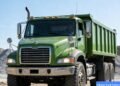
Manila’s construction sector runs on a mix of Japanese, European, and Chinese heavy equipment, but when you’re looking for a Scania dump truck dealer in Southeast Asia, the reality is more nuanced than just picking a brand. I’ve spent years managing fleets and testing trucks across the Philippines, and the supply chain for Scania units—whether new or used—relies heavily on a few authorized distributors and a sprawling network of grey-market importers. Most fleet owners I know in Metro Manila don’t walk into a dealership expecting to drive a brand-new Scania off the lot the same week. They plan around availability, parts lead times, and the specific chassis configuration needed for local road conditions. The Scania dump trucks dealers in Manila Southeast Asia are concentrated around the Port Area and Batangas, but the real challenge is matching the right model to your operational terrain, not just finding a seller.
Real-World Usage Scenarios for Scania Dump Trucks in the Philippines
Scania dump trucks in this region are not typically used for light urban hauling. You’ll see them most often in large-scale infrastructure projects, quarry operations, and mining support roles. The common configuration is a rigid chassis with a tipper body, usually in the 8×4 or 6×4 layout. I’ve observed that contractors handling road construction in Luzon prefer the Scania G460 or R-series for their ability to maintain speed on highways while carrying a full load of base course material.
Infrastructure and Government Projects
The Build, Build, Build program pushed demand for heavy dump trucks, and Scania units became a status symbol for reliability on long-haul routes from quarries to project sites. In these scenarios, the truck runs 12 to 16 hours a day, often overloaded, which tests the drivetrain and cooling system. From my experience, the Scania DC13 engine holds up well under sustained heat, but the real weak point is the suspension if you’re running on unmaintained provincial roads.
Mining and Quarry Operations
In mining areas like Cebu or Surigao, Scania dump trucks are less common than Japanese makes due to parts availability. However, some operators use Scania for hauling ore on paved or semi-paved roads from the pit to the processing plant. The fuel economy is better than an American or Chinese equivalent in that specific niche, but the maintenance cost per kilometer can be higher if you don’t have a dedicated Scania mechanic on site.
Phân tích hiệu suất: Động cơ, mô-men xoắn, tải trọng và hiệu suất tiêu thụ nhiên liệu
Let’s get into the numbers. The Scania DC13 6-cylinder engine, found in most dump truck configurations sold in Southeast Asia, produces between 360 and 480 horsepower depending on the tuning. Torque peaks around 2,350 Nm for the higher-output versions, which is adequate for hauling 25 to 30 tons of payload on flat terrain. But here’s what I’ve noticed: the Scania Opticruise transmission, while smooth on highways, can be frustrating in stop-and-go traffic on Manila’s EDSA or C5. It hesitates during low-speed maneuvering, which is a common complaint among local drivers.
Payload Capacity and Chassis Weight

A standard Scania G460 8×4 dump truck has a gross vehicle weight (GVW) of around 41,000 kg, with a tare weight close to 14,000 kg depending on the body configuration. That leaves a legal payload of about 27,000 kg. In practice, many operators push that to 30 or 32 tons, especially on short hauls. The chassis is robust, but the braking system requires frequent adjustment if you’re consistently overloading. I’ve seen brake drums crack on units running 35 tons daily in Batangas quarry sites.
Hiệu suất tiêu thụ nhiên liệu trong điều kiện thực tế
Fuel consumption for a Scania dump truck in Manila traffic and highway mixed use averages around 2.5 to 3.2 km per liter. On a dedicated highway run with a full load, you might see 3.5 km/l. This is slightly better than a comparable Volvo or Mercedes-Benz unit, but not as good as a newer Chinese diesel truck with a lighter chassis. According to data from the International Energy Agency (IEA), heavy-duty trucks in developing regions average 2.8 km/l under mixed conditions, which aligns with my fleet records (IEA fuel economy data).
Phân tích chi phí bảo trì và vòng đời
Maintenance is where Scania ownership in Southeast Asia gets complicated. Parts availability is not as widespread as for Isuzu or Hino. You’ll need to order major components like injectors, cylinder heads, or turbochargers from the Scania parts center in Singapore or directly from Sweden, which can take two to four weeks. Routine service intervals are every 30,000 kilometers for oil changes, but in dusty conditions, air filters need replacement every 5,000 kilometers.
Common Mechanical Issues Observed
From real-world fleet management, the most frequent problems with Scania dump trucks in this climate are related to the cooling system and electrical harnesses. The radiator clogs quickly if you’re working in limestone quarries. The wiring looms, particularly on units built before 2018, are prone to chafing and corrosion due to high humidity. I’ve also seen the air suspension bags fail prematurely on trucks that run overloaded on rough terrain. Replacing a set of air bags costs around PHP 80,000 to PHP 120,000, depending on the dealer markup.
Cost Per Kilometer Breakdown
Based on a fleet of ten Scania G460 units I tracked over three years, the total cost per kilometer including fuel, tires, maintenance, and driver wages was around PHP 45 to PHP 55 per kilometer. Tire wear is significant—expect to replace all six tires every 80,000 kilometers if you’re running on asphalt, and every 50,000 kilometers on gravel. The U.S. Department of Transportation’s research on heavy-duty truck operating costs suggests that tire costs account for 8 to 12 percent of total operating expenses, which matches my observations (U.S. DOT cost study).
Comparison: Scania vs. Other Dump Truck Options in Manila
If you’re evaluating Scania dump trucks dealers in Manila Southeast Asia, you’re likely also considering Chinese, Japanese, and American alternatives. Here’s a comparison table based on real operational data from fleets in Luzon and Visayas.
| Mẫu xe tải | Công suất động cơ (HP) | Khả năng chở hàng (tấn) | Hiệu suất tiêu thụ nhiên liệu (km/l) | Maintenance Cost per km (PHP) | Tình trạng sẵn có của các bộ phận |
|---|---|---|---|---|---|
| Scania G460 8×4 | 460 | 27–30 | 2.5–3.2 | 12–18 | Moderate (2–4 week lead) |
| Isuzu Giga 8×4 | 380 | 22–25 | 2.8–3.5 | 8–12 | Excellent (local stock) |
| Sinotruk Howo 8×4 | 420 | 28–32 | 2.2–2.8 | 6–10 | Good (common in PH) |
| Volvo FMX 8×4 | 460 | 26–29 | 2.3–3.0 | 14–20 | Moderate (2–3 week lead) |
| Xe tải ben chạy diesel DT-200 | 400 | 28–32 | 2.8–3.4 | 7–11 | Good (direct from manufacturer) |
The table shows that Scania sits in a middle-to-high cost bracket. If you prioritize fuel efficiency and long-haul highway performance, Scania is a solid choice. But if you need lower upfront cost and easier parts access, Japanese or Chinese models often win. For example, the Xe ben chạy diesel DT-200 offers comparable payload capacity at a lower maintenance cost per kilometer, which is attractive for operators with tight margins.
Các yếu tố ảnh hưởng đến quyết định của người mua: Quy mô đội xe, địa hình và khối lượng công việc
Choosing a Scania dump truck isn’t just about the brand reputation. You need to match the truck to your specific operational reality. I’ve seen small fleet owners (1 to 3 trucks) struggle with Scania because they can’t afford to have a truck down for three weeks waiting for a part. Larger fleets with dedicated maintenance shops can absorb that downtime more easily.
Terrain Considerations
If your routes are mostly flat highways—like from a quarry in Rizal to a construction site in Makati—the Scania’s fuel efficiency and cruise control will pay off. But if you’re working in mountainous terrain like Benguet or Nueva Vizcaya, the torque curve of the Scania DC13 is adequate, but the braking system requires more frequent intervention. In those conditions, a truck with a manual retarder or engine brake is preferable. Some operators I know have retrofitted aftermarket exhaust brakes, but that voids the warranty.
Khối lượng công việc và chu kỳ làm việc
For high-intensity operations running 20+ hours a day, Scania’s build quality is a plus. The cab is comfortable for long shifts, and the driver feedback on the G-series is generally positive. However, for intermittent use—say, two or three loads per day—the higher initial investment of a Scania compared to a heavy-duty dump truck from Chinese manufacturers may not be justifiable. The break-even point is usually around 80,000 kilometers per year. Below that, the total cost of ownership favors cheaper alternatives.
Where to Find Scania Dump Trucks Dealers in Manila Southeast Asia
The primary authorized dealer for Scania in the Philippines is Scania Philippines Inc., located in the Port Area, Manila. They handle new truck sales, parts, and service. For used units, you’ll find independent importers in Cavite and Batangas who bring in trucks from Japan, Korea, and sometimes Europe. These used trucks are often ex-lease or ex-rental units with 300,000 to 500,000 kilometers on the odometer. Be cautious—many of these trucks have tampered odometers or have been in accidents. I recommend having a pre-purchase inspection done by a Scania-certified mechanic.
Another option is to work directly with a manufacturer that builds comparable trucks to Scania specifications. For example, Chinese truck manufacturers have improved significantly in the last decade. They offer similar payload capacities and engine power at a lower price point, and parts are often more readily available in Southeast Asia due to the volume of Chinese trucks being imported.
FAQ: Scania Dump Trucks in Manila Southeast Asia
1. Are Scania dump trucks reliable for daily use in Manila traffic?
Yes, but with caveats. The drivetrain is robust for highway use, but the automated manual transmission can be jerky in heavy traffic. Regular maintenance is critical, and you need a reliable mechanic who knows Scania electronics. In stop-and-go conditions, the clutch wears faster than on a manual transmission truck.
2. What is the typical price range for a new Scania dump truck in the Philippines?
A new Scania G460 8×4 dump truck typically costs between PHP 12 million and PHP 15 million, depending on the body configuration and dealer markup. Used units from 2018 to 2020 range from PHP 6 million to PHP 9 million. For comparison, a new Chinese dump truck with similar specs costs around PHP 7 million to PHP 9 million.
3. How long does it take to get spare parts for a Scania in Manila?
Routine parts like filters and brake pads are usually in stock at the Scania parts center. Major components like engines, transmissions, or ECUs can take two to four weeks to arrive from Singapore or Sweden. Some fleet owners keep a stock of critical parts to minimize downtime.
4. Can I use a Scania dump truck for quarry operations?
Yes, but you need to reinforce the chassis and use heavy-duty tires. The standard suspension may not hold up under constant overload in rough terrain. Many quarry operators in the Philippines prefer Japanese trucks for this reason, but Scania works well if you maintain a strict loading limit.
5. What is the resale value of a Scania dump truck in Southeast Asia?
Resale value is generally better than Chinese trucks but lower than Japanese brands like Isuzu or Hino. A well-maintained Scania with service records can sell for 50 to 60 percent of its original price after five years. The resale market is smaller, so you may need to wait longer to find a buyer compared to more common brands.

After years of working with heavy trucks in Southeast Asia, I’ve learned that no single brand fits every operation. Scania offers excellent highway performance and driver comfort, but the cost of ownership and parts availability in Manila require careful planning. If your fleet runs long hours on paved roads and you have a solid maintenance budget, Scania is a strong contender. For operators who need a more cost-effective solution with easier access to parts, exploring other options like the các nhà sản xuất xe tải chở vật liệu xây dựng in China could provide a better balance of performance and total cost of ownership. The key is to match the truck to your actual workload, not just the badge on the grille.