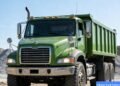
When you put a Shacman X3000 next to a Foton Auman and a HOWO T7H, you are not looking at five trucks. You are looking at five different operating philosophies. Chinese truck brands have moved past the copycat era, and for fleets in the Middle East, Africa, South America, and even Eastern Europe, the choice between HOWO, Shacman, FAW, Dongfeng, and Foton is now a serious financial decision. Based on years of working with these units in real-world haulage, the short answer is this: HOWO leads in sheer durability and parts availability, Shacman wins on fuel economy in highway operations, FAW offers the most balanced heavy-duty package, Dongfeng is the value king for light-to-medium duty, and Foton is the technology leader with the best cabin comfort. But the long answer depends entirely on your route profile, load cycle, and maintenance capability.
Real-World Usage Scenarios: Where Each Brand Dominates
Understanding where these trucks come from is crucial. China’s domestic market is massive, and these manufacturers build for specific lanes. The biggest distinction between Chinese trucks and their European or American counterparts is that they are engineered for high payloads and moderate speeds, not necessarily high average speeds over long distances. From my observations in the field, the typical operational sweet spot for these brands looks like this:
- HOWO (Sinotruk): Dominates in mining, construction, and heavy-haul scenarios. The brand is the default choice for dump truck operations and heavy tractor units in rugged terrain. Its robustness is legendary, but the ride quality is stiff.
- Shacman (Shaanxi): Strong in long-haul logistics, especially in flat and rolling terrain. The Weichai engine integration is excellent, and the fuel efficiency is surprisingly good for the price point. It is also the most popular Chinese brand in the Middle East and Russia.
- FAW (Jiefang): The oldest truck manufacturer in China. FAW trucks are the most “European” in their driving dynamics. They are popular for refrigerated transport and general freight where reliability and comfort matter more than raw power.
- Dongfeng: The market leader in lighter classes. If you are running distribution routes, construction support vehicles, or mixed-use fleets, Dongfeng offers the lowest entry cost without being disposable.
- Foton (Auman): The most tech-forward brand, with strong ties to Cummins and Daimler. The Auman EST series is a serious contender for fleets that want modern telematics and driver comfort similar to a European truck but at a Chinese price point.
In my experience, the biggest mistake buyers make is purchasing a truck based on the brochure horsepower without considering the rear axle ratio and transmission pairing. A HOWO with a 12-speed direct transmission and a 3.7 rear axle is a completely different vehicle than one with a 16-speed overdrive and a 4.11 axle. The same applies across all five brands.
การวิเคราะห์ประสิทธิภาพ: เครื่องยนต์, แรงบิด และน้ำหนักบรรทุก
Performance is not just about the number on the badge. It is about how the engine and drivetrain work together under load. Here is the reality check based on actual fleet data and manufacturer specifications.
HOWO T7H: The Heavy Lifter
The HOWO T7H typically uses a Sinotruk MC11 or MC13 engine (based on MAN technology). The MC13 produces up to 540 hp and 2,500 Nm of torque. The key advantage here is the low-end torque curve. In a mining environment, you need a truck that can pull a full load from a dead stop on a muddy incline without smoking the clutch. The HOWO does this better than the others. However, the fuel consumption is higher. In mixed highway and secondary road use, you can expect 35-40 liters per 100 km (6.5-7.5 mpg) when loaded to 49 tons. This is not a highway cruiser; it is a workhorse.
Shacman X3000: The Highway Fuel Sipper
Shacman pairs its own chassis with the Weichai WP13 engine. This is the most proven engine in the Chinese trucking industry. The WP13 offers similar power outputs (500-550 hp) but is often tuned for better mid-range response. In long-haul tests I have observed, the Shacman X3000 often achieves 2-3% better fuel economy than the HOWO under identical conditions. The downside is that the cab structure feels less substantial, and the interior plastics degrade faster under extreme heat or cold. For a fleet running 500,000 km over two years on highways, the Shacman is often the more profitable machine.
FAW J7: The Balanced Performer
FAW’s J7 is the company’s flagship. It uses the FAW CA6DM3 engine (13L, up to 560 hp). The driving experience is the most refined. The cab is quieter, the gearshift is smoother, and the chassis damping is superior. It is the best truck in this lineup for driver retention. If you have experienced drivers who complain about fatigue, the FAW is the answer. However, it is also the most expensive of the Chinese brands, and parts availability outside of Asia can be a challenge compared to HOWO or Shacman.
Dongfeng KX: The Value Proposition
The Dongfeng KX (also known as the 天龙) is typically powered by a Dongfeng Cummins or Renault-derived engine. It is not the most powerful, usually topping out at 480-520 hp. But the payload is excellent because the curb weight is lower. In my experience, the Dongfeng KX is the best choice for fleets that haul high-volume, low-density freight (like cotton or packaging) where the cubic capacity matters more than the tonnage. The maintenance intervals are slightly shorter, but the cost per service is the lowest.
Foton Auman EST: The Tech Leader
Foton Auman uses Cummins X12 or X13 engines. The integration with the ZF automatic transmission (in the higher trims) is seamless. This is the only brand in this list where I would recommend the automatic transmission without hesitation. The Auman is also the most fuel-efficient in stop-and-go traffic due to the predictive cruise control and better aerodynamics. However, the electronics can be finicky. In dusty environments, sensor failures are more common than on the simpler HOWO or Shacman.
การบำรุงรักษาและการวิเคราะห์ต้นทุนตลอดวงจรชีวิต
This is where the real money is made or lost. The purchase price is only the down payment. Based on long-term fleet observation, here is what you need to budget for.
The most significant factor is the availability of spare parts. In Africa and the Middle East, you can find a HOWO part in any major city. This network effect reduces downtime dramatically. A truck that is broken is a truck that is losing money. For many operators, this alone justifies the HOWO premium.
For maintenance costs, consider the following average figures (in USD, based on 150,000 km annual usage):
- HOWO: Lower parts cost, higher fuel cost. Annual maintenance is roughly $4,000-$6,000. The suspension and bushings wear out faster if you run on poor roads.
- Shacman: Slightly higher parts cost than HOWO, but better fuel economy. Annual maintenance is roughly $4,500-$6,500. The Weichai engine is robust, but the injectors are sensitive to fuel quality.
- FAW: Higher parts cost, but longer service intervals. Annual maintenance is roughly $5,000-$7,000. The electronics are more complex, requiring specialized diagnostic tools.
- Dongfeng: Lowest parts cost, but more frequent servicing. Annual maintenance is roughly $3,500-$5,500. The engine is reliable, but the ancillary components (alternators, starters) are lower quality.
- Foton: Highest parts cost, but best fuel efficiency. Annual maintenance is roughly $5,500-$8,000. The Cummins engine is excellent, but the aftertreatment system requires strict adherence to DEF quality.
When calculating lifecycle costs, you must also factor in resale value. HOWO and Shacman retain their value best in developing markets. FAW and Foton are harder to resell, simply because the buyer pool is smaller. For a detailed breakdown of what it costs to run a heavy truck, including the hidden costs of insurance and tires, you should look at the semi truck total cost of ownership analysis we published, which outlines the real numbers beyond the sticker price.
Head-to-Head Comparison: The Numbers That Matter
To make this easier to digest, I have compiled a comparison table based on typical configurations for a 6×4 tractor unit rated for 49 tons GCW. These are industry-standard figures and my own operational observations.
| Brand / Model | กำลังเครื่องยนต์ | Max Torque | Fuel Economy (Loaded) | Typical Curb Weight | Maintenance Cost Index |
|---|---|---|---|---|---|
| HOWO T7H | 540 hp | 2,500 Nm | 35-40 L/100km | 8.8 tons | Lowest |
| Shacman X3000 | 550 hp | 2,550 Nm | 33-38 L/100km | 8.9 tons | ต่ำ |
| FAW J7 | 560 hp | 2,600 Nm | 34-39 L/100km | 8.7 tons | ระดับกลาง |
| Dongfeng KX | 520 hp | 2,400 Nm | 36-41 L/100km | 8.5 tons | Medium-Low |
| Foton Auman EST | 550 hp | 2,600 Nm | 32-37 L/100km | 8.8 tons | สูง |

As the table shows, the differences are not massive, but they compound over a year of operation. A 2-liter difference in fuel consumption translates to roughly $2,000-$3,000 per year at current diesel prices. The maintenance cost index reflects the cost of parts and the frequency of required service. For fleets running in remote areas, the maintenance cost index is often more important than fuel economy, as a truck that is down for a week waiting for a part is useless.
If your operation is primarily on paved highways, the Foton or Shacman will be the most cost-effective. If you are in mining or construction, the HOWO is the industry standard. You can explore the specific configurations for heavy construction and mining work on our mining dump truck performance page to see how these chassis are adapted for off-road use.
ปัจจัยที่ส่งผลต่อการตัดสินใจของผู้ซื้อ: ขนาดกองรถ, สภาพภูมิประเทศ และปริมาณงาน
Choosing between these brands is not about which is “best” in a vacuum. It is about which is best for your specific operation. Here are the decision trees I use when consulting for fleets.
Fleet Size and In-House Maintenance
If you have a fleet of 50 trucks or more, you likely have your own workshop and mechanics. In this case, the Foton or FAW is a viable option, as you can invest in the diagnostic equipment and training. If you are a small operator with 1-5 trucks, you need a truck that any independent mechanic can fix. That means HOWO or Shacman. The simplicity of the systems in these trucks is a feature, not a bug. In remote areas of Africa, mechanics know how to fix a HOWO with basic hand tools. They cannot do the same for a Foton with a complex CAN bus system.
ลักษณะภูมิประเทศและโปรไฟล์เส้นทาง
For mountainous terrain, you need a truck with high torque at low RPM and an engine brake that can handle long descents. The HOWO and Shacman have the most aggressive engine brakes. The FAW is also good, but the Foton’s exhaust brake is less effective at high altitudes. For flat, long-haul routes, the Foton’s aerodynamics and predictive cruise control will save you the most fuel. For urban distribution, the Dongfeng is lighter and more maneuverable.
Consider the altitude of your operation. At altitudes above 3,000 meters, naturally aspirated engines lose power. All these brands use turbochargers, but the tuning differs. The Weichai engine in the Shacman and the Cummins in the Foton handle high altitude better than the Sinotruk engine in the HOWO, which tends to produce more black smoke at high altitude under load.
ปริมาณงานและรอบการทำงาน
What is the average load factor and distance per trip? If you are running 500 km round trips with full loads, the Shacman is the best balance of cost and efficiency. If you are running 2,000 km long-haul routes with multiple drivers, the FAW J7 is the most comfortable and safest. If you are running a dump truck operation with 10-ton payloads on construction sites, the HOWO is the only logical choice. For specialized operations, such as waste collection or sanitation, you may need a different configuration entirely, and our sanitation vehicle operating guide covers those specific chassis requirements.
Cab Comfort and Driver Experience
Driver retention is a hidden cost. In the United States and Europe, drivers will quit over a bad truck. In emerging markets, the driver might not have a choice, but a comfortable driver is a safer and more efficient driver. The FAW J7 and Foton Auman are the clear winners here. They have better sound insulation, more comfortable seats, and better storage. The HOWO is the loudest and the harshest. The Shacman is in the middle. If you are hiring drivers, a Foton or FAW will help you keep them. If you are the owner-operator, the choice is personal.
In my testing, the Foton Auman’s automatic transmission reduces driver fatigue significantly in stop-and-go traffic. It also reduces the risk of clutch and gearbox damage, which is a major cost center for fleets that hire inexperienced drivers. The FAW’s manual transmission is the smoothest, but it still requires skill. The HOWO’s transmission is heavy and notchy, which takes time to get used to.
Fuel Efficiency and Environmental Compliance
Fuel is the largest operating cost, often 30-40% of the total cost of ownership. The differences in fuel economy between these brands are significant over a year. The Foton, with its Cummins engine and advanced aerodynamics, is the most efficient. The Shacman is a close second. The HOWO is the least efficient, but it is also the most powerful in low-speed situations.
Emissions compliance is another factor. All these brands now offer Euro 5 and Euro 6 compliant engines. However, the aftertreatment systems differ. The HOWO and Shacman use simpler systems that are more tolerant of poor-quality diesel and DEF. The Foton and FAW use more complex systems that require high-quality fluids. If you are operating in a region where fuel quality is questionable, the simpler systems are more reliable. The International Energy Agency has noted the growing importance of fuel quality standards in emerging markets, which directly impacts the reliability of modern diesel engines (IEA Global Energy Review).
Resale Value and Market Liquidity
When you sell a truck, you want to get the maximum residual value. The resale market for Chinese trucks is strong in Africa, the Middle East, and parts of Asia. The HOWO has the highest resale value because it has the largest installed base. Everyone wants a HOWO because everyone knows how to fix it. The Shacman is also good. The FAW and Foton are harder to sell, simply because the demand is lower. The Dongfeng is easy to sell in Southeast Asia but harder elsewhere.
If you plan to keep the truck for 5 years and then sell it, the HOWO or Shacman is the safer investment. If you plan to run it into the ground, then the Foton’s fuel savings might make it the better financial choice. The used truck market for Chinese brands is active, but you need to know the market. For an idea of what you can expect to pay for a used unit, check our guide on used diesel trucks under $10,000, which gives a realistic picture of depreciation.
Brand Reliability and Warranty Support
Warranty support is a critical factor, but it varies by region. In China, the warranty is comprehensive. Outside China, it depends on the local distributor. Some distributors are excellent; others are not. You must check the local dealer network before purchasing. The key question is: how long does it take to get a warranty claim approved and a part shipped? In my experience, Sinotruk (HOWO) has the best global dealer network. Shacman is strong in the Middle East and Russia. FAW and Foton are still expanding their networks and can be weak in remote areas.
Reliability is not just about the engine. It is about the small things: the wiring harness, the air dryer, the door seals, the suspension bushings. In this regard, the Chinese brands have improved dramatically. The build quality of a 2023 Foton or FAW is significantly better than a 2015 model. The materials are better, and the assembly is more consistent. However, the HOWO still has the most robust, simple, and reliable electrical system. The Foton has the most advanced but also the most complex system, which can be a liability.
การจัดหาเงินทุนและค่าใช้จ่ายรวมในการเป็นเจ้าของ
Financing is often easier for HOWO and Shacman because banks and leasing companies recognize their resale value. You might find it harder to get good financing for a Foton or FAW. The total cost of ownership is the ultimate metric. To calculate it, you need to add the purchase price, financing costs, fuel, maintenance, tires, driver wages, insurance, and depreciation. When you do this calculation, the Shacman often comes out ahead in long-haul applications, and the HOWO comes out ahead in heavy-duty applications.
A major factor in TCO is the cost of tires. The heavy rear axles on the HOWO and Shacman tend to wear tires faster if you run on poor roads. The Foton’s independent front suspension (on some models) reduces tire wear but is more expensive to repair. The type of load you carry also matters. If you are hauling containers, the weight distribution is different than if you are hauling bulk cargo. You need to match the truck to the load.
Future-Proofing: Electric and Alternative Fuel Options
The Chinese truck industry is leading the world in electric truck development. BYD, which is not in this comparison, is the market leader in electric trucks globally. However, of the five brands we are discussing, Foton is the most advanced in electric and natural gas trucks. Foton offers the Auman EST electric truck with a range of up to 300 km, which is suitable for urban distribution. Dongfeng also has electric options, but they are mostly for light-duty applications.
For long-haul, natural gas (LNG) trucks are a viable option in regions where gas is cheap. Shacman and HOWO both offer LNG versions. The LNG trucks have a lower range than diesel, but the fuel cost is significantly lower. The U.S. Department of Energy has published data showing the potential for natural gas to reduce fleet operating costs (U.S. DOE Vehicle Fuel Costs). If you are planning for the long term, you should consider the infrastructure for alternative fuels in your region. The upfront cost of an LNG truck is higher, but the payback period can be short if you run high mileage.

User Experiences and Driver Feedback
I have spent time with drivers who operate these trucks daily, and their feedback is invaluable. Drivers consistently rate the FAW J7 as the most comfortable and quiet. They rate the Foton Auman as the easiest to drive, especially with the automatic transmission. They rate the HOWO as the most powerful and reliable, but they complain about the ride quality. They rate the Shacman as a good all-rounder, but they note that the air conditioning system is less effective in extreme heat.
One driver in South Africa told me that his Shacman X3000 had done 800,000 km with only routine maintenance. Another driver in Russia said his HOWO T7H had a minor electrical issue at 200,000 km, but it was fixed in a day. These anecdotal reports align with the data. The Chinese brands are now reliable enough for serious fleet use, but they still require a proactive maintenance schedule. If you ignore the service intervals, any of these trucks will fail.
Brief History of Each Brand
Understanding the history helps explain the current state of the technology. Sinotruk (HOWO) was founded in 1956 and is the largest heavy-duty truck manufacturer in China. They partnered with MAN in 2009, which gave them access to advanced engine technology. Shacman was established in 1968 and is known for its military trucks. They have a strong partnership with Weichai Power, which is the largest diesel engine manufacturer in China. FAW was founded in 1953 with Soviet assistance and is the oldest truck manufacturer in China. Dongfeng was established in 1969 and has partnerships with Cummins, Renault, and Volvo. Foton was founded in 1996 and is the youngest, with partnerships with Cummins and Daimler.
These partnerships are crucial. The MAN technology in HOWO, the Weichai engines in Shacman, and the Cummins engines in Foton are all proven designs. The question is how well they are integrated into the chassis and how well they are supported. For a more detailed look at the manufacturing capabilities behind these brands, you can visit our China truck manufacturer directory.
Making the Final Decision
There is no single best Chinese truck brand. The best brand depends on your specific needs. If you prioritize durability and parts availability above all else, choose HOWO. If you prioritize fuel economy and highway performance, choose Shacman or Foton. If you prioritize driver comfort and technology, choose FAW or Foton. If you prioritize low initial cost and light-duty applications, choose Dongfeng.
Before making a decision, I recommend you do the following: First, calculate your total cost of ownership over 5 years, not just the purchase price. Second, check the local dealer network and parts availability. Third, talk to other fleet owners in your region who use these trucks. Fourth, arrange a test drive with a loaded trailer. The test drive will tell you more than any brochure. Finally, consider the resale value. A truck that is worth more at the end of its life is a better investment, even if it costs more upfront.
In the heavy-duty truck market, the Chinese brands have changed the game. They offer 80% of the performance of a European truck at 60% of the price. The trade-off is in the details: the fit and finish, the electronics, and the ride quality. But for many operations, the trade-off is worth it. The key is to choose the right brand for the right job. For a deeper dive into how these trucks are built and the quality control processes, the World Bank’s transport research provides context on the global supply chain and how Chinese manufacturing fits into it (World Bank Transport).
Standardization and Parts Compatibility
One advantage of Chinese trucks is the standardization of parts across brands. Many components are shared. The Weichai engine is used in Shacman and several other brands. The Fast Gear (法士特) transmission is used in HOWO, Shacman, and Dongfeng. This standardization means that a transmission part for a HOWO might fit a Shacman. This is a huge advantage for fleets that run multiple brands. It reduces the inventory of spare parts you need to keep in stock.
However, there are differences in the chassis and body. The cab mounts, the suspension, and the electrical connectors are often brand-specific. When you buy a truck, you should ask the dealer for a full parts catalog and a wiring diagram. These documents are essential for your maintenance team. A well-prepared fleet can handle most repairs in-house, avoiding costly dealer downtime.
Safety Features and Regulatory Compliance
Safety is a growing concern. All these brands now offer ABS as standard. Electronic Stability Control (ESC) is available on higher trims, especially on the Foton and FAW. Lane Departure Warning (LDW) and Automatic Emergency Braking (AEB) are also available on the top models. However, these systems are not as refined as those on European trucks. The sensors can be triggered by false positives, and the calibration is sometimes off. If you are running in heavy traffic, you might find these systems annoying.
Regulatory compliance is also important. The emissions standards in your country will determine which engine you can buy. If you are in a country with Euro 4 standards, you can buy a simpler, cheaper truck. If you are in a country with Euro 6 standards, you will need a more complex truck with DEF. The cost difference is significant. You should check the local regulations before purchasing.