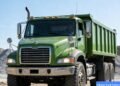
If you are looking into the heavy-duty truck market in Mozambique, the price of a HOWO truck is likely at the top of your list. Depending on the specific model and configuration, a new HOWO unit typically lands in Maputo port between $42,000 and $95,000 USD, with the popular HOWO 6×4 tractor unit often sitting around $55,000 to $68,000 before local taxes and registration. However, the sticker price is only the beginning; import duties, transport logistics, and long-term maintenance costs will significantly impact your total cost of ownership. This guide breaks down the real numbers and operational considerations I have observed across fleets in Southern Africa, offering a practical look at what it takes to run these trucks profitably.

Overview and Real-World Usage Scenarios in Mozambique
Mozambique’s transport corridors, particularly the Beira and Maputo corridors, are the lifeblood of the region’s economy. These routes connect landlocked nations like Zimbabwe, Zambia, and Malawi to deep-water ports. In this environment, the HOWO truck has become a dominant player, not because of flashy technology, but because of its sheer resilience and the availability of spare parts. I have spent time with fleet operators in the region, and the consensus is clear: these trucks are workhorses built for high-usage, high-load operations where downtime is the biggest enemy.
The most common applications I see on the ground involve bulk commodity transport—coal, grain, and timber—moving from mining and agricultural zones to port facilities. The 6×4 tractor units are the standard choice for pulling tri-axle side tippers or flatbeds, often running at gross combination masses (GCM) of 50 to 60 tons. In urban settings like Maputo, HOWO 8×4 rigid dump trucks are frequently used for construction and infrastructure projects, handling heavy loads on uneven terrain where a standard tractor unit would struggle.

Another significant use case is in the fuel and logistics sector. Tanker operators favor the HOWO chassis for its stability, especially when navigating the sometimes poorly maintained secondary roads. The trucks are also increasingly used in container haulage, moving 40-foot boxes from the port to inland dry ports. In all these scenarios, the operational philosophy is the same: maximize payload and minimize idle time. The HOWO’s straightforward mechanical design makes it easier for local workshops to service, a critical advantage over more electronically complex European or American models.
What strikes me most about the HOWO’s performance in Mozambique is its adaptability to high ambient temperatures and dusty conditions. The air filtration systems and cooling packs are robust, though they require diligent daily checks. Operators who stick to a strict preventative maintenance schedule—changing air filters every 10,000 kilometers instead of the standard 15,000—see significantly fewer issues with turbocharger failures, which is a common complaint in this climate. For a fleet manager, the real value lies in the truck’s ability to keep moving when the temperature hits 40 degrees Celsius and the roads turn to dust.
การวิเคราะห์ประสิทธิภาพ: เครื่องยนต์, แรงบิด, ความสามารถในการบรรทุก และประสิทธิภาพการประหยัดเชื้อเพลิง
The heart of most HOWO trucks sold in Mozambique is the Sinotruk WD615 series engine, a 9.7-liter inline-six diesel that has been a mainstay in the Chinese truck industry for decades. In its common 371 horsepower (272 kW) configuration, it produces a peak torque of around 1,500 Nm, delivered low in the rev range. This is where the HOWO excels; the power delivery is not about top-end speed but about pulling power at low RPMs, which is exactly what you need when hauling 40 tons up a steep incline on the Beira corridor.
When we talk about payload, the numbers are competitive. A standard HOWO 6×4 tractor unit has a chassis weight of roughly 8.8 tons, allowing for a substantial payload when the truck is used as a rigid vehicle. However, in tractor-trailer form, the legal payload is dictated by axle weight limits. In Mozambique, the maximum gross vehicle weight is typically 56 tons, meaning you are looking at a payload capacity of around 35 to 38 tons depending on the trailer weight. The frame is heavy-duty, with a thickness that resists bending under constant full-load operation, a common failure point on lighter trucks.
Fuel efficiency is a mixed bag and heavily dependent on driving style and route. In my observation, a well-maintained HOWO hauling 40 tons on a flat highway will average around 35 to 40 liters per 100 kilometers. On hilly terrain or in stop-and-go urban traffic, that figure can easily climb to 45 or even 50 liters. This is not class-leading efficiency; European trucks like the Volvo FH or Scania R-series can do better, often achieving 30-33 liters per 100km under the same conditions. However, the initial purchase price difference of $30,000 to $50,000 USD is a massive factor that often outweighs the fuel penalty for local operators.
The transmission is typically a manual 9-speed or 10-speed gearbox (Fast Gear). It is not as smooth as modern automated manuals, but it is nearly indestructible. Drivers who are experienced with manual shifting can get the best out of the engine, but a poor driver can easily cost the operator $5,000 to $10,000 USD per year in excess fuel consumption and clutch replacements. I have seen fleets where driver training on the specific HOWO gearbox ratios resulted in a 15% improvement in fuel economy, purely by shifting at the optimal RPM.
For fleet operators looking at the total package, the HOWO offers a reliable, if somewhat thirsty, powertrain. The trade-off is clear: you sacrifice a bit of fuel efficiency and driver comfort for a significantly lower upfront cost and lower complexity. This makes the HOWO a logical choice for operations where the primary goal is moving maximum tonnage at the lowest possible capital expenditure, rather than optimizing for fuel cost per mile. The durability of the driveline is a known quantity, and that predictability has value in markets where financing costs are high.
การบำรุงรักษาและการวิเคราะห์ต้นทุนตลอดวงจรชีวิต
Understanding the true cost of running a HOWO truck in Mozambique requires looking beyond the initial invoice. Based on my long-term fleet observation, the lifecycle cost is driven by three main factors: parts availability, service intervals, and the quality of local labor. The good news for HOWO owners is that the parts supply chain in Southern Africa is mature. You can find genuine and OEM replacement parts in Maputo, Beira, and even smaller towns, which drastically reduces downtime compared to more niche brands.
Routine maintenance costs are relatively low. A standard service, including oil, filters, and labor, will set you back between $400 and $600 USD. The service interval is typically every 15,000 kilometers, but in harsh conditions, I recommend shortening this to 10,000 kilometers. The engine oil capacity is significant (around 30 liters), which is a recurring cost. Brake maintenance is another major consideration. The drum brakes on the HOWO are effective but require frequent adjustment and lining replacement, especially on mountainous routes. A full brake job, including shoes and labor, can cost around $1,200 to $1,800 USD per axle group.
When we project the 5-year cost of ownership, the picture becomes clearer. Assuming an annual mileage of 120,000 kilometers, the total maintenance cost (excluding tires and fuel) will likely be in the range of $45,000 to $60,000 USD. This is significantly lower than the equivalent cost for a European truck, which might be $70,000 to $90,000 USD over the same period, primarily due to higher labor rates and more expensive specialized parts. However, the HOWO will likely have a higher unscheduled downtime risk related to minor electrical issues, which are common but easily fixed.
Tires are the single largest consumable cost. On a 6×4 tractor unit, you are looking at 10 drive tires plus 2 steer tires. In the Mozambique market, a good quality Chinese or Brazilian tire will cost around $300 to $400 USD each. With proper tire pressure management, a set of drive tires should last 60,000 to 80,000 kilometers. This puts your tire cost per kilometer at roughly $0.06 to $0.08, a significant line item that is often underestimated by new buyers.
One of the most critical maintenance aspects I have observed is the quality of diesel fuel. Mozambique has seen issues with contaminated or low-quality fuel in the past. This wreaks havoc on the high-pressure common rail injectors in the WD615 engine. A set of injectors can cost upwards of $2,000 USD to replace. Fleet operators who invest in high-quality secondary fuel filtration systems see a dramatic reduction in injector failures. It is a small upfront cost that pays for itself many times over in a market where fuel quality is variable.
HOWO vs. Rivals: Comparison and Market Positioning
In the Mozambican market, the HOWO does not operate in a vacuum. It competes primarily with other Chinese brands like Shacman and Foton, as well as used Japanese trucks (Isuzu, Hino) and, to a lesser extent, used European units. To make an informed decision, you need to look at the specific trade-offs. The table below summarizes the key differences I have noted in operational settings.
| เกณฑ์ | HOWO (New) | Shacman (New) | Used Isuzu Giga (Imported) |
|---|---|---|---|
| Typical Purchase Price (6×4 Tractor) | $58,000 – $65,000 | $55,000 – $62,000 | $35,000 – $50,000 |
| กำลังเครื่องยนต์ (HP) | 371 | 340-385 | 330-380 |
| แรงบิด (Nm) | 1,500 | 1,450 – 1,600 | 1,420 – 1,500 |
| Fuel Consumption (L/100km @ 40t) | 38 – 42 | 38 – 44 | 35 – 40 |
| ความพร้อมของชิ้นส่วน | ยอดเยี่ยม | ดี | Moderate (depends on model) |
| Resale Value (5 years) | ~40% of new price | ~35% of new price | ~30% of purchase price |
| ค่าใช้จ่ายในการบำรุงรักษา (รายปี) | $9,000 – $12,000 | $9,000 – $12,000 | $ 12,000 – $ 18,000 |
The data above shows that the HOWO sits in a sweet spot for new equipment buyers. The Shacman is often slightly cheaper but has historically had a less robust dealer network in Mozambique. The used Japanese trucks are attractive on price but represent a significant gamble. You are buying someone else’s maintenance history, and the hidden costs of repairing a high-mileage import can quickly erase the initial savings. I have seen fleets purchase used Isuzu trucks that looked clean but required $15,000 in immediate repairs to be roadworthy.
The decision often comes down to risk tolerance. A new HOWO offers a warranty and predictable maintenance costs for the first few years. The used import route is a lottery; you might get a gem, but you are more likely to get a truck that was sold because it was becoming uneconomical to run in Japan or Europe. In the current market, the price gap between a new HOWO and a reliable used Japanese truck is narrowing, making the new truck a more logical choice for serious fleet operators.
Another competitor worth mentioning is the FAW brand, which is present in the region. FAW trucks are generally well-built but have a different engine architecture that some mechanics find less familiar. In terms of driver acceptance, the HOWO has a slight edge due to its more spacious cab and better ergonomics, which is a factor in driver retention. In a market where skilled drivers are in high demand, providing a comfortable working environment can be just as important as the truck’s mechanical specifications.
ปัจจัยที่ส่งผลต่อการตัดสินใจของผู้ซื้อ: ขนาดกองรถ, สภาพภูมิประเทศ และปริมาณงาน
Choosing the right HOWO configuration is not a one-size-fits-all proposition. Your decision should be driven by your specific operational profile. For a small owner-operator with one truck, the priority is usually maximum versatility and minimum downtime. In this case, a 6×4 tractor unit with a manual transmission is the safest bet. It allows you to haul a variety of trailers and is the easiest to sell later. The simpler the truck, the easier it is to fix when things go wrong.
For larger fleets running dedicated routes, such as hauling coal from Tete to Beira, the focus shifts to total cost per ton-kilometer. Here, you might consider the 8×4 rigid dump trucks, which offer a higher payload capacity on rough terrain. These trucks are more expensive and have higher tire costs, but they reduce the need for separate trailers and are more maneuverable at loading sites. The workload is constant and heavy, so investing in the heavier-duty components is justified.
Terrain is a massive factor. The routes through the Chimanimani mountains require trucks with excellent engine braking and robust cooling systems. If your operation involves this kind of terrain, you should spec the HOWO with a hydraulic retarder or at least a high-spec exhaust brake. This is an added cost (around $2,500 USD) but saves you from premature brake wear and potential safety issues. Fleet managers who skip this option often regret it within the first year of operation.
Workload cycles also dictate the choice between a manual and automated transmission. While the HOWO AMT is available, many operators in Mozambique prefer the manual due to lower initial cost and ease of repair. However, if you are running long distances with multiple drivers per truck, the AMT can reduce driver fatigue and clutch replacements. It is a trade-off between upfront cost and long-term operational efficiency. For a fleet running 24/7 operations, the AMT is worth the premium.
Finally, consider the regulatory environment. Mozambique has strict axle load limits, and overloading fines are common. Purchasing a truck with a lighter tare weight increases your legal payload. The HOWO’s lightweight design is a benefit here, allowing you to carry more legal cargo than some heavier rivals. This is a strategic advantage that directly impacts your revenue per trip. I have worked with operators who specifically chose the HOWO for its tare weight, gaining an extra 1.5 tons of payload per load compared to a comparable European model.
Import Process, Duties, and Logistics in Mozambique
Bringing a HOWO truck into Mozambique involves navigating a specific set of regulations and costs. The process typically starts with the Bill of Lading and the Commercial Invoice. You will need to clear customs at the port of entry, usually Maputo or Beira. The import duty on commercial vehicles is generally around 20% of the CIF (Cost, Insurance, Freight) value, but this can vary based on the vehicle’s classification and trade agreements. It is essential to work with a licensed customs broker who understands the local tariff codes to avoid overpaying.
Beyond the import duty, you must pay Value Added Tax (VAT), which is currently 16% in Mozambique. This is calculated on the total of the CIF value plus the import duty. This is a significant cash outlay that must be factored into your budget. For a truck priced at $60,000, the CIF value might be $64,000 with shipping. The duty would be $12,800, and the VAT would be $12,288. This adds roughly $25,000 to the cost of the truck before it is even registered.
Shipping costs from China to Mozambique have fluctuated significantly. A standard 40-foot container or RoRo shipment for a single truck can cost between $2,500 and $5,000 USD, depending on the shipping line and season. It is often more cost-effective to use RoRo (Roll-on/Roll-off) for the truck itself, but this requires the truck to be driven on and off the vessel, which is not always possible for non-runners. When considering the total landed cost, these logistics fees are a major component.
Once the truck is cleared, you need to register it with the local transport authority (ANTT). This involves a vehicle inspection and the payment of registration fees, which are relatively modest (around $200-$300 USD). However, the bigger cost is the mandatory third-party insurance and, if you are financing the truck, comprehensive insurance. Comprehensive coverage on a new $60,000 truck can cost around $2,500 to $3,500 USD per year.
For those looking to minimize initial capital outlay, exploring the used truck market might seem appealing, but the import rules for used vehicles are often more stringent. In some cases, the government has imposed age limits on imported used trucks to protect local industry and safety. It is critical to verify the current regulations before purchasing a used unit from overseas. A new ผู้ผลิตรถบรรทุกของจีน like Sinotruk offers a streamlined process with full documentation, which simplifies the import procedure significantly compared to buying from a private seller.
การจัดหาเงินทุนและค่าใช้จ่ายรวมในการเป็นเจ้าของ
Financing a HOWO truck in Mozambique is often more challenging than in more developed markets. Local banks are generally conservative when it comes to commercial vehicle loans, often requiring a down payment of 30% to 50% and offering loan terms of only 3 to 4 years. The interest rates are also high, frequently in the range of 20% to 25% per annum. This makes the monthly payment on a $60,000 truck quite substantial, often exceeding $2,000 USD per month.
This high financing cost forces operators to look at the total cost of ownership (TCO) very carefully. The TCO includes the purchase price, financing costs, fuel, maintenance, tires, driver wages, insurance, and depreciation. For a typical 6×4 tractor unit, the TCO per kilometer is likely to be between $0.90 and $1.20 USD. To make a profit, you need to be earning more than that in freight rates. The current market rates on the Beira corridor are tight, making efficiency and uptime crucial.

Depreciation is a silent killer in this market. While the HOWO holds its value better than some other Chinese brands, it still depreciates faster than a premium European truck. After 5 years, you might get 35% to 40% of the original purchase price back on resale. This is better than the 25% you might get for a lesser-known brand, but worse than the 50% you might get for a Volvo. However, the higher initial cost of the Volvo means you have more capital tied up in a depreciating asset.
One way to mitigate the financing burden is to consider the operational efficiency of the vehicle. A truck that is down for repairs is not generating revenue. In this regard, the HOWO’s simple design is a financial advantage. You can do many repairs in-house with a basic mechanical workshop, saving on expensive dealer labor rates. I have seen small fleets in Mozambique keep their HOWO trucks running for over 1 million kilometers with consistent, disciplined maintenance, proving that the asset can be profitable over a long lifespan.
For operators looking to expand their fleet, it is worth exploring the โซลูชันการขนส่งระยะไกล available from Chinese manufacturers. These packages often include extended warranties and training, which can reduce the risk associated with launching new routes. The key is to build a financial model that is conservative on revenue and aggressive on maintenance costs. If the truck still makes money in that scenario, it is a sound investment.
Dealer Support and Parts Network in Mozambique
The availability of after-sales support is often the deciding factor between a successful fleet operation and a costly nightmare. In Mozambique, the official Sinotruk dealer network is present but concentrated in major cities. Maputo has the main facility, with a smaller presence in Beira and Nampula. For operators based outside these hubs, parts delivery can take a few days, which is a significant downtime risk. However, the proliferation of independent parts suppliers who stock generic HOWO parts has mitigated this issue.
I have found that the quality of aftermarket parts varies enormously. While you can buy a cheap brake shoe for $30, it will likely wear out in half the time of a genuine part costing $70. The hidden cost of using inferior parts is not just the part price but the labor cost and downtime to replace it again. In my experience, it is more cost-effective to use genuine or high-quality OEM parts for safety-critical items like brakes and steering components.
The dealer’s service department is generally competent, but their labor rates are high, often rivaling those of international brands. This pushes many fleet owners to independent workshops, where labor costs are 50% to 60% lower. The challenge with independent workshops is the variability in skill levels. A good independent mechanic who knows the WD615 engine is worth their weight in gold. Building a relationship with such a mechanic is a strategic move for any fleet operator.
For specialized repairs like engine rebuilds or transmission overhauls, you will likely need to use the dealer or a specialized engine shop. The WD615 engine is a robust unit, but it will eventually need a rebuild at around 800,000 to 1,000,000 kilometers. A rebuild kit costs around $3,000 to $5,000, and labor can add another $2,000 to $3,000. This is a significant expense but is still far less than the cost of replacing the entire vehicle.
When evaluating the support network, consider the availability of specialized vehicles for maintenance. For example, if you are running a fleet of dump trucks on a construction site, you need a mobile service truck that can reach the site. In this context, the รถบริการทำความสะอาดแบบมืออาชีพ and other specialized chassis from Chinese manufacturers are often used as mobile workshops, equipped with compressors and tools to handle on-site repairs, reducing the need to tow trucks back to a central depot.
Operational Tips for Maximizing HOWO Efficiency
Getting the most out of a HOWO truck starts with driver behavior. The engine’s sweet spot is between 1,200 and 1,500 RPM. Drivers who are used to driving high-revving engines will waste fuel and increase wear. I recommend installing a simple RPM gauge and training drivers to shift early. This alone can improve fuel economy by 10% to 15%. It is a simple, cost-free change that has a direct impact on the bottom line.
Tire management is another area where significant savings can be found. Under-inflated tires increase rolling resistance, which increases fuel consumption and causes premature tire failure. A daily tire pressure check is essential. Investing in a good quality tire pressure gauge and training drivers to use it is cheap insurance. I have seen fleets reduce their tire costs by 20% just by implementing a strict daily pressure check regime.
The aerodynamic profile of the truck also matters. While the HOWO is not the most aerodynamic truck on the market, adding a roof deflector and side skirts on the trailer can reduce drag. On a highway run, this can save 2% to 3% on fuel. This is a small saving per trip, but over the course of a year, it adds up to thousands of dollars. It is a low-tech solution with a guaranteed return on investment.
Idling is a major waste of fuel. Drivers often leave the engine running to keep the cab cool while waiting to load or unload. This can burn 2 to 3 liters of fuel per hour. Implementing a strict no-idling policy, or installing auxiliary cooling units, can save a significant amount of fuel. In the hot Mozambican climate, this is a hard sell to drivers, but the economics are compelling.
Finally, consider the weight distribution. Overloading the front axle can cause premature tire wear and steering issues. Properly distributing the load on the trailer is critical for safety and component longevity. A truck that is correctly loaded will handle better, brake better, and use less fuel. For operators running on rough terrain, understanding the dynamics of the โซลูชันสำหรับรถก่อสร้างแบบทนทาน is key to avoiding costly structural damage.
Resale Value and Long-Term Asset Management
Planning for the eventual resale of your HOWO truck is part of smart asset management. The resale value is heavily influenced by the truck’s maintenance history. A truck with a complete service record will command a premium price compared to one with a questionable history. I always advise fleet owners to keep meticulous records of all repairs and maintenance, as this adds credibility when it comes time to sell.
The condition of the cab and interior is also a major factor. In the used market, a clean, well-maintained cab can add several thousand dollars to the asking price. Drivers who take pride in their truck are an asset. Simple things like keeping the interior clean and fixing minor cosmetic issues can significantly boost resale value. It is worth investing a small amount in detailing before putting the truck on the market.
The mileage is, of course, a key determinant. A truck with 500,000 kilometers is worth considerably less than one with 200,000 kilometers, even if the mechanical condition is similar. However, a well-maintained high-mileage truck is often a better buy than a low-mileage truck that has been neglected. In the HOWO market, buyers are becoming more sophisticated and are looking for signs of consistent maintenance rather than just low odometer readings.
When it is time to sell, you have several options. You can sell it privately, at an auction, or trade it in at a dealer. Private sales typically yield the highest price but require time and effort. Auctions are fast but often result in lower prices. Trading in is the easiest but usually gives you the least value. The best approach is to get a few valuations and understand the current market demand before deciding.
For those looking to upgrade their fleet, understanding the market for ขายรถบรรทุกดีเซลมือสอง ราคาต่ำกว่า 10,000 can provide a benchmark for entry-level buyers, but for a truck that has been worked hard, you can expect to sell it for $20,000 to $30,000 USD if it is in good condition. This residual value helps offset the cost of your new purchase, making the upgrade cycle more financially sustainable.
FAQ: Common Questions About HOWO Trucks in Mozambique
What is the average price of a new HOWO 6×4