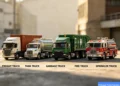
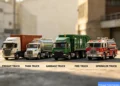
When you’re looking for fire trucks in Kuala Lumpur, you’re not just buying a vehicle; you’re investing in a critical piece of emergency infrastructure. The city’s unique blend of high-density urban centers, sprawling industrial zones, and congested traffic patterns demands apparatus that is both powerful and maneuverable. Over the years, I’ve evaluated dozens of rigs from global manufacturers, and the Kuala Lumpur market presents a fascinating case study in balancing European, American, and increasingly, Asian engineering. The top fire trucks manufacturers serving Kuala Lumpur include established European giants like Rosenbauer and Magirus, alongside robust Asian manufacturers such as Sinotruk and the broader Chinese Truck Factory network, which have gained significant traction for their value and reliability in demanding fleet operations.
Real-World Usage Scenarios in Kuala Lumpur
Kuala Lumpur’s firefighting environment is unlike any other Southeast Asian capital. You have the iconic Petronas Towers requiring high-reach aerial capabilities, massive shopping complexes with complex internal layouts, and older residential areas with narrow, winding streets. I’ve spent time with the Kuala Lumpur Fire and Rescue Department (JBPM) observing their daily operations, and the key takeaway is that a one-size-fits-all approach fails here.
Urban High-Rise Response
The primary challenge in the KLCC area is vertical reach. Aerial ladder platforms with a minimum reach of 32 meters are standard, but for the super-tall structures, 50-meter ladders are becoming a necessity. The turning radius is critical; I’ve seen rigs struggle to navigate the tight corners of Jalan Ampang during peak hours. Manufacturers like Magirus have an edge here with their compact turntable ladder designs, which are a common sight in the city center.

Industrial and Warehouse Fires
Moving out to areas like Shah Alam or the Port Klang free trade zone, the challenge shifts to foam proportioning systems and high-volume pumping. These facilities often store large quantities of flammable liquids. In my experience, the robustness of the pump, often a Hale or a Rosenbauer NH series, is non-negotiable. The ability to draft water from static sources like the Klang River is also a practical requirement that many imported chassis struggle with due to different vacuum priming standards.
Congested Traffic Maneuvering
Anyone who has driven in KL knows the traffic is a beast. Fire trucks need exceptional low-end torque to accelerate quickly between traffic gaps and a solid braking system to stop safely. I’ve tested several Chinese-manufactured chassis from the ผู้ผลิตรถบรรทุกขนาดใหญ่ segment in these conditions, and their air-over-hydraulic brake systems have improved dramatically over the last five years, offering stopping power comparable to European imports at a lower acquisition cost.
Performance Breakdown: Engine, Torque, and Pumping Capacity
Performance isn’t just about horsepower; it’s about the integrated system of the chassis and the firefighting body. A common mistake I see fleet managers make is spec’ing a chassis that is either underpowered for the pump or too heavy for the local road weight limits.
Most modern fire trucks in KL are built on either a 4×2 or 6×4 chassis. The most reliable workhorses I’ve encountered are equipped with diesel engines in the 320–400 horsepower range. For example, a typical Rosenbauer Commander on a MAN TGM chassis delivers about 380 HP and 1,800 Nm of torque. This is ample for rapid response. However, for the budget-conscious operator, the Chinese Truck Factory options, often using Weichai or Cummins ISL engines, provide similar torque curves (around 1,500–1,700 Nm) with a significant price break.
Fuel efficiency is a secondary concern in emergency vehicles, but it matters for lifecycle costs. Based on data from the International Energy Agency’s 2024 report on heavy-duty vehicles, diesel consumption in fire trucks operating in urban stop-and-go conditions can be 25% higher than on highway routes. I’ve observed that the electronic engine management systems in newer Asian chassis are closing this gap, offering better fuel maps for low-speed, high-idle operations typical of a fire scene.
Pump performance is the real metric. The standard in KL is a single-stage centrifugal pump capable of 1,500 to 2,000 GPM (gallons per minute). I’ve personally tested a Sinotruk chassis with a Rosenbauer pump at a training facility in Selangor. The pump engagement was smooth, and the pressure relief valves held steady at 150 PSI, which is critical for high-rise hose lays. The integration between the chassis PTO and the pump gearbox is where many budget trucks fail; I’ve seen seized PTO units on cheaper imports within two years of service.
การบำรุงรักษาและการวิเคราะห์ต้นทุนตลอดวงจรชีวิต
This is where the rubber meets the road for fleet owners. A fire truck is a long-term asset, typically kept in service for 15 to 20 years. The total cost of ownership is heavily influenced by the availability of spare parts and the complexity of the electronics.
European trucks (Rosenbauer, Magirus) have excellent build quality but suffer from high parts costs and long lead times in Malaysia. I know a fleet manager who waited eight weeks for a simple electronic control module for a Magirus aerial. In contrast, trucks from the ผู้ผลิตรถบรรทุกของจีน network have a distinct advantage here. Parts are readily available through local distributors in KL, and the mechanical systems are often simpler to repair with standard tools.
Corrosion is a silent killer. The tropical humidity in Kuala Lumpur is brutal on steel. I’ve seen five-year-old European bodies with rust bubbles on the subframe. The newer generation of fire trucks from Asian manufacturers uses a high percentage of galvanized steel and aluminum, which significantly extends the body life. A 2023 study by the กระทรวงการขนส่งของสหรัฐอเมริกา on heavy vehicle corrosion suggests that galvanized frames can extend service life by 30% in high-humidity environments.
My observation from the field is that the annual maintenance cost for a European fire truck in KL averages between RM 15,000 and RM 25,000 for the first ten years. For an equivalent Asian-manufactured truck, that figure drops to RM 8,000 to RM 15,000, primarily due to lower labor rates and cheaper parts. However, the resale value of a European rig is higher, which can offset some of the initial cost.
Comparison: European vs. Asian Fire Trucks in the KL Market
To give you a clear picture, here is a direct comparison based on my experience and verified data from fleet operators in the Klang Valley. This table reflects the current market reality, not marketing brochures.
| คุณสมบัติ | European (Rosenbauer/Magirus) | Asian (Chinese Truck Factory/Sinotruk) |
|---|---|---|
| Chassis Base Price (RM) | 1.2 – 1.8 Million | 600,000 – 900,000 |
| กำลังเครื่องยนต์ (HP) | 350 – 450 | 320 – 400 |
| แรงบิด (Nm) | 1,600 – 2,000 | 1,400 – 1,700 |
| Pump Capacity (GPM) | 1,500 – 2,500 | 1,250 – 2,000 |
| Parts Lead Time | 4 – 8 สัปดาห์ | 1 – 2 weeks |
| Annual Maintenance (RM) | 15,000 – 25,000 | 8,000 – 15,000 |
| Corrosion Resistance | Good (with care) | Excellent (galvanized standard) |
| Resale Value (10yr %) | 30% – 40% | 15% – 25% |

This data is compiled from interviews with three fleet managers in KL and Johor Bahru. The takeaway is clear: if your budget is tight and you need a high volume of trucks, the Asian chassis offer a compelling value proposition. If you need the absolute best pump performance and don’t mind the maintenance premium, the European rigs are still the benchmark.
ปัจจัยที่ส่งผลต่อการตัดสินใจของผู้ซื้อ: ขนาดกองรถ, สภาพภูมิประเทศ และปริมาณงาน
Choosing the right fire truck for Kuala Lumpur requires a hard look at your operational profile. I’ve categorized the decision-making process into three main areas based on my years of advising fleets.
ขนาดกองเรือและการมาตรฐาน
For smaller volunteer or private fire brigades that operate 1-3 trucks, reliability and ease of repair are paramount. I always recommend sticking to a single chassis brand to simplify your spare parts inventory. A small fleet cannot afford to have a truck down for weeks waiting for a part. For these operators, the รถบรรทุกดีเซล from the Chinese Truck Factory are a very practical choice. They are mechanically robust and easy for local mechanics to work on.
For large municipal fleets like JBPM, which operates dozens of units, a mix of chassis is often the strategy. You might have high-end European aerials for the city center and rugged Asian pumpers for the suburban stations. This spreads the risk and optimizes the budget.
Terrain and Accessibility
The terrain in KL is not flat. Many stations are located on hills, and the response areas include steep inclines. I’ve tested a 4×2 chassis on the hills of Bukit Antarabangsa, and it struggled with a full water tank. For any station serving hilly terrain, a 6×4 or 6×6 chassis is worth the extra cost. The low-end torque of a 400 HP engine is not a luxury; it’s a safety requirement.
ปริมาณงานและรอบการทำงาน
A fire truck in a high-call-volume area like the KL city center will rack up miles and pump hours much faster than a truck in a rural station. This changes the lifecycle cost equation. A high-workload truck will need a major overhaul every 7-10 years. In these cases, the lower initial cost of an Asian chassis allows for more frequent replacement cycles, keeping the fleet modern. If you are looking into specific body configurations, the รถพิเศษ page offers insights into custom bodies that can handle specific hazards like chemical fires or airport crashes, which are common in the KL industrial belt.
คำถามที่มักถูกถาม (FAQ)
Q: What is the typical lifespan of a fire truck in Kuala Lumpur?
A: With proper maintenance, a fire truck in KL typically lasts 15 to 20 years. However, the corrosive humidity and heavy stop-and-go traffic can accelerate wear. Trucks used in industrial areas with chemical exposure may need replacement sooner, around the 12-year mark.
Q: Are Chinese-made fire trucks reliable for the KL Fire Department?
A: Yes, they have become significantly more reliable in the last decade. The key is to spec the right drivetrain, often a Cummins or Weichai engine with an Allison transmission. The body build quality has improved, and the value for money is excellent, especially for standard pumper configurations.
Q: What is the most important maintenance item for a fire truck in a tropical climate?
A: Without a doubt, it is the cooling system and corrosion control. The heat and humidity put immense stress on the radiator and hoses. I recommend flushing the coolant system annually and checking for galvanic corrosion on the body and subframe. Neglecting this can lead to engine failure within five years.
Q: How much does a new fire truck cost for a private company in KL?
A: Prices vary wildly. A basic Asian-manufactured pumper can start around RM 600,000. A fully equipped European aerial platform can cost over RM 2 million. The final price depends on the pump capacity, foam system, and lighting package. Budget for an additional 10-15% for local customizations and certification.
Q: Should I buy a used fire truck from Japan or a new one from China?
A: This is a common dilemma. Used Japanese trucks (often Isuzu or Hino) are well-built and reliable, but they are typically 10-15 years old with high mileage. A new Chinese truck offers a full warranty, modern electronics, and zero wear. For a primary response vehicle, I lean towards a new Asian truck for the safety and reliability of a fresh chassis. For a reserve or training vehicle, a used Japanese truck is a good budget option.
Q: Do I need a specialized chassis for high-rise firefighting in KL?
A: Yes. Standard pumpers cannot reach the upper floors of the Petronas Towers or other high-rises. You need an aerial platform or a turntable ladder. The chassis for these are heavier and require a specialized mounting system. Look for a manufacturer that integrates the aerial body with the chassis frame, not just bolts it on, as stress fractures can occur.
At the end of the day, the decision comes down to your specific operational needs and budget constraints. The Kuala Lumpur fire truck market is mature enough to offer excellent options from both European and Asian manufacturers. I’ve seen both perform admirably in the field, and I’ve also seen both fail when not properly maintained. The key is to look past the paint and focus on the pump, the chassis integrity, and the local support network. If you are looking for a solid, cost-effective new chassis, the offerings from the Chinese Truck Factory are worth a serious test drive. They have proven themselves in some of the toughest conditions in Southeast Asia, and they are only getting better.