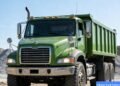
The shift to autonomous haulage in open-pit mining isn’t a futuristic concept anymore; it is a present-day operational reality that is reshaping how large-scale extraction projects are planned and executed. Driverless mining trucks, once a pilot project curiosity, now move millions of tonnes of material daily across sites in Australia, Chile, and Canada. For fleet owners and logistics operators watching from the sidelines, the question isn’t whether this technology works, but rather how it integrates with existing infrastructure and what it actually means for the bottom line. This analysis looks at the mechanical realities, operational costs, and decision-making factors that define autonomous mining truck operations today, drawing on field observations and industry data rather than press releases.
How Autonomous Haulage Systems Operate in Real-World Mining Environments
Autonomous mining trucks are not simply standard haulers with a computer bolted on. The entire system relies on a complex ecosystem of GPS correction stations, high-definition LiDAR mapping, onboard obstacle detection radar, and centralized fleet management software. The trucks operate within a geofenced area where the route is pre-mapped to the centimeter. When a truck receives a dispatch command from the control room, it follows that digital path, communicating its position and speed continuously. The system is designed for redundancy; if a truck loses communication with the control center for more than a few seconds, it will initiate a controlled stop rather than continue blind.
From a practical standpoint, the most significant operational shift is the removal of human fatigue from the equation. A manned haul truck typically operates in two shifts of roughly 11 hours each, with mandatory breaks and shift changes. An autonomous truck can run almost continuously, stopping only for refueling, scheduled maintenance, or tire changes. This increases the effective operating hours per day from around 20 to nearly 23.5. In high-density environments like large open-pit copper or iron ore mines, this uptime difference is the primary driver for the business case, directly influencing the efficiency of mining industry truck solutions.
One aspect that often gets overlooked is the interaction with manned equipment. In most current deployments, autonomous trucks share the haul roads with manned light vehicles, water trucks, and blasting crews. This requires a strict traffic management protocol. The autonomous trucks are programmed to yield to manned vehicles in specific zones and to maintain a safe following distance that is often longer than a human driver would keep. The safety case is strong, but it requires a cultural shift in how the entire site operates, moving from reactive driving to a predictive, system-managed flow.
Performance Breakdown: Engine, Torque, Payload, and Fuel Efficiency
Let’s look at the hardware. The current generation of autonomous haul trucks is based on the ultra-class mechanical and electric drive platforms. The dominant models in the field are the Caterpillar 789D and 793F, the Komatsu 930E and 980E, and the Hitachi EH5000. These are not small machines. The Komatsu 980E, for example, is powered by a 2,611 kW (3,500 hp) diesel engine and has a gross machine operating weight of over 600 tonnes. The payload rating is typically 400 tonnes. The torque characteristics are crucial here; these engines are tuned to deliver maximum torque at low RPM to move the load from a standstill on a grade, not for top speed.
Fuel efficiency in this class of equipment is measured in liters per hour, not miles per gallon. A typical ultra-class truck will burn between 80 and 120 liters of diesel per hour under load. However, autonomous operation has shown a measurable improvement in fuel economy. According to operational data from sites in Western Australia, autonomous trucks can achieve a 5-10% reduction in fuel consumption per tonne of material moved. This is because the acceleration and braking curves are programmed to be smooth and consistent, avoiding the hard throttle and brake applications that human operators often apply. This smoothness also translates into less wear on the tires and the final drive components.
Payload management is another area where autonomous systems excel. The onboard system continuously monitors the load weight and can communicate with the loading tool (shovel or wheel loader) to ensure the truck is loaded to its optimal capacity without being over or under-loaded. Overloading is a major cause of structural fatigue and tire failure in mining trucks. By maintaining a consistent payload, the fleet manager can predict maintenance intervals with much higher accuracy, which is a key factor in lifecycle cost modeling for heavy-duty dump trucks for sale in the broader market.
Maintenance and Lifecycle Cost Analysis
The cost structure for an autonomous mining truck is different from a manned truck. The initial capital expenditure is higher, primarily due to the sensor suite, computing hardware, and the control system infrastructure. However, the total cost of ownership (TCO) can be favorable when calculated over a 10-15 year life cycle. The most significant savings come from labor. A manned haul truck fleet requires four to five operators per truck to cover all shifts and holidays. An autonomous fleet requires one remote supervisor for every four to six trucks, plus a smaller team of pit technicians who handle breakdowns and re-fueling.
Maintenance costs are a mixed bag. The mechanical components—engine, transmission, and hydraulics—are the same as in manned trucks, so the scheduled maintenance costs are similar. However, the reduction in “operator abuse” events (hard braking, impacts, over-revving) leads to longer component life. Tire life is often cited as a key advantage. In the mining industry, tire costs can account for up to 30% of the total operating cost. Autonomous systems maintain consistent tire pressure monitoring and avoid sudden lateral forces, which can increase tire life by 15-20% compared to the fleet average. On the flip side, you have new maintenance items: the LiDAR sensors need cleaning and calibration, and the high-precision GPS antennas are vulnerable to lightning strikes and physical damage from flying debris.
From a long-term observation perspective, the lifecycle cost analysis must also factor in the cost of downtime. When an autonomous truck breaks down, it often requires a specialist technician to troubleshoot the software control system before the mechanical repair can begin. This can increase the mean time to repair (MTTR) by a few hours compared to a standard truck. Fleet managers need to have a robust diagnostic tool and a strong relationship with the OEM’s software support team. For those looking at the broader market, understanding the cost of these systems is similar to analyzing the brand new dump truck price structures, where the upfront cost is just the entry ticket to a larger operational budget.
Comparison: Autonomous vs. Manned Haulage Operations
To put the performance and cost data into perspective, a side-by-side comparison is useful. This table reflects typical averages observed across large-scale open-pit operations in the Pilbara region and South America, based on industry reporting and operator data.
| Operational Metric | Manned Haul Truck | Autonomous Haul Truck |
|---|---|---|
| Operating Hours (per day) | 20 – 21 | 23 – 23.5 |
| Tire Life (hours) | 4,000 – 5,000 | 5,500 – 6,500 |
| Fuel Efficiency (relative) | Baseline | 5-10% improvement |
| Labor Requirement | 4-5 operators per truck | 1 supervisor per 4-6 trucks |
| Payload Consistency | Variable (operator dependent) | High precision (within 1-2%) |
| Initial CAPEX | Lower | Higher (sensors + control system) |
| MTTR (Mean Time To Repair) | Standard | Higher (software diagnostics) |
The table highlights the core trade-off. You are trading high upfront capital costs and more complex repair procedures for higher uptime and lower variable operating costs. For a site that runs 24/7, the extra 2-3 hours of operation per day adds up to roughly 700-1000 additional operating hours per truck per year. This is significant when you are moving 400 tonnes per load. The decision to switch is rarely about technology readiness and almost always about capital availability and the site’s long-term production plan.
Buyer Decision Factors: Fleet Size, Terrain, and Workload
Not every mine is a candidate for full automation. The decision to deploy an autonomous fleet hinges on several practical factors that fleet owners must evaluate honestly. The first is fleet size. The economics of the control room and the support infrastructure only make sense when you have a minimum of 15-20 trucks operating in a single pit. If you have a smaller fleet, the cost of the dispatch system and the dedicated IT support staff per truck becomes prohibitive.

Terrain is the second critical factor. Autonomous systems work best on well-maintained, wide haul roads with a consistent grade. If your mine has steep, winding ramps with poor visibility, the system will operate, but the speed will be reduced to maintain safety margins, eroding the productivity gains. The system also struggles in extreme weather conditions—heavy rain, fog, or dust storms can interfere with the LiDAR and camera systems, forcing the trucks into a “safe stop” mode until visibility improves. This is a critical consideration for sites in tropical climates or high-altitude locations.
Workload and production targets are the final piece. Autonomous trucks are ideal for “greenfield” projects where you are building the mine from scratch. Retrofitting an existing manned fleet is possible, but it is a painful process. You have to take trucks out of production to install the hardware, and you have to run a mixed fleet (manned and autonomous) during the transition, which creates operational inefficiencies. For a mature mine with a stable production schedule, the disruption might not be worth the long-term gain. The operational planning becomes much more critical in these scenarios, and having a reliable partner who understands heavy-duty construction vehicle solutions is essential for integration.
The Role of the OEM and the Shift in Supply Chain
The relationship between the mining operation and the OEM changes significantly with automation. In a manned fleet, the OEM is a supplier of equipment. In an autonomous fleet, the OEM becomes a technology partner. The software updates, data analytics, and remote diagnostics are as important as the mechanical parts. This is a significant shift for procurement departments. They are no longer just buying a truck; they are buying a software ecosystem that must integrate with the mine’s existing network infrastructure.
From a global supply chain perspective, the move towards automation is also influencing the manufacturing side. Factories are now producing trucks with the necessary wiring harnesses and sensor mounts pre-installed, even if the customer is not buying the autonomous package yet. This reduces the complexity of retrofitting later. For fleet owners looking at the global market, including options from manufacturers like heavy truck manufacturer facilities, it is important to ask about the “autonomous readiness” of the base truck platform. This can save substantial costs down the line if the decision is made to upgrade.
Safety and Workforce Implications
The safety record of autonomous haulage is one of the strongest arguments for its adoption. The removal of humans from the cab eliminates the risk of fatigue-related accidents, distraction, and high-risk driving behaviors. The trucks follow the rules consistently, every time. This has led to a dramatic reduction in vehicle-related incidents in the pits where they operate. However, this does not mean the site is without risk. The new risks are in the maintenance bays, where technicians work on high-voltage systems and large moving parts, and in the pit itself, where light vehicle drivers must be disciplined in their interactions with the autonomous fleet.
The workforce composition changes as well. You need fewer drivers and more “fleet controllers” and “system analysts.” This is a challenge for mining communities that rely on employment for drivers. Many operators have addressed this by retraining their best drivers to become remote supervisors, leveraging their knowledge of road conditions and operational flow. The transition is not seamless, but it is manageable. The focus shifts from manual driving skills to situational awareness and system management, which is a different skill set entirely.
Environmental Impact and Regulatory Compliance
Fuel efficiency directly translates to lower carbon emissions. With the 5-10% reduction in fuel consumption per tonne, autonomous fleets offer a tangible path to reducing the Scope 1 emissions of a mining operation. This is becoming increasingly important as governments and investors push for stricter environmental, social, and governance (ESG) reporting. Several mining companies are now reporting the emissions savings from their autonomous fleets as part of their sustainability reports, using data verified by third-party auditors.
Regulatory compliance is also evolving. The U.S. Department of Transportation and the Mine Safety and Health Administration (MSHA) are actively reviewing safety standards for autonomous equipment. While the technology is advancing faster than the regulations, the industry is moving towards a consensus on data recording standards and safety case requirements. For fleet owners, staying ahead of these regulations is prudent, as retrofitting safety features later is always more expensive than building them in from the start. The data generated by autonomous systems provides an audit trail that is invaluable for compliance and incident investigation, a level of transparency that is impossible to achieve with manned operations.

Data Management and Cybersecurity
An autonomous mining truck generates terabytes of data every day—video feeds, LiDAR point clouds, sensor telemetry, and operational logs. Managing this data is a significant IT challenge. The mine site needs a robust network infrastructure, often requiring 5G or dedicated Wi-Fi mesh networks across the pit. Data storage and processing can be done on-site or in the cloud, but the latency requirements for real-time control mean that some processing must be done at the edge, close to the vehicle.
Cybersecurity is a growing concern. A fleet of autonomous trucks is essentially a network of robots that can be hacked. The industry is investing heavily in securing the communication links between the trucks and the control center. This includes encryption, network segmentation, and physical security for the servers. A cybersecurity breach in a mining operation could stop production and potentially cause physical damage. This is a new risk category that traditional fleet managers did not have to deal with, and it requires a dedicated IT security team. This is a key consideration when evaluating the total operational risk and the reliability of diesel trucks in high-stakes environments.
Financial Modeling and Investment Payback
Calculating the return on investment (ROI) for autonomous haulage requires a detailed financial model that goes beyond simple fuel savings. The main variables are labor costs, which are often the largest single line item in a mining operation, and production volume. If the autonomous system allows the mine to increase production by 15-20% without adding trucks, the payback period can be remarkably short. Most large mining operators report a payback period of 3 to 5 years for their autonomous haulage investments, based on data from the International Council on Mining and Metals (ICMM) and company annual reports.
However, this model assumes that the mine can actually sell or process the additional material that is being mined. If the bottleneck is downstream in the processing plant, the extra haulage capacity might just result in a larger stockpile, not more revenue. Therefore, the decision to invest in autonomous haulage must be aligned with the entire mining value chain. It is not a standalone decision. It is a strategic move that affects the mine plan, the processing schedule, and the logistics of the entire site. For those considering smaller-scale operations, the financial case is harder to make, and investing in more efficient manned trucks might be a better use of capital.
Future Trends: The Shift Towards Battery-Electric Autonomous Trucks
The next major evolution in this space is the convergence of autonomy with electrification. Several OEMs are now testing battery-electric and trolley-assisted autonomous trucks. The combination is powerful. The autonomous system can manage the battery charge cycle efficiently, ensuring that trucks are charged during off-peak times or when they are waiting at the shovel. Trolley-assist systems, where the truck draws power from overhead lines on the main haul road, eliminate the need for massive onboard batteries for the uphill loaded journey, significantly reducing the total energy cost.
The maintenance profile for an electric autonomous truck is simpler; there is no diesel engine to overhaul, no transmission to rebuild, and no hydraulic fluid to change. This could reduce the maintenance cost per hour by up to 30% compared to a diesel autonomous truck. However, the upfront cost is even higher, and the charging infrastructure is a major capital project. For fleet owners, this means that the decision-making process is not just about autonomy; it is about choosing the right powertrain technology for the next 20 years. The industry is watching these pilot projects closely, and the data coming out of them will shape the next generation of mining haul truck efficiency standards.
Conclusion: A Strategic Shift in Mining Operations
Autonomous mining trucks have moved from the experimental phase to the operational mainstream. They represent a fundamental shift in how mining companies approach productivity, safety, and cost management. The technology is not a silver bullet; it brings its own set of challenges in terms of capital investment, IT infrastructure, and workforce retraining. But for large-scale, long-life operations, the benefits of increased uptime, lower operating costs, and improved safety are undeniable. The decision to adopt this technology should be driven by a clear-eyed analysis of the mine’s specific conditions, financial capacity, and long-term strategic goals. It is about building a more resilient and efficient operation, not just about removing the driver from the cab.
Frequently Asked Questions
How much does it cost to convert a manned mining truck to autonomous?
The retrofitting cost varies heavily by truck model and the level of integration required. Generally, it is more cost-effective to buy a new truck with the autonomous hardware pre-installed from the factory. Retrofitting an existing truck can cost between $1 million and $2 million per unit, depending on the sensor suite and the software licensing fees. This is a significant investment that must be justified by the expected reduction in operating costs.

What happens to the drivers when a mine goes autonomous?
Most major mining companies have committed to retraining their drivers for other roles within the organization. The most common paths are becoming remote fleet supervisors, dispatchers, or maintenance technicians. The transition is not always easy, but the industry recognizes that retaining experienced personnel is critical for operational stability. The demand for skilled technicians who understand both mechanics and software is growing rapidly.
Are autonomous mining trucks safe around workers?
Yes, the safety record is very strong. Autonomous trucks are programmed to follow strict safety protocols, including maintaining safe distances and stopping for any obstruction. However, the system relies on all personnel in the pit following the traffic rules. The risk of accidents is actually lower than with manned trucks, as the system eliminates human error and fatigue. The primary risk is during maintenance, not operation.
Can autonomous trucks operate in underground mines?
Currently, the technology is primarily deployed in open-pit mines. Underground mining presents unique challenges, including lack of GPS signal, narrow tunnels, and poor visibility. While some companies are testing autonomous LHD (Load-Haul-Dump) machines for underground use, the full-scale autonomous haul truck is not yet practical for underground applications due to these constraints.
What is the lifespan of an autonomous mining truck?
The mechanical lifespan is similar to a standard mining truck, typically 15 to 20 years with proper maintenance. The technology components, such as the sensors and computers, may need to be upgraded every 5 to 7 years to keep pace with software improvements. The software is designed to be backward compatible, but older hardware may not support new features, so a technology refresh cycle is a realistic part of the lifecycle cost.