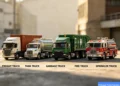
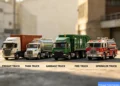
When a runway incident happens, the vehicle rolling up is not the same red truck you see responding to a structure fire downtown. The airport fire truck and the municipal fire truck serve two completely different worlds, and the differences go far beyond paint schemes and price tags. An airport crash tender is built for speed on flat pavement, massive water volume, and off-road capability across grass or mud, while a municipal fire truck is engineered for urban maneuverability, ladder reach, and hose-carrying capacity. Having spent years around both types in fleet operations, I can tell you that the gap in design philosophy is enormous, and understanding it matters if you are involved in any kind of heavy vehicle procurement.
Real-World Usage Scenarios: Where Each Truck Lives
The operational environment dictates nearly every design choice in fire apparatus. Municipal fire trucks operate in a world of narrow streets, tight intersections, and residential neighborhoods. They need to be nimble enough to navigate parked cars and low-hanging branches. Their job is to reach a structure fire, connect to a hydrant, and deliver water through hoses that crews pull by hand. The truck itself is a mobile tool cabinet as much as a water pump.
Airport fire trucks, officially known as Aircraft Rescue and Fire Fighting (ARFF) vehicles, operate on a completely different canvas. They respond to runways, taxiways, and the grassy or paved areas surrounding them. The critical difference is that an airport truck must reach the midpoint of the longest runway in under three minutes during an emergency. That performance requirement, set by the Federal Aviation Administration (FAA), dictates a vehicle that can hit 50 mph or more in under 25 seconds, even when fully loaded with thousands of gallons of water and foam concentrate.
From my time observing municipal fleet operations, the typical pumper truck spends most of its life at moderate speeds, often idling at scenes while crews work. The engine hours accumulate quickly, but the drivetrain rarely sees sustained high-speed operation. In contrast, an ARFF vehicle is driven hard, fast, and often across rough terrain adjacent to runways. The suspension, braking system, and tire specifications are all built for that specific abuse.
Another key scenario difference is the firefighting agent itself. Municipal trucks primarily use water, with some foam capability for flammable liquid fires. Airport trucks carry a combination of water, foam, and dry chemical agents. The foam used at airports is often a specialized formulation designed to coat jet fuel spills quickly, preventing ignition. This means the onboard pumping and proportioning systems are far more complex than what you find on a standard municipal pumper.
Performance Breakdown: Engine, Torque, and Payload
Looking at the powertrain, the differences become stark. A typical municipal fire engine in the United States is often built on a commercial chassis, like a Freightliner or International, with a diesel engine in the 350 to 500 horsepower range. The torque curve is tuned for hauling heavy loads through city traffic, but top speed is rarely a priority. These trucks are governed to around 65 or 70 mph because they simply do not need to go faster.
An airport crash tender is a different beast entirely. These vehicles are usually custom-built on heavy-duty chassis, often with four-wheel drive and all-wheel steering. Engines can range from 600 to over 1,000 horsepower. For example, the Rosenbauer Panther, a common ARFF vehicle, offers engine options that push the truck to speeds around 70 mph with a gross vehicle weight rating (GVWR) that can exceed 60,000 pounds. The acceleration is brutal by fire apparatus standards, and the braking systems are massive to bring that weight to a stop.
Payload capacity is another major divider. A standard municipal pumper carries around 500 to 1,000 gallons of water, depending on the tank size. That is sufficient for initial attack until a hydrant is hooked up. An airport truck, on the other hand, carries significantly more. Smaller ARFF vehicles might hold 1,500 gallons, while larger ones, like the Oshkosh Striker, can carry over 3,000 gallons of water, 500 gallons of foam, and 500 pounds of dry chemical. This weight requires a completely different suspension setup, often using a rigid frame and heavy-duty axles.
Fuel efficiency is a topic that rarely comes up in fire apparatus discussions, but it matters for fleet budgets. Municipal pumpers, with their stop-and-go duty cycles, might average 3 to 5 miles per gallon. Airport trucks, despite their high horsepower, often operate in a similar range because they spend a lot of time idling during standby duties. However, the sheer engine size means fuel costs are consistently higher for an airport fleet per vehicle per year. According to data from the U.S. Department of Energy’s vehicle technology office, heavy-duty emergency vehicles are among the least fuel-efficient classes, which is an accepted operational cost in this industry.
Maintenance and Lifecycle Cost Analysis
Maintenance is where the operational budget really tells the story. Municipal fire trucks have a predictable maintenance cycle. They are serviced based on mileage and engine hours, with a heavy emphasis on pump testing and hose inspections. The drivetrain components, while heavy-duty, are commercially available and relatively easy to source. A good mechanic with commercial truck experience can handle most repairs on a municipal pumper.
Airport trucks are a different maintenance challenge. The custom chassis, complex foam proportioning systems, and specialized pumps require factory-trained technicians. Parts are not always available off the shelf, and lead times can stretch into weeks. From my experience in fleet management, the annual maintenance cost for an ARFF vehicle can easily be double that of a standard municipal pumper. This is not due to poor engineering, but rather to the complexity and low production volumes of these specialized units.
Lifecycle costs also diverge significantly. A municipal fire engine is typically expected to serve 15 to 20 years, with a major refurbishment around the halfway point. The depreciation curve is relatively predictable. An airport crash tender, however, is often replaced on a 10 to 15-year cycle, partly due to regulatory standards and partly due to the extreme stress placed on the components. The resale market for used ARFF vehicles is thin, which means the residual value is lower as a percentage of the initial purchase price.
When looking at total cost of ownership, the initial purchase price is just the tip of the iceberg. A new municipal pumper can cost anywhere from $500,000 to $800,000, depending on specifications. A new ARFF vehicle, like a Striker or Panther, typically starts around $800,000 and can easily exceed $1.2 million with all the required equipment and certifications. These figures are supported by industry procurement data from various state and municipal bidding documents.
For fleet managers, the maintenance schedule dictates staffing needs. A municipal fleet can often rely on in-house mechanics with standard certifications. An airport operation, especially a smaller regional airport, might need to contract out ARFF maintenance to the manufacturer or a specialized third-party provider. This adds a logistical layer to the cost analysis that cannot be ignored. If you are evaluating heavy-duty vehicle solutions for a specialized role, it is worth considering how the specialized vehicle manufacturing sector approaches build quality and serviceability.
Direct Comparison: Airport Fire Truck vs. Municipal Fire Truck
To make the differences clear, it helps to put the specifications side by side. The following table represents typical configurations based on industry standards and manufacturer specifications, not a specific model from any single brand.
| Specification | Airport Fire Truck (ARFF) | Municipal Fire Truck (Pumper) |
|---|---|---|
| Primary Role | Runway fire response, aircraft rescue | Structure fire response, hydrant support |
| Typical Water Tank Capacity | 1,500 – 3,000 gallons | 500 – 1,000 gallons |
| Engine Horsepower | 600 – 1,000+ HP | 350 – 500 HP |
| Top Speed | 70 – 80 mph | 60 – 70 mph (governed) |
| Drive Configuration | 4×4 or 6×6, all-wheel steering | 4×2 or 6×4, conventional steering |
| Acceleration Requirement | 0-50 mph in under 25 seconds | No specific standard |
| Foam Capacity | 500+ gallons | 20 – 50 gallons (portable) |
| Chassis Type | Custom-built, heavy-duty | Commercial truck chassis |
| Typical GVWR | 50,000 – 70,000 lbs | 30,000 – 40,000 lbs |
| Estimated Purchase Price | $800,000 – $1.2M+ | $500,000 – $800,000 |
| Expected Service Life | 10 – 15 years | 15 – 20 years |
| Primary Firefighting Agent | Water, foam, dry chemical | Water, limited foam |
The table highlights the core truth: these are different machines for different jobs. The municipal truck is a versatile workhorse, capable of handling a wide range of emergencies in an urban environment. The airport truck is a specialized piece of equipment, optimized for a single high-stakes scenario. The cost difference is justified by the performance envelope and the life-saving capability required on an airfield.
Another point to consider is the pump system. Municipal fire pumps are rated by flow, typically 1,000 to 2,000 gallons per minute (GPM) at a specific pressure. Airport trucks have pumps that can deliver similar flow, but they are also designed to inject foam concentrate at precise ratios, often 1%, 3%, or 6%. This requires a proportioning system that is calibrated and tested regularly, adding to the maintenance complexity.
Buyer Decision Factors: Fleet Size, Terrain, and Workload
If you are in the market for a fire apparatus, the decision between an airport truck and a municipal truck is not really a choice. It is dictated by your operational mandate. However, there are nuances in how you spec the vehicle based on your specific needs.
Fleet size matters. A large municipal department might have dozens of pumpers and ladder trucks, allowing for economies of scale in parts inventory and training. A regional airport might only have two or three ARFF vehicles, meaning each unit must be highly reliable because there is no backup if one is out of service. This drives a preference for proven, robust designs with strong manufacturer support networks.
Terrain is another factor. A municipal department serving a dense city with narrow streets might opt for a shorter wheelbase pumper with a tighter turning radius. An airport serving a coastal area with sandy soil might need an ARFF vehicle with enhanced off-road capability and tire pressure control systems. The terrain directly impacts the suspension and tire specifications.
Workload is the final consideration. A municipal pumper in a busy city might run thousands of calls per year, accumulating engine hours rapidly. The maintenance schedule must be aggressive. An airport truck at a small general aviation field might only see a handful of actual emergencies per year, but it must be ready to roll at a moment’s notice. This means the truck spends a lot of time idling and undergoing routine checks, which is a different kind of wear and tear.
For departments that operate both types of vehicles, cross-training mechanics is a challenge. The skill sets are different, and the diagnostic tools are not always compatible. Some fleet managers I have spoken with handle this by maintaining separate maintenance bays for ARFF vehicles. This is an operational cost that is often overlooked during the budgeting phase.

When evaluating manufacturers, it is worth looking at the production quality and the availability of spare parts. In the fire service, downtime is not an option. Some departments have found that exploring options from global manufacturers, including those offering OEM truck manufacturing capabilities, can provide cost-effective solutions without sacrificing reliability, especially for support vehicles that are not frontline apparatus.
Structural and Chassis Engineering Differences
The frame and body construction of these two truck types reveal a lot about their intended use. Municipal fire trucks are often built with a body mounted on a commercial chassis. The frame rails are strong, but they are a compromise between cost and rigidity. The body compartments are typically made of aluminum or galvanized steel, designed to resist corrosion from water and chemicals.
Airport trucks use a different approach. The body is often an integral part of the chassis design, creating a monocoque or semi-monocoque structure. This provides immense torsional rigidity, which is necessary when driving at high speeds over uneven ground. The body panels are often made of specialized composites or stainless steel to resist the corrosive effects of jet fuel and firefighting chemicals.
The suspension systems also differ. Municipal trucks use leaf springs or air suspension on the rear axle for a balance of ride comfort and load stability. Airport trucks often use heavy-duty coil springs or a combination of leaf and coil, designed to absorb the shock of hitting runway lights or other obstacles at speed. The shock absorbers are larger and more robust.
Steering geometry is another area of divergence. Municipal trucks have a standard front-axle steering setup, which is adequate for city streets. Airport trucks, especially larger models, often feature all-wheel steering. This allows them to maneuver in tight spaces around hangars and to make quick turns on the apron. The turning radius can be surprisingly small for such a large vehicle, which is a critical safety feature in an emergency.
Braking systems are also upgraded on ARFF vehicles. They use massive air disc brakes or multi-disc wet brakes to handle the high kinetic energy of a fast-moving, heavy vehicle. These brakes are designed to withstand repeated hard stops without fading. Municipal trucks, while equipped with good brakes, do not face the same thermal demands. From a safety perspective, the braking performance of an airport truck is one of its most critical features.
Operational Training and Crew Requirements
The human element is often the most overlooked part of the fire apparatus equation. Driving an airport crash tender requires a different skill set than driving a municipal pumper. The high speed, heavy weight, and unique handling characteristics demand specialized training. Many airports require their drivers to complete a specific ARFF driver training program that goes beyond a standard commercial driver’s license (CDL).
Municipal fire truck drivers, on the other hand, typically need a CDL with appropriate endorsements, but the driving is more predictable. They are navigating city streets at moderate speeds, and the primary challenge is spatial awareness in tight quarters. The training focuses on pump operation and aerial ladder setup, not on high-speed maneuvering.
Crew configuration also differs. A municipal pumper typically has a crew of four to five firefighters. They all have specific roles: driver, pump operator, and interior attack team. An airport truck usually carries a smaller crew, often three to four personnel, but each member is cross-trained to operate the turrets, foam systems, and rescue tools. The ARFF crew must be able to perform a rescue and fire suppression simultaneously.
The communication systems on board also reflect the operational environment. Municipal trucks use standard fire department radios to communicate with dispatch and incident command. Airport trucks are equipped with radios that can communicate with air traffic control, the airport operations center, and the fire dispatch center. This adds a layer of complexity to the vehicle’s electronics.
For fleet operators, this means the cost of training is not trivial. It takes time and money to certify a driver on an ARFF vehicle, and that certification must be maintained through regular drills and evaluations. This is an ongoing operational expense that should be factored into the total cost of ownership. The specialized nature of this work is one reason why some airports prefer to lease their ARFF vehicles, transferring the maintenance and training burden to the lessor.
Global Standards and Regulatory Compliance
Regulatory standards are a major driver of design differences. Municipal fire apparatus in the U.S. are often built to standards set by the National Fire Protection Association (NFPA) 1901. This standard covers everything from pump performance to compartment dimensions. It is a comprehensive document that ensures a baseline of safety and performance.
Airport fire trucks are governed by a different standard: NFPA 414. This standard specifies the performance requirements for ARFF vehicles, including acceleration, top speed, water capacity, and agent discharge rates. It is a more demanding standard because the operational environment is more hazardous. The FAA also has its own requirements, which are detailed in Advisory Circular 150/5220-10, covering the number and type of ARFF vehicles required at different categories of airports.
The certification process is also more rigorous for airport trucks. They must undergo a series of performance tests, including a high-speed acceleration test and a foam discharge test, before they are accepted for service. Municipal trucks are tested too, but the emphasis is often on pump flow and pressure, which is easier to verify in a static test.
International operators need to be aware of standards set by the International Civil Aviation Organization (ICAO). ICAO publishes guidance on ARFF vehicle requirements, which many countries adopt into their own regulations. This creates a global market for ARFF vehicles, but it also means that manufacturers must build to multiple standards, which can drive up costs. For a fleet manager, ensuring compliance with all applicable standards is a non-negotiable part of the procurement process.
The complexity of these regulations is one reason why some buyers choose to work with a manufacturer that has a deep understanding of global compliance. It is also why the heavy truck manufacturing sector has become more competitive in this niche, as they offer the ability to customize vehicles to meet specific regulatory requirements at a lower price point.
Comparing Firefighting Agent Delivery Systems
The way water and foam are delivered from the truck is fundamentally different. A municipal pumper relies on hoses that are manually deployed by firefighters. The pump creates pressure, and the hose nozzle controls the flow and pattern. This is a flexible system that allows crews to attack a fire from various angles and distances.
An airport truck is equipped with roof-mounted turrets, also known as bumper turrets or roof turrets, which can be operated remotely from inside the cab. These turrets can deliver a massive flow of water or foam over a long distance, allowing the crew to cool down a fuel spill or an engine fire from a safe distance. Some turrets are even controlled by joysticks, allowing for precise aiming without exposing the crew to heat and smoke.
The pump system on an airport truck is also designed to deliver a higher pressure to the turrets. While a municipal pumper might deliver 150 PSI at the nozzle, an ARFF turret might need 250 PSI or more to achieve the required throw distance. This requires a more powerful pump and larger diameter piping throughout the vehicle.
Foam proportioning is another area of complexity. Municipal trucks might have a simple foam eductor that injects concentrate into the hose line. Airport trucks have a precisely calibrated injection system that can vary the foam percentage based on the type of fuel and the discharge rate. This system must be tested regularly to ensure accuracy, as using the wrong foam concentration can render the agent ineffective.
For fleets that operate both types of vehicles, maintaining the different agent delivery systems is a significant undertaking. The training for pump operators is also different. A municipal pump operator needs to understand pressure and flow calculations for hose lines. An ARFF driver needs to understand turret trajectory and foam chemistry. These are two different skill sets within the same fire service.
Evaluating the Total Cost of Ownership
When budgeting for new fire apparatus, the purchase price is only the starting point. The total cost of ownership (TCO) over the vehicle’s life is what really matters. For a municipal pumper, the TCO includes fuel, routine maintenance, pump tests, and periodic refurbishment. The costs are relatively predictable and spread out over a long service life.
For an airport truck, the TCO is higher due to several factors. The initial purchase price is higher, the maintenance costs are higher, and the service life is shorter. Additionally, the cost of specialized training and certification for the crew must be included. When you add it all up, the annual cost of owning an ARFF vehicle can be two to three times that of a municipal pumper.
However, the cost is justified by the risk. An aircraft accident can involve hundreds of passengers and millions of dollars in equipment. The ability to respond quickly and effectively is not just a regulatory requirement; it is a moral imperative. The high cost of ARFF vehicles is a reflection of the high stakes involved.
Fleet managers should also consider the cost of downtime. If a municipal pumper is out of service for a week, the department can often rely on neighboring departments for mutual aid. If an airport’s only ARFF vehicle is out of service, the airport may be forced to close its runways, which has enormous economic consequences for the airlines and the local economy. This is why redundancy and reliability are so critical in ARFF fleets.
For those looking to manage costs without compromising on quality, exploring alternative sourcing options is a valid strategy. Some operators have found that working with a Chinese truck manufacturer offers a favorable balance of cost and capability, particularly for non-critical support vehicles or for fleets in emerging markets where budget constraints are tighter.
Future Trends and Technological Advancements
The fire apparatus industry is not static. Both municipal and airport trucks are seeing technological advancements that are changing how they are built and operated. Electric powertrains are starting to make inroads, although the heavy weight and high power demands of fire trucks present significant challenges for current battery technology.
For municipal trucks, the trend is toward more compact and maneuverable designs, especially for urban environments. There is also a push toward better fuel efficiency and reduced emissions, leading some departments to experiment with hybrid powertrains. The use of telematics is also growing, allowing fleet managers to monitor vehicle health and driver behavior in real time.
For airport trucks, the focus is on improving acceleration and off-road capability. Some manufacturers are exploring the use of electric motors to supplement the diesel engine, providing a boost of power for the critical acceleration phase. There is also research into using advanced materials to reduce weight, which would improve both speed and fuel efficiency.
Autonomous technology is also being explored, although it is unlikely to replace human drivers in the near future. However, semi-autonomous features like automatic braking and collision avoidance are becoming more common. These systems can help prevent accidents during high-speed responses, which is a major safety concern for ARFF operations.
Another trend is the integration of digital communication systems. Airport trucks are being equipped with advanced display systems that show the location of the aircraft, the status of the fire, and the position of other emergency vehicles. This situational awareness is invaluable in the chaotic environment of a runway incident. Municipal trucks are also getting similar systems, but the integration with airport operations is unique to ARFF vehicles.
FAQ: Common Questions About Fire Truck Types
Here are answers to some of the most common questions I hear from fleet managers and operators about the differences between these two types of fire apparatus.
What is the main difference between an airport fire truck and a municipal fire truck?

The main difference is the operational focus. An airport fire truck is designed for high-speed runway response and carries large amounts of foam and water for fuel fires. A municipal fire truck is designed for structure fires and urban response, relying on hydrants and hose lines. The chassis, pump systems, and agent delivery mechanisms are all optimized for these different roles.
Can a municipal fire truck be used at an airport?
In some very small airports with low traffic, a municipal truck might be used as a supplementary vehicle. However, it does not meet the FAA or ICAO performance standards for ARFF response. The acceleration, water capacity, and off-road capability are insufficient for a large aircraft incident. It is not a recommended substitute for a dedicated ARFF vehicle.
Why are airport fire trucks so much more expensive than municipal trucks?
Airport trucks are built on custom chassis with high-horsepower engines, all-wheel drive, and complex foam proportioning systems. They are produced in much lower volumes than municipal trucks, which are often built on commercial chassis. The engineering and certification costs are spread over fewer units, driving up the price. The performance requirements are also much more demanding.
How often does an airport fire truck need to be replaced?
The typical service life of an ARFF vehicle is 10 to 15 years, depending on the operating environment and maintenance practices. Some agencies extend this by refurbishing the vehicle, but the high-stress nature of the work often makes replacement more cost-effective. Municipal pumpers can often last 15 to 20 years with proper maintenance.
What is the most important maintenance task for an airport fire truck?
The most critical maintenance task is testing and calibrating the foam proportioning system. If the foam concentration is incorrect, the firefighting agent will be ineffective. Regular pump tests and checks of the turret operations are also essential. The braking system and suspension should be inspected frequently due to the high-speed, off-road use.
Are there any cost-effective alternatives to buying a new airport fire truck?
Some airports choose to buy used ARFF vehicles or refurbish older models. However, the availability of used vehicles is limited, and the remaining service life may be short. Another option is to explore manufacturers that offer competitive pricing without compromising on quality. Some global manufacturers, particularly in Asia, offer used diesel trucks for sale under 10000 that can be converted for support roles, though these are not suitable for frontline ARFF duties.
Final Thoughts on Choosing the Right Apparatus
Choosing between an airport fire truck and a municipal fire truck is not a matter of which is better, but which is right for the job. The municipal truck is a generalist, ready to handle a wide range of emergencies in a city or town. The airport truck is a specialist, honed for the specific and extreme demands of aircraft rescue and firefighting.
From a fleet management perspective, the decision comes down to your operational mandate, your budget, and your risk tolerance. If you are running a municipal department, you