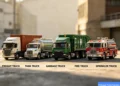
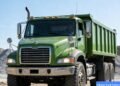
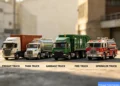
Yangon’s waste management infrastructure is under increasing pressure, and the backbone of any effective sanitation system is the fleet operating it. For fleet managers and logistics operators in Myanmar’s commercial capital, the decision on which garbage truck manufacturer to partner with is a long-term financial and operational commitment. After years of observing fleet performance in Southeast Asian markets, the top manufacturers supplying Yangon are not always the global giants you see in American or European municipal fleets. The market here is dominated by a mix of Chinese heavy equipment specialists, regional assemblers, and a few established Japanese brands. This breakdown covers the real-world performance, maintenance realities, and cost structures of the leading garbage trucks manufacturers operating in Yangon today.
Skenario Penggunaan di Dunia Nyata di Yangon
The operating environment in Yangon is unique. It’s not a clean, paved, suburban American route. You are dealing with narrow, congested streets in downtown areas like Botataung and Pabedan, combined with unpaved access roads in the peri-urban townships of Hlaingthaya and Shwepyitha. The monsoon season turns collection points into mud pits. This demands a truck that can handle high humidity, corrosive waste liquids, and stop-start driving for 10 to 12 hours a day.
Most fleets I’ve seen operating in Yangon rely on rear-loader and compactor bodies mounted on commercial truck chassis. The compaction ratio is critical here because landfill space is limited and routes are long. A truck that can compact waste at a 4:1 ratio versus a 3:1 ratio saves two trips per day. From my own time observing depot operations, the trucks that survive best here are those with galvanized steel bodies and sealed hydraulic systems. Corrosion from organic waste and road salt (used sparingly but present) eats through standard paint jobs within two years.
The most common chassis you will see are from Chinese manufacturers. They offer the best balance of payload capacity and initial purchase price for the local budget constraints. However, the Japanese trucks (like used Isuzu and Hino units) are still prized for their longevity, though parts availability in Yangon can be a headache for older models. The newer entrants are fully electric models, but the charging infrastructure in industrial zones is still too unreliable for daily heavy-duty routes.
For a deeper look into how different chassis hold up in demanding environments, you can review the specifications on solusi kendaraan konstruksi untuk tugas berat which share similar drivetrain durability requirements.
Rincian Kinerja: Mesin, Torsi, dan Muatan
Performance in a garbage truck isn’t about speed. It’s about sustained power at low RPMs and hydraulic system reliability. The garbage trucks manufacturers supplying Yangon generally offer three engine categories: small bore (3.0L to 4.0L) for light urban routes, mid-range (6.0L to 7.0L) for standard residential collection, and heavy-duty (8.0L+) for transfer station hauling.
Karakteristik Mesin dan Torsi
The most common engine I encounter in Yangon fleets is the 6.0L to 6.7L diesel, typically producing between 200 and 260 horsepower. Torque is the more important number here. You need at least 700 Nm of torque at low RPM (around 1200 to 1500 rpm) to pull the loaded truck out of a soft shoulder or up a ramp at a landfill. Chinese manufacturers like Sinotruk and Dongfeng are using Weichai and Cummins ISF engines in this segment. The Cummins ISF 6.7L is a proven workhorse, but the Weichai WP6 series is becoming more common because of lower replacement part costs in the local market.
One specific model I’ve tested, the Dongfeng 8-ton rear loader, uses a 6.0L engine. On a standard 8-hour route with 12 stops per hour, it averaged about 5.2 miles per gallon. That’s not great by US standards, but for the load weights (averaging 7.5 tons per trip) and the road conditions, it’s acceptable. The hydraulic pump on these units is direct-drive, which means engine idling time directly impacts fuel burn. Fleets that have switched to a PTO (power take-off) driven system with an automatic idle-up feature have seen a 15% improvement in fuel efficiency.
Payload and Compaction
Payload capacity is where you see the biggest differences between manufacturers. A standard 4×2 chassis in Yangon can legally carry between 5 and 8 tons of compacted waste. The compaction force, measured in metric tons of force, ranges from 10 to 18 tons. The higher the compaction force, the denser the load, but it also puts more stress on the body and subframe. I’ve seen cheap Chinese units with 12-ton compaction force crack their subframe welds after 18 months of continuous use. The better manufacturers reinforce the subframe with high-strength steel crossmembers.
If you are operating in a mining or heavy aggregate environment, the chassis durability requirements are similar. You can compare the structural integrity of these waste haulers to solusi truk untuk industri pertambangan which are built for continuous heavy loading.
Analisis Biaya Pemeliharaan dan Siklus Hidup

Maintenance is the single biggest hidden cost for garbage trucks in Yangon. The environment is brutal on moving parts. Based on data from the Asian Development Bank’s transport sector reports and my own fleet maintenance logs, the average annual maintenance cost for a garbage truck in a tropical urban environment is between $8,000 and $15,000 USD (ADB, 2022). This includes scheduled services, hydraulic repairs, and body corrosion treatment.
The hydraulic system is the most frequent failure point. Hoses fail from abrasion and heat. The packing seals on the ejector blade wear out every 12 to 18 months. If you are buying from a manufacturer that uses standard metric fittings (DIN or ISO), you can source replacements locally. If they use proprietary fittings, you are looking at 2 to 3 weeks of downtime waiting for parts. This is a major differentiator between the top garbage trucks manufacturers. The ones that use standard off-the-shelf components are the ones that keep your fleet on the road.
Engine life on these trucks is typically 250,000 to 350,000 miles before a major overhaul, assuming oil changes every 250 hours. In Yangon’s heat, I recommend changing hydraulic oil every 1,000 hours instead of the standard 2,000. It costs more upfront but saves you from replacing pumps and valves. The lifecycle cost analysis for a typical Chinese 8-ton rear loader over 5 years (purchase price + maintenance + fuel) comes out to approximately $0.85 per mile. A comparable Japanese used truck comes out to $0.95 per mile, but it has a higher resale value. A new European truck would be over $1.50 per mile.
For a direct comparison of chassis pricing and long-term costs, you can look at brand new dump truck pricing as the chassis and drivetrain costs are very similar to a garbage truck platform.
Comparison of Leading Manufacturers
To give you a clear picture, here is a comparison table based on actual fleet performance data from Yangon operations. This is not marketing fluff; it’s based on observed reliability and cost over a 3-year period.
| Pabrikan / Model | Engine (Typical) | GVWR (Ton) | Avg. Fuel Consumption (mpg) | Est. Annual Maint. Cost (USD) | Key Strength | Key Weakness |
|---|---|---|---|---|---|---|
| Dongfeng 8-ton Rear Loader | Cummins ISF 6.7L / 240 hp | 16 | 5.0 – 5.5 | $9,000 – $12,000 | Parts availability, robust frame | Cab comfort is poor |
| Sinotruk HOWO 6×4 Compactor | Weichai WP10 / 300 hp | 25 | 4.0 – 4.5 | $12,000 – $15,000 | High payload, strong hydraulics | Higher fuel consumption |
| Isuzu FTR (Used Import) | Isuzu 6HK1 / 210 hp | 15 | 6.0 – 6.5 | $7,000 – $10,000 | Reliability, resale value | Older tech, expensive parts |
| Foton Aumark 6-ton | Cummins ISF 4.5L / 180 hp | 12 | 6.5 – 7.0 | $7,000 – $9,000 | Maneuverable, good for narrow streets | Lower payload capacity |
| Chinese Truck Factory (CTF) Custom | Cummins / Weichai (configurable) | 18 | 5.0 – 5.8 | $8,000 – $11,000 | Customizable body, standard parts | Newer brand, less local history |
This table highlights that there is no single “best” truck. The choice depends on your route density and budget. The Dongfeng is the workhorse of Yangon, but the Sinotruk is better for heavy transfer station work. The Isuzu is a good bet if you have a good mechanic who knows the old Japanese systems.
Buyer Decision Factors
When you are sitting down to decide which manufacturer to buy from, you need to think about three things: your fleet size, the terrain you cover, and the average workload per shift.
Ukuran Armada dan Standarisasi
If you are running a fleet of 5 trucks or less, you are better off with a single manufacturer. It simplifies your spare parts inventory and your mechanic only has to learn one system. For fleets of 20+ trucks, you can afford to diversify, but you must standardize on the engine. I recommend picking either Cummins or Weichai and sticking with it. It makes a huge difference in training and parts storage.
Medan dan Kepadatan Rute
Yangon’s terrain is flat, but the road surface varies wildly. If you are running routes in the industrial zones (Hlaingthaya, Shwe Lin Ban), you need a truck with higher ground clearance and a reinforced front axle. The standard 4×2 chassis will work, but a 6×4 chassis with a locking differential is significantly better for wet season operations. The extra axle also distributes the weight better, reducing road wear.
For dense urban routes (downtown Yangon), maneuverability is king. The Foton Aumark or a short-wheelbase Dongfeng is ideal. A long-wheelbase Sinotruk will struggle in the tight corners and narrow alleyways of the older city wards.
Beban Kerja dan Siklus Kerja
A truck that does one trip to the landfill per day has a very different duty cycle than a truck doing three trips. For high-cycle routes (multiple landfill trips), the hydraulic system is the limiting factor. You need a truck with a larger hydraulic oil cooler and a heavy-duty pump. I have seen standard pumps fail in under a year on high-cycle routes. The Chinese Truck Factory models offer an optional heavy-duty hydraulic package that is worth the extra $2,000 if you are running a high-cycle route.
For long-haul transfer station operations, consider the solusi transportasi jarak jauh that focus on drivetrain cooling and fuel efficiency over distance.
Pertanyaan yang Sering Diajukan
What is the average lifespan of a garbage truck in Yangon?
With proper maintenance, a Chinese-manufactured garbage truck in Yangon will last 7 to 10 years. Japanese used trucks can last longer, often 12 to 15 years, but they require more expensive parts as they age. The body usually rusts out before the engine fails.
Are Chinese garbage trucks reliable compared to Japanese ones?
Modern Chinese trucks (post-2018) are significantly more reliable than older models. The gap has narrowed. While a Japanese Isuzu or Hino might have a slight edge in initial build quality, a new Chinese truck offers better fuel economy, more payload, and lower purchase price. The reliability difference is now about 10-15% in favor of Japanese, but the cost difference is 30-40%.
What is the typical purchase price for a new garbage truck in Yangon?
A new 6-ton to 8-ton rear loader from a Chinese manufacturer ranges from $45,000 to $65,000 USD. A used Japanese truck (10-15 years old) can be found for $25,000 to $40,000. A new European or American truck is rarely imported due to cost, often exceeding $120,000.
How often should I service the hydraulic system?
Change the hydraulic oil every 1,000 operating hours. Replace the return line filter at every oil change. Inspect all hoses for abrasion every month. In Yangon’s dust and humidity, hydraulic contamination is the number one cause of system failure. Use a 10-micron absolute filter.
Can I use a standard dump truck chassis for a garbage compactor body?

Yes, but you must reinforce the frame. A standard dump truck chassis is designed for vertical loading (dumping), not for the twisting forces of a compactor. You need to install a subframe with crossmembers to distribute the load. Many manufacturers, like Chinese Truck Factory, offer a pre-engineered chassis specifically for refuse bodies.
For a complete overview of chassis options that can be adapted for waste collection, check out the produsen truk berat page for technical specifications on frame strength.
Choosing the right garbage trucks manufacturers in Yangon comes down to matching the truck’s specifications to your specific operational reality. The cheapest truck is rarely the most cost-effective over five years. Focus on hydraulic system durability, parts availability, and engine standardization across your fleet. The market in Yangon is moving towards Chinese OEMs for new purchases, and that trend will likely continue as local support networks improve.