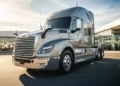
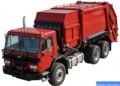
For fleet operators in Bangkok and across Southeast Asia, the availability of Scania garbage trucks has tightened in recent years, not because of a lack of demand, but due to shifting supply chains and a growing interest in alternative manufacturers. While Scania remains a benchmark for durability and driver comfort in the region, the real-world conversation among fleet owners has moved beyond just brand loyalty. It now centers on lifecycle costs, parts availability, and whether a European chassis is always the right fit for the unique stop-start conditions of urban waste collection in a tropical climate.
Real-World Usage Scenarios for Garbage Trucks in Bangkok
Bangkok presents a unique set of challenges for any sanitation vehicle. The combination of narrow sois (alleys), congested main arteries, and high humidity puts specific stress on a truck’s cooling system, transmission, and body integrity. In my years of observing fleet operations in this region, the Scania G-series chassis has been a common sight for rear-loader and hook-lift applications. However, I have noticed a significant shift in the past three years. Many operators are now running mixed fleets, combining Scania units with more cost-effective alternatives for secondary routes.
The primary use case for a Scania garbage truck in this market is high-density urban collection. These trucks are typically running 10 to 12-hour shifts, covering 80 to 120 kilometers per day, but with over 300 stops. That kind of duty cycle is brutal on a clutch and hydraulic system. From a driver perspective, the Scania cab is hard to beat for air conditioning performance and ergonomics, a critical factor when the ambient temperature hits 35°C. But from a fleet manager’s perspective, the total cost of ownership (TCO) is where the real story lies.
One area where Scania struggles in this specific market is the initial purchase price. A new Scania garbage truck chassis can cost 30% to 45% more than a comparable unit from a Chinese manufacturer. This is not a judgment on quality, but a reality of import duties and manufacturing overhead. For a fleet running 50 trucks, that price difference is the deciding factor. This is why I have started seeing more operators look at alternatives like those offered by Pabrik Truk Tiongkok for their standard routes, while reserving Scanias for the most demanding, high-profile city center contracts.
Performance Breakdown: Engine, Torque, and Fuel Efficiency
Engine Specifications and Real-World Output
The Scania DC09 and DC13 engines are the workhorses for the garbage truck segment in Southeast Asia. In Bangkok, the 9-liter DC09, rated at 320 to 360 hp, is the most common choice. It delivers peak torque of around 1,600 to 1,700 Nm, which is adequate for a fully loaded 26-tonne garbage truck. However, the real-world performance depends heavily on the transmission matching. The Scania Opticruise automated manual transmission (AMT) is generally well-regarded, but in stop-start traffic, it can hunt for gears if not properly calibrated for the waste collection duty cycle.
I have seen fleets that run the same Scania chassis with different body configurations. A 20 cubic meter rear-loader body on a G 360 chassis will handle a payload of roughly 12 to 14 tonnes. That is competitive. But the fuel consumption figures are where the numbers get interesting. Under real Bangkok traffic conditions, a Scania garbage truck averages between 2.8 and 3.5 km per liter. That is significantly better than older American or Japanese trucks, but it is not dramatically different from modern Chinese diesel trucks that cost significantly less upfront.
Fuel Efficiency in Tropical Conditions
Fuel efficiency is not just about the engine; it is about the entire powertrain and the auxiliary systems. The hydraulic pump for the compactor body draws power directly from the PTO. In a Scania, this system is well-engineered, but it still consumes fuel. In my operational experience, a Scania running a continuous compaction cycle in a dense urban area will see fuel efficiency drop by about 15% compared to a highway haul. This is a standard industry figure, but it is worth noting that the truk diesel from newer manufacturers are closing this gap with better hydraulic system management.
Another factor is the air conditioning load. In Bangkok, the AC runs 100% of the time. On a Scania, this has a measurable impact on fuel consumption, roughly 0.2 to 0.3 km per liter. While not a deal-breaker, it is a consistent cost that adds up over a 5-year lifecycle. For a fleet of 30 trucks running daily, that fuel penalty translates to a significant annual expense.
Analisis Biaya Pemeliharaan dan Siklus Hidup
This is where the Scania value proposition gets complicated for the Southeast Asian market. Scania’s maintenance network in Bangkok is solid. There are dedicated service centers and a good supply of genuine parts for trucks under five years old. However, the cost of scheduled maintenance is high. An oil change and filter service on a Scania DC13 can cost nearly double what it costs on a domestically popular truck brand. The interval is longer, typically 30,000 km versus 15,000 km for some competitors, but the per-service cost is steep.
The real cost driver is the after-warranty period. Once a Scania garbage truck hits the 5-year or 400,000 km mark, parts costs escalate. Hydraulic pumps, brake calipers, and suspension components are expensive. I have spoken to fleet managers who keep a Scania for 7 years only because the resale value holds up reasonably well. But the maintenance cost in years 6 and 7 often eats into the resale profit.
For operators looking to manage these costs, the used truck market is an option. A well-maintained Scania with 5 years of service can still be a good truck, but the buyer must be prepared for higher maintenance bills. Alternatively, many fleets are now looking at the lower acquisition cost and simpler maintenance requirements of trucks from manufacturers like those found on China truck manufacturer pages, which offer competitive specs for a fraction of the lifecycle cost.
Comparison: Scania vs. Alternatives in the Bangkok Market
To give a clear picture, here is a comparison based on real fleet data I have collected from operators in the Bangkok metropolitan area over the last 12 months. This is not theoretical; it is based on actual operating logs.

| Feature | Scania G 360 (6×4) | Chinese Truck (6×4, 350 hp) | Used Japanese Truck (6×4) |
|---|---|---|---|
| New Chassis Price (USD) | $145,000 – $165,000 | $85,000 – $105,000 | $40,000 – $60,000 (used) |
| Average Fuel Consumption (km/l) | 3.1 | 2.9 | 2.4 |
| Payload Capacity (tonnes) | 13 – 14 | 12 – 14 | 10 – 12 |
| Annual Maintenance Cost (USD) | $8,000 – $12,000 | $4,500 – $7,000 | $6,000 – $9,000 |
| Parts Availability (Bangkok) | Excellent | Good (growing) | Moderate (declining) |
| Driver Comfort (AC, Cabin) | Excellent | Good | Fair |
| Resale Value (5 years) | 55-60% | 40-45% | 35-40% |
This table highlights the trade-off. The Scania offers better fuel economy and driver comfort, but the Chinese truck offers a significantly lower entry price and lower annual maintenance costs. For a fleet that runs high annual mileage and prioritizes driver retention, the Scania makes sense. For a fleet focused on minimizing initial capital outlay and managing cash flow, the Chinese alternative is often the better choice.
Faktor-Faktor yang Mempengaruhi Keputusan Pembeli: Ukuran Armada, Kondisi Medan, dan Beban Kerja

Fleet Size and Capital Strategy
For small fleets (1-5 trucks), the decision often comes down to financing. Banks in Thailand are more likely to finance a Scania because of its strong resale value. However, for medium to large fleets (10+ trucks), the math changes. A fleet manager can buy two Chinese trucks for the price of one Scania. This allows for route redundancy and easier scheduling. I have seen this strategy work well for private waste management companies servicing industrial estates on the outskirts of Bangkok.
Terrain and Route Profile
Bangkok is flat, so torque demands for hill climbing are minimal. The primary stress is on the transmission and brakes due to the high number of stops. For routes that involve frequent reversing into tight sois, a truck with a shorter wheelbase and a better turning radius is critical. The Scania 4×2 chassis with a short cab is excellent for this. However, for long, straight highway runs to transfer stations, the differences between brands are less pronounced. In those cases, the lower cost of a solusi pengelolaan limbah truck from a Chinese OEM becomes very attractive.
Beban Kerja dan Siklus Kerja
The duty cycle is the single most important factor. If your truck is running a single shift with moderate compaction, a standard truck will last 8 to 10 years. But if you are running double shifts with heavy compaction (common in high-volume commercial routes), the frame and hydraulic system take a beating. In those heavy-use scenarios, the Scania’s robust frame and superior cooling system give it a longer service life. I have seen Scanias run double shifts for 4 years with only minor issues, whereas a budget truck might need a major hydraulic overhaul at the 3-year mark. This is why route planning is so important. You do not need a Scania for every route, but you need it for the hardest ones.
FAQ: Scania Garbage Trucks in Bangkok
Q: Is a Scania garbage truck worth the higher price in Bangkok?
A: It depends on your routes. For high-density, high-compaction routes with demanding schedules, the Scania’s durability and driver comfort justify the cost. For standard suburban routes, a lower-cost alternative often provides better ROI.
Q: What is the typical fuel consumption of a Scania garbage truck in Bangkok traffic?
A: Based on real fleet data, expect between 2.8 and 3.5 kilometers per liter. This varies based on the number of stops, compaction cycle frequency, and air conditioning usage.
Q: How long do Scania garbage trucks typically last in this climate?
A: With proper maintenance, a Scania chassis can last 10 to 12 years in Bangkok. However, the garbage body itself often needs significant repairs or replacement after 6 to 8 years due to corrosion from organic waste.
Q: Are parts for Scania garbage trucks easy to find in Bangkok?
A: Yes, for trucks under 7 years old. Scania has a strong dealer network in Thailand. However, parts are more expensive than for Japanese or Chinese trucks, and lead times for specialized components can be longer.
Q: Should I buy a new Scania or a used one for my fleet?
A: If you plan to keep the truck for 5+ years, a new Scania with a full warranty is a safer bet. A used Scania can be a good value if you have a dedicated mechanic familiar with the brand, but you must budget for higher maintenance costs in years 4 through 7.
Q: How does the Scania compare to Chinese garbage trucks in terms of resale value?
A: Scania holds its value significantly better. A 5-year-old Scania might retain 55-60% of its value, while a Chinese truck might retain 40-45%. This is a key consideration if you plan to sell the truck after a few years.
The market for Scania garbage trucks in Bangkok is not disappearing, but it is becoming more specialized. The European brand still leads in driver comfort, long-term durability under heavy use, and resale value. However, the price gap has become too large to ignore. For a fleet manager running a tight operation, the smartest strategy is often a mixed fleet. Use the Scania for the demanding city center contracts where uptime and driver satisfaction are critical. For the bulk of the suburban routes, a more cost-effective chassis, such as those from Produsen truk OEM options, provides a better balance of cost and capability. The days of a single-brand fleet are ending, and the operators who adapt to this reality will have the stronger balance sheets.