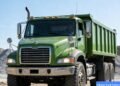
Choosing a dump truck for sand and gravel work comes down to matching the machine to the material density, haul distance, and the terrain you work on daily. Most operators I’ve talked to over the years focus on payload capacity first, but the real cost drivers are often the suspension setup, the body material, and how the truck handles a full load of wet sand. A standard highway dump truck might handle gravel fine, but wet sand can push the GVW over legal limits before the box looks full. You need to spec the truck for the heaviest material you’ll haul, not the average load.
Real-World Usage Scenarios for Sand and Gravel Dump Trucks
Sand and gravel hauling is not a single job profile. It ranges from short hauls out of a pit to a crushing plant, to longer runs delivering washed stone to ready-mix plants or construction sites. Each scenario places different demands on the truck. A truck that works a 10-mile radius from the pit will have different gearing and suspension needs than one doing 60-mile runs to a highway project. In my experience, the short-haul trucks get beat up more on rough pit roads, while the longer-haul units deal with higher average speeds and fuel consumption issues.
For pit-to-plant operations, the cycle time is short, and the truck spends a lot of time waiting under the loader or at the scale. The priority here is a robust rear suspension and a body that sheds material easily. Wet, sticky clay or sand can hang up in a poorly designed box, and that adds downtime for cleaning. On the other hand, over-the-road gravel hauling demands better fuel economy and a comfortable ride, because the driver is spending more hours behind the wheel. The same chassis cannot be optimized for both extremes without compromise.
I have seen fleet operators try to use one spec for all their sand and gravel work, and it always leads to higher maintenance costs. The trucks running off-road need heavier-duty shock absorbers and stronger pivot bushings in the suspension. The highway trucks need a different axle ratio to keep engine rpm low at 55 mph. If you are buying a single truck for mixed duty, you have to decide which part of the job is more critical. That decision is usually driven by the volume of material you move each week, not by the occasional long haul.
Another factor is the loading equipment. A wheel loader with a 5-yard bucket will load a dump truck in three or four passes. If the loader operator is aggressive, the truck frame and body mounts take a beating. I have seen dump truck bodies cracked at the bolsters because the loading was too rough for the body thickness specified. For sand and gravel, the body floor should be at least 3/16-inch thick, but if you are loading with a large excavator, you might need 1/4-inch floor with wear plates. This is not a place to save money, because body repairs are expensive and take the truck out of service.
The terrain inside the pit also matters. Soft, sandy floors can bog down a truck that is not spec’d with the right tires or differential locks. Many aggregate producers run their trucks on packed gravel roads that are well-maintained, but some smaller pits have muddy, uneven surfaces. In those conditions, a tandem-drive axle with a locking differential is worth more than extra horsepower. The driver needs to keep momentum without spinning the tires, and that is more about traction than power.
Rincian Kinerja: Mesin, Torsi, dan Muatan
The engine choice for a sand and gravel dump truck should be based on torque curve, not peak horsepower. A typical load of gravel weighs about 1.4 tons per cubic yard, while sand can weigh up to 1.6 tons per cubic yard when wet. That means a 16-cubic-yard load of sand could weigh over 25,000 pounds just for the material, plus the truck’s tare weight. The engine needs to produce strong torque at low rpm to get that load moving from a stop, especially on a grade.
Most operators in the U.S. spec a 400 to 500 horsepower engine for a tandem-axle dump truck with a 40,000-pound payload rating. The difference between 400 and 500 horsepower is not as important as the torque rise. A heavy-duty engine like the Cummins X15 or the Detroit DD15 produces peak torque around 1,100 to 1,200 rpm, which is where the truck spends most of its time during acceleration. For a truck that runs loaded on highways, the fuel economy is better with a lower horsepower rating, but for pit work, the higher torque rating is more valuable.
Transmission gearing is also critical. A dump truck that runs off-road in a pit needs a deep first gear and a low reverse gear to maneuver in tight spaces. Many operators choose an 18-speed manual or an automated manual transmission with a crawler gear. The torque converter in an automatic can be helpful for smooth engagement on soft ground, but it adds weight and heat. In my experience, the automated manuals are becoming more popular because they protect the driveline from shock loads, which is a common issue with less experienced drivers.
Fuel efficiency for a loaded dump truck is typically between 4 and 6 miles per gallon, depending on the route and load factor. According to the U.S. Department of Energy’s vehicle technology office, heavy-duty trucks account for about 23% of transportation-related greenhouse gas emissions, and fuel economy varies widely based on duty cycle. For sand and gravel haulers, the loaded trip is usually short, so the engine is not at peak efficiency for long periods. The idling time at the loader and the scale can be significant, and that burns fuel without moving material. Some fleets are installing APUs or battery-powered cab heaters to reduce idle time, but that is more common in long-haul operations.
Payload capacity is governed by the chassis ratings, not by the size of the body. A truck with a 46,000-pound rear suspension can legally carry around 20 tons of material, but the body volume must match that weight. If the body is too large, the driver will overload the axles before the box is full, which creates a safety risk and a legal liability. If the body is too small, the truck will be underloaded, and you are hauling air. The key is to calculate the density of the material you haul most often and size the body accordingly.
In real-world operations, I have seen trucks with a 14-cubic-yard body rated for 25 tons of gravel, but when they load wet sand, the weight limit is reached at 12 cubic yards. That means the truck is not using its full volume capacity. Some fleets solve this by running different body sizes for different materials, but that is not practical for a small operation. The smarter approach is to spec the body for the heaviest material and accept that you will not fill it completely when hauling lighter aggregates.
Analisis Biaya Pemeliharaan dan Siklus Hidup
Dump trucks used in sand and gravel work have a harder life than most other vocational trucks. The dust gets into every pivot point, the abrasive material wears out the body, and the constant loading shocks stress the frame. Based on long-term fleet observation, the maintenance cost for a dump truck in aggregate service runs between $0.15 and $0.25 per mile, but that number can spike significantly if the truck is used in a wet, muddy pit where components corrode faster.
The suspension is the first area that shows wear. The rubber bushings in the equalizer and torque rods take a beating from constant articulation on uneven pit roads. I have seen these bushings fail at 50,000 miles in severe service, while the same components last 150,000 miles on a highway truck. The pivot points need regular greasing, and the grease itself gets contaminated with dust, which accelerates wear. Some fleets have switched to self-lubricating bushings or sealed joints, but those are more expensive upfront.
The dump body itself is a major cost item. A steel body will eventually corrode from the inside out, especially if it is used for sand, which retains moisture. The floor and the sidewalls are the most vulnerable areas. Many operators are moving to aluminum bodies for sand and gravel because they do not rust and they weigh less, which allows a higher payload. However, aluminum is softer than steel and can dent more easily from large rock loading. For sand and gravel, the impact is less severe than for riprap or boulders, so aluminum is a viable option.
Tire wear is another significant cost. The tires on a dump truck that runs in a pit wear faster on the edges because of the constant turning on loose surfaces. I have seen tire life as low as 20,000 miles in severe pit service, while the same tire might last 60,000 miles on the highway. The tire pressure needs to be monitored closely because under-inflation causes heat buildup and premature failure. Some fleets are using tire pressure monitoring systems to catch leaks early, and that has reduced roadside failures significantly.
The hydraulic system for the dump hoist is often neglected until it fails. The hydraulic oil gets contaminated with dust, and the cylinder seals wear out. The hoses are exposed to abrasion from the material splashing against the frame. I have seen hydraulic hoses fail because they were rubbing against the frame rail, and the replacement cost is minor, but the downtime is not. A good practice is to inspect the hydraulic hoses and cylinders every 500 hours of operation and replace any that show signs of chafing.
Brake maintenance is also critical, especially for trucks that run loaded on public roads. The brake drums on a dump truck wear faster than on a highway truck because of the frequent stops in pit traffic. The brake shoes need to be inspected regularly, and the slack adjusters need to be checked for proper stroke. According to the Federal Motor Carrier Safety Administration, brake violations are the most common out-of-service citation during roadside inspections, and that is a cost that can be avoided with a good preventive maintenance program.

Comparison: Types of Dump Trucks for Aggregate Hauling
When comparing dump truck configurations, the main decision points are the number of axles, the drive configuration, and the body type. A standard tandem-axle dump truck is the most common choice for sand and gravel work because it offers a good balance of payload capacity and maneuverability. A tridem-axle truck, with three rear axles, can carry more weight but is less maneuverable and has a higher purchase price. The table below summarizes the key differences:
| Konfigurasi | Muatan Tipikal (ton) | Common Use Case | Relative Operating Cost |
|---|---|---|---|
| Single axle dump truck | 10-12 | Small jobs, tight sites | Lower, but limited capacity |
| Tandem axle dump truck | 18-20 | General sand and gravel hauling | Moderate, good balance |
| Tridem axle dump truck | 22-25 | High-volume aggregate hauling | Higher, more tires and axles |
| Articulated dump truck | 25-40 | Off-road pit and quarry work | High, but excellent traction |
The articulated dump truck, or ADT, is a different animal. It is designed for off-road use, with a pivot joint between the cab and the body that allows the rear wheels to follow the terrain. ADTs are common in large quarries and mining operations, but they are not practical for on-road use because they are slow and the tires are not highway-rated. For a small sand and gravel operation that hauls mostly on public roads, a rigid-frame tandem or tridem truck is a better choice.
In terms of fuel consumption, the tandem-axle truck is generally the most efficient for loads up to 20 tons. The tridem truck has more rolling resistance because of the extra axle, and that costs fuel. However, the tridem can carry a larger payload, so the fuel cost per ton of material moved might be lower. The decision comes down to the legal weight limits in your state and the distance you are hauling. If you are running 50 miles loaded, the extra payload of a tridem might justify the higher fuel burn.
The body type also matters. A standard dump body with a tailgate is fine for gravel, but for sand, a body with a rounded interior and a high-angle hoist will dump more cleanly. Some operators use a bathtub-style body, which has a curved floor and no sharp corners where material can hang up. The trade-off is that a bathtub body is heavier and more expensive, but it saves time at the dump site. In my experience, the time savings are worth it if you are making multiple trips per day.
Another comparison point is the suspension type. A spring suspension is simpler and cheaper to maintain, but it does not provide as smooth a ride as an air-ride suspension. For off-road use, a spring suspension is more durable because it can handle the twisting forces without damaging the air bags. However, for a truck that spends significant time on the highway, an air-ride suspension will reduce driver fatigue and protect the load from vibration. Many operators choose a spring suspension for the drive axles and an air suspension for the steering axle, which is a good compromise.
Faktor-Faktor yang Mempengaruhi Keputusan Pembeli: Ukuran Armada, Kondisi Medan, dan Beban Kerja
The size of your fleet changes the way you approach a dump truck purchase. A single-truck owner-operator has to be more conservative with the spec because one breakdown stops the entire business. A larger fleet can afford to run more specialized trucks, because if one truck is down, the others can cover the workload. For a single truck, I would recommend a well-rounded spec that can handle a variety of materials and job sites, even if it is not perfect for any single one.
The terrain is a major factor in the spec. If you are working in a flat area with well-maintained roads, a standard highway ratio axle will give you better fuel economy. If you are working in hilly terrain or in a pit with soft ground, you need a lower axle ratio and possibly a locking differential. I have seen trucks with a 4.10 axle ratio struggle to pull a load up a steep grade, while the same truck with a 4.56 ratio has no problem. The lower ratio costs a little fuel on the highway, but it saves time and clutch wear on the grades.
The workload, measured in tons per day or per week, is the ultimate driver of the truck spec. A truck that makes 10 trips per day with a 20-ton payload moves 200 tons per day. If your operation needs to move 300 tons per day, you either need a bigger truck or more trucks. The cost of a larger truck is not linear; a tridem might cost 15% more than a tandem but only carry 25% more payload. In that case, the tridem is a better value. But if the workload is only 150 tons per day, a tandem is more than enough, and the extra cost of a tridem is wasted.
Driver experience is an often-overlooked factor. A less experienced driver will be harder on the truck, especially when loading and dumping. An automated manual transmission can help protect the driveline from shock loads, and a rearview camera can help with backing under the loader. In my experience, the cost of these features is justified by the reduction in driveline repairs and minor accidents. For a fleet with high driver turnover, these features are even more important.
The availability of parts and service is also a consideration. If you are running a fleet of trucks from a manufacturer that does not have a strong dealer network in your area, you will face longer downtime for repairs. This is one reason why many operators stick with the major brands like Freightliner, Kenworth, or Peterbilt, even if the initial cost is higher. However, the market has changed, and some Chinese truck manufacturers now offer competitive products with better availability of parts in certain regions. For example, Pabrik Truk Tiongkok offers a range of heavy-duty dump trucks that are gaining traction in some export markets, and the produsen truk pengangkut material konstruksi are expanding their dealer networks.
For a fleet operator, the total cost of ownership should be the deciding factor, not just the purchase price. This includes the cost of financing, insurance, fuel, maintenance, and depreciation. A cheaper truck that has higher maintenance costs will cost more over five years than a more expensive truck that is reliable. I have seen fleets buy low-cost trucks and then spend more on repairs than they saved on the purchase price. The harga truk pengangkut tanah baru varies widely, and it is important to compare the full lifecycle cost before making a decision.
Practical Considerations for Dump Truck Operation
One of the most overlooked aspects of dump truck operation is the dumping process itself. The truck must be on level ground when the bed is raised, or the truck can tip over. This is a safety issue that has caused many accidents and fatalities. The operator should be trained to check the ground conditions before dumping, and the truck should be equipped with a roll-over warning system if it is operating on uneven terrain. I have seen experienced drivers get complacent and dump on a slight slope, and the results were not good.
The material being hauled also affects the dumping process. Wet sand can stick to the body and come out in one large clump, which can cause a sudden shift in weight and destabilize the truck. The operator should use the hoist slowly and be ready to lower the bed if the load shifts. Some trucks are equipped with a vibrator that helps shake the material loose, but that adds weight and cost. In most cases, a well-designed body with a smooth interior will dump cleanly without a vibrator.
The loading process is another area where damage can occur. If the loader drops a large rock from a height, it can dent the body floor and damage the crossmembers. The operator should position the truck so that the loader does not have to raise the bucket too high, and the loader operator should be trained to lower the bucket gently. In some operations, the trucks are fitted with a liner or a layer of sand on the floor to absorb the impact. This is a simple and cost-effective way to protect the body.
The legal operation of a dump truck is also a concern. The truck must be registered for the correct weight, and the driver must have the appropriate commercial driver’s license. The load must be secured with a tarp if it is going on a public highway, and the tarp system must be in good working order. Some states have specific requirements for tarping sand and gravel loads, and the fines for not complying can be significant. I have seen fleets spend more on fines than they would have spent on a good tarp system.
The fuel system is another area that needs attention. The fuel tank on a dump truck is often exposed to debris from the loading operation, and the fuel filter can become clogged. The fuel should be tested regularly for water and contaminants, and the filters should be changed on a preventive schedule. I have seen trucks that were running perfectly fine suddenly lose power because of a clogged fuel filter, and the downtime could have been avoided with a simple filter change.
The air intake system is also critical. The dust from sand and gravel operations can clog the air filter quickly, and a restricted air intake reduces engine power and increases fuel consumption. The air filter should be checked daily and changed when the restriction indicator shows a high level. Some fleets use a pre-cleaner or a cyclone separator to extend the life of the air filter, and that is a worthwhile investment for dusty conditions.
Dump Truck Specifications for Different Material Types
Not all sand and gravel is the same. The density, moisture content, and particle size affect how the truck should be spec’d. For example, dry sand has a density of about 2,700 pounds per cubic yard, while wet sand can be over 3,200 pounds per cubic yard. Gravel is typically around 2,800 pounds per cubic yard, but crushed stone can be heavier. The truck’s payload rating must be based on the heaviest material that will be hauled, and the body volume must be adjusted accordingly.
For hauling sand, the body should have a steep angle of repose so that the material flows out easily. A body with a 45-degree dump angle is usually sufficient for sand, but some operators prefer a 50-degree angle for wet, sticky sand. The body should also have a smooth interior with no sharp corners where sand can accumulate. Some bodies are lined with a plastic or rubber liner to reduce sticking, but that adds cost and weight. In most cases, a well-designed steel body will work fine.
For hauling gravel, the body does not need as steep a dump angle because the material is less likely to stick. However, the body floor should be thicker to withstand the impact of loading. A 3/16-inch floor is common for gravel, but a 1/4-inch floor with wear plates is recommended for heavy loading. The sidewalls should also be reinforced to prevent bulging from the pressure of the load. I have seen gravel truck bodies with bowed sidewalls because they were not reinforced properly.
The tailgate is another consideration. A standard tailgate that hinges at the top is fine for most applications, but for sticky material, a tailgate that opens outward or a cross-gate that swings to the side might be better. The tailgate should seal tightly to prevent material from leaking, and the hinges and latches should be greased regularly to prevent wear. I have seen tailgates fail because the hinges were not maintained, and that caused a load to spill on the highway, which is a safety hazard.

The hoist cylinder is the heart of the dump system. A single-stage cylinder is simpler and cheaper, but it does not provide as much lifting power as a multi-stage cylinder. For a truck that dumps on a flat surface, a single-stage cylinder is sufficient. For a truck that might dump on a slight incline or in soft ground, a multi-stage cylinder provides more lift and is more reliable. The cylinder should be mounted on a sturdy base that is welded to the frame, and the pivot points should be greased regularly.
The frame itself must be strong enough to handle the twisting forces of dumping. A frame that is too light will flex and crack over time, especially if the truck is used off-road. The frame should be reinforced with additional plates or a liner in the area where the hoist is mounted. Some manufacturers offer a heavy-duty frame option for dump trucks, and that is worth the extra cost for aggregate service. I have seen frames crack on light-duty dump trucks that were used in a pit, and the repair is expensive.
Cost Analysis: Purchase Price vs. Operating Cost
The purchase price of a dump truck is a significant investment, but it is only the beginning of the cost. The operating cost over the life of the truck is usually several times the purchase price. A typical dump truck used for sand and gravel might cost $150,000 to $250,000 new, depending on the spec. Over a five-year period, the operating cost might be $300,000 to $400,000, including fuel, maintenance, and insurance. The total cost of ownership is what matters, and that should be calculated before making a purchase decision.
Fuel is the largest operating cost for most fleets. At $4 per gallon and an average fuel economy of 5 miles per gallon, a truck that runs 50,000 miles per year will spend $40,000 on fuel. Over five years, that is $200,000. A truck that gets 6 miles per gallon would save about $33,000 over the same period. That is why it is important to spec the truck for the duty cycle and not buy more horsepower than you need.
Maintenance is the second-largest cost. The preventive maintenance cost for a dump truck is about $0.10 to $0.15 per mile, but that does not include major repairs. A transmission overhaul can cost $8,000 to $12,000, and an engine overhaul can cost $20,000 to $30,000. The key to controlling maintenance costs is to follow the manufacturer’s recommended service intervals and to use quality parts. I have seen fleets try to save money by using cheap filters and oil, and that always leads to higher repair costs.
Depreciation is another cost that is often overlooked. A dump truck loses about 20% of its value in the first year and another 10% in each subsequent year. After five years, the truck is worth about 50% of its original price. The depreciation cost is not a cash outlay, but it is a real cost that affects the return on investment. If you are financing the truck, the depreciation can be higher than the loan payment in the first few years, which means you are underwater on the loan.
The cost of insurance is also significant. A dump truck used for commercial hauling has high insurance premiums because of the risk of accidents and the potential for cargo claims. The premium can vary by state and by the driver’s record, but it is typically $5,000 to $10,000 per year for a single truck. A fleet with a good safety record can negotiate lower rates, but the cost is still a major expense.
Financing is the final cost component. The interest rate on a commercial truck loan is typically 5% to 8%, depending on the credit history and the down payment. A $200,000 loan at 6% for five years has a monthly payment of about $3,800. The total interest paid over the life of the loan is about $28,000. If you can pay cash or make a larger down payment, you can save on interest, but that ties up capital that could be used for other purposes.
When comparing the cost of a new truck versus a used truck, the analysis is different. A used truck might cost half as much as a new one, but it will have higher maintenance costs and lower fuel economy. The truk diesel bekas dijual dengan harga di bawah 10.000 can be a good entry point for a small operator, but the risk of breakdown is higher. In my experience, a well-maintained used truck from a reputable dealer can be a good value, but it is important to have it inspected by a qualified mechanic before buying.
Future Trends in Dump Truck Technology
The dump truck market is evolving, and the technology is changing faster than many operators realize. The most significant trend is the move toward electric powertrains. Several manufacturers are testing electric dump trucks for short-haul applications, and the initial results are promising. An electric dump truck has lower operating costs because electricity is cheaper than diesel, and the maintenance is simpler because there is no engine or transmission to service. However, the range is limited, and the charging infrastructure is not yet in place for most operations.