There is no single “best” garbage truck manufacturer for every fleet on the African continent, and any supplier who tells you otherwise is selling a brochure, not a solution. What actually determines whether a refuse truck survives five to eight years of hard collection work comes down to three things: how well the chassis matches your route profile, how well the compactor body matches your waste stream, and how quickly you can get parts when something breaks. Manufacturers that understand these three variables — and can document them in a specification sheet — are the ones worth shortlisting. This guide breaks down the supplier landscape, the engineering criteria that separate a workable truck from an expensive mistake, and the questions you should ask before signing a purchase order.
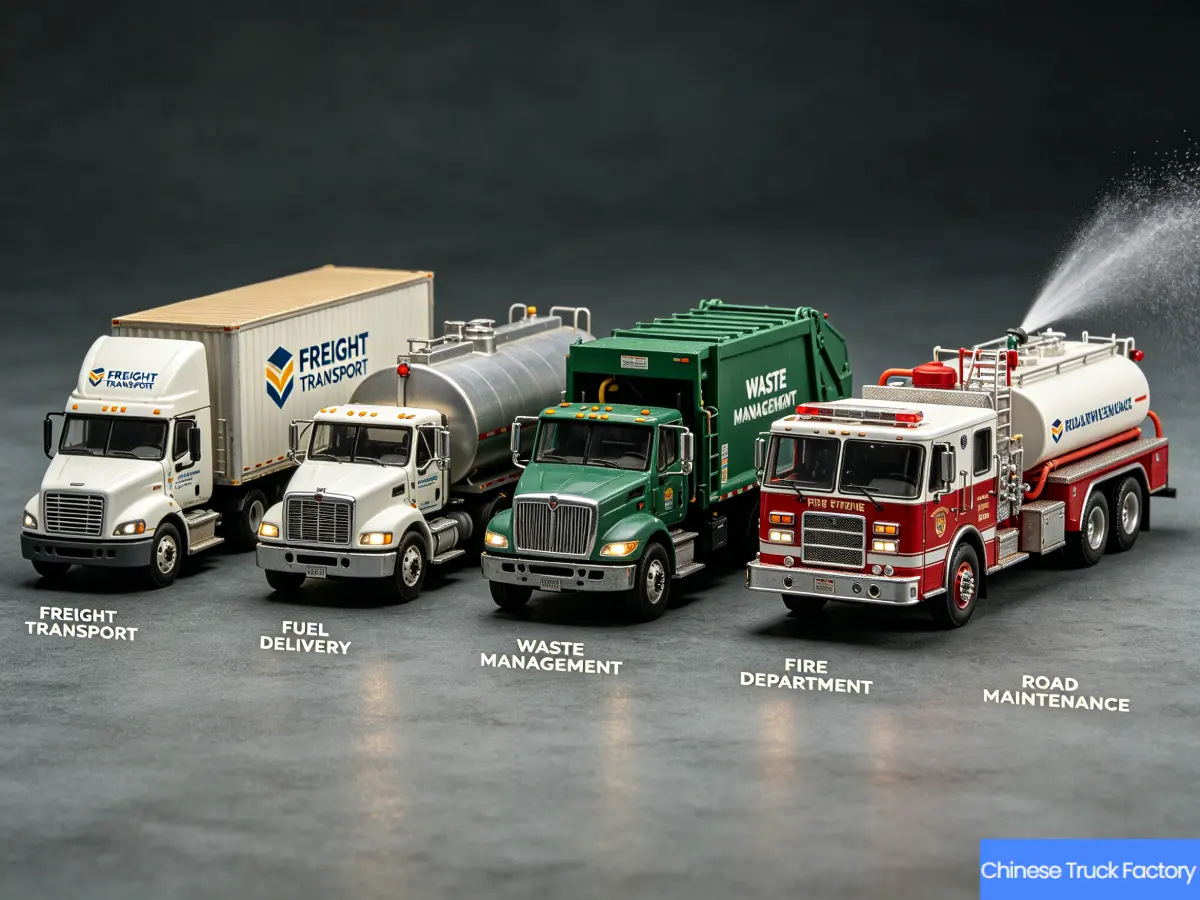
What “Garbage Truck Manufacturer” Actually Means in This Market
The term gets used loosely. In practice, the suppliers serving African municipal and private waste fleets fall into four categories, and each one carries a different risk profile.
- Full-line OEMs — companies that build both the chassis and the compactor body, or that control the body through a captive subsidiary. Examples in the global market include established European and Japanese brands. They typically offer the tightest integration but also the highest unit cost and the longest lead times.
- Chassis OEMs with body partnerships — the chassis comes from a major truck builder, and the refuse body is mounted by a specialist upfitter. This is the most common model for Chinese brands such as Sinotruk/HOWO, SHACMAN, FAW, Dongfeng, Foton, and JAC when they supply export markets.
- Body upfitters and integrators — companies that buy chassis and build the compactor, bin lifter, and hydraulic package in-house. Quality varies widely. The good ones publish body steel grades, cylinder specifications, and compaction ratios. The weak ones do not.
- Trading companies and exporters — they do not manufacture anything. They source from the above and resell. This is where specification drift, warranty gaps, and parts problems usually originate.
For most fleet buyers, the practical choice is between a chassis OEM with a proven body partnership and a reputable integrator who can show you the actual build. The brand name on the cab matters less than the body design, hydraulic system, and the parts pipeline behind it.
The Real Selection Criteria: Route, Waste, and Duty Cycle
Before you compare manufacturers, define your operation. A compactor truck that works well on wide urban avenues with 240-liter wheeled bins will fail quickly on narrow unpaved roads collecting loose household waste from open containers. The truck has to match the job.
Waste density drives everything
Waste density is the single most misunderstood number in refuse truck selection. Loose, uncompacted household waste might sit somewhere in the 150–250 kg/m³ range, while construction debris or wet organic waste can exceed 500 kg/m³. A compactor body rated at 16 m³ of geometric volume does not mean you can load 16 m³ of dense material. The compaction mechanism and the legal payload limit what you can actually carry.
Always calculate: material density × effective body volume, then compare that against the chassis GVW minus curb weight. If the result exceeds the axle load limits in your registration country, you have a truck that looks right on paper and gets fined at the weighbridge.
Collection route defines the chassis
Ask these questions before you look at any truck:
- How many stops per shift, and how far apart are they?
- Are the roads paved, gravel, or mixed? Any steep gradients?
- What is the bin type — wheeled, open-top, skip, or bulk?
- Is loading manual, semi-automatic, or fully automated?
- What is the daily mileage and the number of trips to the transfer station or landfill?
- What is the ambient temperature range and dust exposure?
Stop-start urban collection with 300+ stops per shift favors a 4×2 or 6×4 chassis with a short wheelbase, an automatic or automated manual transmission, and a body optimized for fast compaction cycles. Long-haul transfer work between collection zones and distant landfills favors a 6×4 or 8×4 with a larger body and a taller final drive ratio for highway efficiency.
Comparing Common Configurations for African Operating Conditions
The table below compares the configurations you will encounter most often when sourcing refuse trucks for African fleets. It is a decision aid, not a specification sheet — final numbers must come from the actual truck quotation and your destination-country weight regulations.
| Faktor | 4×2 Compactor (16–20 m³) | 6×4 Compactor (18–22 m³) | 8×4 Compactor (20–26 m³) |
|---|---|---|---|
| Contoh penggunaan terbaik | Dense urban routes, narrow streets | Mixed urban and suburban collection | High-volume routes, transfer haulage |
| Typical GVW range | About 16–18 tonnes | About 25–26 tonnes | About 31–35 tonnes |
| Kemampuan manuver | Best | Sedang | Terbatas |
| Potensi muatan | Lebih rendah | Lebih tinggi | Tertinggi |
| Road condition fit | Paved urban | Mixed, moderate gradients | Paved, longer haul routes |
| Konsumsi bahan bakar | Lowest per km, highest per tonne | Seimbang | Highest per km, lowest per tonne on long routes |
| Kompleksitas pemeliharaan | Simple | Sedang | Higher — more axles, more tires, more brake service |
| Keunggulan utama | Access and agility | Best all-round compromise | Maximum volume per trip |
| Keterbatasan utama | Limited payload per trip | Turning radius in tight areas | Cost, weight, and route restrictions |
Body and Compactor Design: Where Cheap Trucks Fail First
The chassis gets the attention, but the refuse body is where most premature failures happen. When you compare manufacturers, look past the paint and ask about the following.
Body steel and plate thickness
Compactor bodies take abrasive loading, wet waste, and constant hydraulic cycling. The floor plate and sidewall thickness matter more than the total volume figure. A thicker floor resists wear and puncture from construction debris, but it also adds tare weight and reduces legal payload. There is a real trade-off here, and reputable builders will explain it rather than hide it.
Ask for the steel grade and the plate thickness for the floor, sides, and rear door. Vague answers are a warning sign.
Compaction mechanism
Rear-loader compactors typically use a sweep-and-slide or a rotary packer blade. The compaction ratio — the reduction in waste volume achieved by the mechanism — is a key number, but it is often quoted under ideal laboratory conditions. Real-world compaction depends on waste type, moisture, and operator technique. Treat published ratios as indicative and ask how the mechanism performs on your specific waste stream.
Bin lifter and hopper
If your route uses wheeled bins, the lifter must match the bin design and weight. A mismatched lifter means manual lifting, slower cycles, and operator injuries. For bulk waste, a wider hopper with a reinforced lip handles loose loading better. Confirm the lifter capacity and the bin interface standard before ordering. For a deeper look at how the compaction cycle works in practice, see this explanation of how a trash compactor operates.
Hydraulics and leachate management
Hydraulic cylinders, hoses, and the control valve are the components most likely to fail in the first two years if they are undersized or sourced from low-tier suppliers. Ask for the cylinder bore, stroke, and pressure rating. On wet waste routes, a leachate tank is not optional — without it, liquid drains onto the road and creates both a compliance problem and a corrosion problem inside the body.
Powertrain and Chassis Considerations for African Roads
Refuse trucks spend most of their life at low speed with frequent stops, which puts unusual demands on the driveline. Engine power matters less than torque delivery at low rpm and the durability of the transmission and clutch under constant engagement.
- Engine: A torque curve that delivers usable power from around 1,000–1,400 rpm reduces clutch wear and improves fuel economy in stop-start work. Oversized engines add cost and weight without proportional benefit on urban routes.
- Transmission: Automated manual transmissions (AMT) reduce driver fatigue and clutch abuse on high-stop routes. Manual transmissions are cheaper to repair and more familiar to many workshops. Choose based on your driver pool and maintenance capability.
- Axles and final drive: A numerically higher final drive ratio improves low-speed pulling and gradeability but raises engine rpm at highway speed. Match the ratio to the dominant duty — urban collection or transfer haulage, not both.
- Suspension: Leaf springs are simpler and more repairable in remote areas. Air suspension improves ride and protects the body structure but adds cost and complexity.
- Frame: The chassis frame must handle the twisting loads of a compactor body plus uneven roads. Reinforced frames are common on trucks intended for poor road conditions.
If your operation includes transfer haulage over long distances, the same chassis principles that apply to long-haul transport trucks become relevant — axle ratio, fuel tank capacity, and driver comfort all affect total cost per tonne collected.
Maintenance, Parts Availability, and Uptime
A refuse truck that sits in the workshop for three weeks waiting for a hydraulic cylinder costs more than a truck that costs 15% more upfront and stays on the road. Uptime is the real currency of fleet economics.
What to verify before you buy
- Parts network: Are engine, transmission, and axle parts available through local distributors, or must everything be imported? Import lead times of four to eight weeks are common and must be planned for.
- Body-specific parts: Hydraulic cylinders, control valves, bin lifters, and packer blades are often proprietary. Confirm the supplier can ship these within a reasonable window and that the part numbers are documented.
- Service documentation: A truck delivered without a service manual, hydraulic schematic, and wiring diagram is a truck your local workshop cannot maintain properly.
- Training: Operator and technician training reduces premature failures more than any single component upgrade.
Preventive maintenance priorities
Daily checks should cover hydraulic oil level, hose condition, tire pressure, brake air pressure, and warning indicators. Periodic service should cover engine oil and filters, transmission and differential oil, brake adjustment, suspension components, wheel bearings, hydraulic oil condition, PTO engagement, packer blade wear, and body hinge points. Specific intervals must come from the actual engine and component manufacturer manuals — not from a generic schedule.
Common failure diagnosis
When a compactor body rises slowly or fails to complete a cycle, do not replace the pump first. Work through the system in order:
- Periksa tingkat dan suhu oli hidrolik
- Periksa hambatan pada filter
- Verify PTO engagement
- Test pump pressure at the outlet
- Inspect the control valve for sticking or internal leakage
- Check cylinder seals for bypass
- Inspect hoses for internal collapse or restriction
- Confirm the load is within the body’s design limit
This sequence finds the actual cause instead of replacing parts by guesswork.
Total Biaya Kepemilikan: Angka yang Sebenarnya Penting
Purchase price is the smallest part of the story over a five-year horizon. A realistic TCO model for a refuse truck includes:
- Purchase price (EXW, FOB, or CIF — be explicit about the price basis)
- Freight, insurance, port charges, and inland transport
- Import duty, VAT, and registration or homologation costs
- Fuel or electricity over the expected annual mileage
- Tires — refuse trucks wear tires faster than line-haul trucks due to constant turning and curb contact
- Scheduled maintenance and consumables
- Perbaikan tak terjadwal dan perawatan sistem hidraulik
- Spare parts inventory carried locally
- Downtime cost — the revenue lost when the truck is not collecting
- Residual value at disposal or trade-in
Two trucks with a 20% price difference can easily reverse positions once fuel, tires, downtime, and parts lead times are included. This is particularly true for electric refuse trucks, where the energy and maintenance savings can be real but only if charging infrastructure and route predictability support them. For a broader view of how these cost components interact, see this guide to biaya operasional per kilometer — the same cost logic applies to refuse fleets.
Kepatuhan dan Persyaratan Pasar Tujuan
There is no such thing as a “globally compliant” garbage truck. Every destination market has its own rules, and they change. Before you commit to a specification, confirm with the relevant authority in your country:
- Emission standard required for registration (Euro II through Euro VI, or local equivalents)
- Persyaratan pengesahan tipe kendaraan atau homologasi
- Maximum axle weights and gross vehicle weight limits
- Batas panjang, lebar, dan tinggi keseluruhan
- Persyaratan kemudi di sebelah kiri atau kanan
- Lighting, reflective marking, and safety equipment rules
- Persyaratan sistem pengereman
- Kualitas bahan bakar dan ketersediaan DEF/AdBlue jika mesin menggunakan sistem SCR
- Local service capability for the specific engine and body systems
Do not rely on a supplier’s verbal assurance that a truck “meets local requirements.” Ask for documentation and verify it with your registration authority. Regulations are country-specific and frequently updated, so the buyer — not the seller — carries the compliance risk.
Shipping and Import: Getting the Truck to Your Yard
Refuse trucks are large, heavy, and often non-running at the port, which limits shipping options. The three practical methods are:
- RoRo (Roll-on/Roll-off): The truck is driven onto the vessel. Usually the most cost-effective for complete, driveable units. Requires the truck to be operational and the destination port to have RoRo capability.
- Barang curah: The truck is lifted on and off by crane. Suitable for oversized or non-running units. Fewer sailings and higher handling risk.
- Flat rack or container: Practical only for smaller units or when the truck can be partially disassembled. Not typical for a fully assembled compactor truck.
Shipping method depends on dimensions, weight, quantity, sailing schedule, and destination port. For a detailed breakdown of the options, see this guide to bagaimana truk-truk berat dikirim ke luar negeri.
How to Evaluate a Manufacturer: A Practical Framework
Use this framework when you shortlist suppliers. Score each one against the criteria that matter for your operation.
| Kriteria Evaluasi | Hal-hal yang Perlu Diperhatikan | Red Flag |
|---|---|---|
| Pemahaman tentang aplikasi | Asks about route, waste type, bin type, and duty cycle before quoting | Quotes a model number immediately |
| Specification transparency | Publishes steel grades, cylinder specs, compaction ratio method | Vague or missing technical data |
| Chassis-body integration | Demonstrates how the body is mounted and load distributed | Cannot explain mounting or weight distribution |
| Suku cadang dan layanan | Documents parts availability, lead times, and service network | No parts list or service documentation |
| Dukungan kepatuhan | Provides documentation for destination-country registration | Claims “meets all regulations” without evidence |
| Warranty clarity | Written warranty terms covering chassis and body separately | Verbal warranty promises only |
| Reference verification | Provides verifiable references or inspection access | Refuses inspection or reference checks |
Pabrik Truk Tiongkok (https://chinesetruckfactory.com/) fits this framework as a direct-from-factory supplier of sanitation vehicles and garbage compactor trucks. The company works with established Chinese chassis brands including Sinotruk/HOWO, SHACMAN, FAW, Dongfeng, and others, and builds refuse bodies to application-specific specifications. Buyers can request configuration details, body steel specifications, and hydraulic component data before committing to an order. The direct-factory model reduces intermediary markups, though buyers should still verify compliance, parts support, and warranty terms against their own requirements — the same due diligence applies to any supplier.
Need a refuse truck specification matched to your route and waste stream?
Share your duty cycle, payload target, and destination requirements for a configuration review.
Kesalahan Umum yang Sering Dilakukan Pembeli
Most bad refuse truck purchases share the same root causes. Avoiding these will save more money than any discount negotiation.
- Buying on volume alone. A 20 m³ body does not mean 20 m³ of payload. Density and legal weight limits decide what you can actually carry.
- Ignoring the body. The compactor, hydraulics, and bin lifter determine daily productivity and repair costs more than the chassis brand.
- Underestimating parts lead times. A truck that waits six weeks for a cylinder is not saving money.
- Assuming compliance transfers. A truck legal in one country may not be registrable in another.
- Comparing FOB prices to landed costs. Freight, duty, and port charges can add a substantial percentage to the invoice price.
- Skipping the inspection. Pre-shipment inspection is the last practical point to catch specification errors.
- No operator training. Poor loading and compaction technique damages the body and shortens its life.
Pertanyaan yang Sering Diajukan
How do I choose the right payload for a garbage truck?
Start with your waste density and the legal axle and gross weight limits in your country. Multiply the expected material density by the effective compacted volume, then compare that against the chassis GVW minus curb weight. The lower of the two numbers is your realistic payload. Confirm the axle load limits with your registration authority before finalizing the specification.
Which axle configuration is best for refuse collection?
It depends on your route. A 4×2 works well for dense urban collection with narrow streets and short distances. A 6×4 is the most common compromise for mixed urban and suburban routes. An 8×4 makes sense for high-volume routes or transfer haulage where maximum payload per trip justifies the higher cost and reduced maneuverability.
Bagaimana kondisi jalan memengaruhi pemilihan truk sampah?
Poor roads increase frame stress, suspension wear, and tire damage. For unpaved or badly maintained routes, prioritize a reinforced chassis frame, robust leaf spring suspension, higher ground clearance, and tires suited to mixed surfaces. Air suspension and low-profile tires are better left for paved urban routes.
What affects fuel consumption on a compactor truck?
Gross vehicle weight, number of stops per shift, idling time, route gradient, average speed, axle ratio, tire pressure, and driver technique all influence fuel use. Refuse trucks consume more fuel per kilometer than line-haul trucks because of constant stop-start operation and the power drawn by the compaction hydraulics. There is no single representative figure — actual consumption must be measured on your specific route.
Perawatan apa saja yang sebaiknya saya rencanakan?
Daily checks on hydraulic oil, hoses, tires, brakes, and warning indicators. Periodic service on engine oil and filters, transmission and differential, brake adjustment, suspension, wheel bearings, hydraulic oil condition, PTO, packer blade wear, and body hinges. Specific intervals must come from the actual component manufacturer manuals. Budget for hydraulic cylinder and hose replacement as wear items.
How do I estimate total ownership cost?
Add purchase price, freight and import costs, fuel or electricity over the expected annual mileage, tires, scheduled maintenance, unscheduled repairs, spare parts inventory, and the cost of downtime. Subtract residual value at disposal. The result — cost per tonne of waste collected — is the number that lets you compare trucks fairly.
What information do I need to provide for a quotation?
Destination country and port, application and waste type, required payload or body volume, bin type and loading method, daily mileage and stops per shift, road conditions and gradients, drive configuration, steering side, emission requirement, quantity, and any required options. The more specific your inputs, the more accurate the specification and price.
Bagaimana cara memastikan kepatuhan negara tujuan?
Contact your national vehicle registration authority or customs office directly. Ask about emission standards, type approval or homologation, axle weight limits, dimension limits, steering side, lighting, and braking requirements. Request documentation from the supplier and verify it independently. Regulations change, and the buyer carries the compliance risk.
How are garbage trucks shipped from China?
Most complete refuse trucks ship by RoRo, which is cost-effective for driveable units and available at major ports. Breakbulk is used for oversized or non-running units. Flat rack or container shipping is practical only for smaller units or partial disassembly. The right method depends on dimensions, weight, quantity, sailing schedule, and destination port capability.
Kesimpulan Akhir
The most suitable garbage truck is not the one with the largest body volume or the lowest invoice price. It is the configuration that matches your waste density, route profile, legal weight limits, maintenance capability, and expected duty cycle with the fewest compromises. The parameters worth confirming first are payload against legal axle limits, body steel and hydraulic specifications, parts availability and lead times, and destination-country compliance. The most common buyer mistake is treating the chassis brand as the whole decision — the body, hydraulics, and service pipeline determine whether the truck earns money or drains it. If your route is urban and stop-heavy, a smaller, more agile configuration will often outperform a larger truck that cannot maneuver or stay within weight limits. If your operation includes long transfer hauls, a heavier configuration with a taller final drive may make more sense. Match the truck to the job, verify every specification in writing, and inspect before shipment.