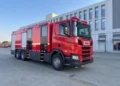
There is no single “best” fire truck manufacturer for every buyer, and anyone who tells you otherwise is usually trying to close a sale. What actually matters is whether the builder can match the chassis, pump, tank, and body to the mission you run — municipal structural response, industrial plant protection, airport crash rescue, or wildland interface work. The shortlist should be built around four things: proven chassis availability in your market, pump and foam system integration experience, spare parts support, and the ability to deliver a truck that can actually be registered and serviced where you operate. This article walks through how to evaluate manufacturers on those terms, not on brochure claims.
Start With the Mission, Not the Manufacturer List
Fire apparatus is one of the few vehicle categories where the “right” specification is almost entirely dictated by the duty cycle. Two departments can buy what looks like the same 10,000-liter pumper and end up with very different trucks, because one runs structural fires in a dense urban grid and the other protects a fuel depot on the edge of an industrial zone.
Before you compare manufacturers, write down the answers to these questions:
- Primary mission: structural firefighting, industrial/hydrocarbon fire, wildland grass and brush, airport rescue, or a mixed municipal role.
- Water and foam requirement: how many liters of water, and how much foam concentrate, per first-response load.
- Pump duty: rated flow at rated pressure, and whether you need a separate high-pressure stage for hose reel or forestry work.
- Access conditions: road width, bridge limits, gate clearances, and whether the truck has to negotiate narrow residential streets or plant pipe racks.
- Kru: how many firefighters ride the truck, and how they enter and exit with SCBA and tools.
- Equipment load: ladders, hose, breathing apparatus, hydraulic rescue tools, ventilation fans, and generator.
- Water source: hydrant pressure, open water drafting, or tanker shuttle.
- Climate and altitude: ambient temperature swings, dust, humidity, and elevation all affect pump performance and engine cooling.
Only after this list is clear does a manufacturer shortlist make sense. A builder that is strong in municipal pumpers may have little experience with foam proportioning systems for a refinery, and a builder that specializes in crash tenders is not the right partner for a volunteer department running grass fires.
How I Evaluate a Fire Truck Manufacturer
When I look at a builder — whether it is a European OEM, a North American body builder, or a Chinese factory exporting complete units — I use the same framework. It is deliberately boring, because boring is what keeps a fleet running.
1. Chassis sourcing and parts availability
The chassis is the foundation, and it determines how easy the truck is to service for the next fifteen years. Ask which chassis platforms the builder routinely works with, whether those platforms are sold and supported in your country, and how long the local dealer network can supply brake parts, filters, and engine components. A fire truck that sits for six weeks waiting for a chassis sensor is a failed investment regardless of how good the pump is.
2. Pump and foam system integration
The pump is the heart of the truck. What matters is not just the brand, but whether the builder can properly size the driveline, PTO, and cooling system around it, and whether the foam proportioning system is matched to the agent you actually use. Around-the-pump proportioners, balanced-pressure systems, and direct-injection systems all have different maintenance profiles and different accuracy at low flow rates.
3. Body construction and compartment layout
Look at how the body is built: material (aluminum, stainless, or galvanized steel), compartment door hardware, hose bed design, and how the weight is distributed across the axles. A body that looks impressive in a photo can still be poorly balanced when the tank is full and the compartments are loaded.
4. Certification and registration
Fire apparatus standards vary by country, and in many cases by state or province. There is no universal “global compliant” fire truck. The builder should be able to tell you which standards the truck is built to, and — more importantly — whether the finished vehicle can actually be registered and used in your jurisdiction.
5. Delivery, documentation, and after-sales
Ask how the truck will be shipped, what documentation is included, what the warranty covers, and who performs warranty work in your country. For imported apparatus, the warranty is only as good as the local service capability behind it.
Comparing the Main Manufacturing Approaches
Buyers in most markets end up choosing between three broad categories of supplier. Each has a different cost and support profile, and none is automatically better.
| Faktor | Global OEM (premium brand) | Regional specialty body builder | Export-oriented factory builder |
|---|---|---|---|
| Contoh penggunaan terbaik | Large departments with established service networks and standardized fleets | Buyers who need a specific pump, foam system, or body layout | Buyers who need a complete, cost-controlled truck with flexible specification |
| Chassis options | Limited to the OEM’s own platforms | Usually multiple chassis brands | Usually multiple chassis brands, including export-proven platforms |
| Pump integration | Factory-integrated, well documented | Depends on the builder’s experience | Varies — confirm pump brand, flow, and pressure ratings in writing |
| Waktu tunggu | Often long, especially for custom bodies | Sedang | Typically shorter, but depends on chassis availability |
| Purchase cost | Tertinggi | Mid to high | Generally lower for comparable configuration |
| Suku cadang dan layanan | Strong in mature markets, weaker in some regions | Depends on local footprint | Requires the buyer to plan spare parts and service capability |
| Keterbatasan utama | Cost and lead time | Variable engineering depth | Compliance and after-sales must be verified carefully |
The takeaway is not that one column wins. It is that the right column depends on your budget, your service reality, and how much specification flexibility you need.
Water, Foam, and Pump Capacity: The Numbers That Actually Matter
Fire truck capacity is one of the most misunderstood specifications in the industry. A “10,000-liter” truck does not mean 10,000 liters of usable firefighting agent in every scenario, and a “3,000 L/min” pump does not deliver that flow at every pressure.
Water tank capacity
Tank capacity is a nominal figure. The usable volume is slightly lower, and the effective firefighting time depends on the flow you actually use. A 6,000-liter tank feeding a 2,400 L/min monitor gives you roughly two and a half minutes of continuous monitor flow before you need a water source. That is why tank size and water supply plan have to be evaluated together.
Pump flow and pressure
Pumps are rated at a specific flow and pressure combination. A pump rated at 3,000 L/min at 10 bar may only deliver a fraction of that at 40 bar for high-pressure hose reel work. When a manufacturer quotes a pump figure, ask for the full performance curve, not a single number.
Foam proportioning
Foam systems are only as good as their accuracy across the flow range. A proportioner that is accurate at full flow may be badly off at the low flows used for small spills. For industrial and hydrocarbon risk, this matters more than tank size.
For buyers comparing municipal and industrial configurations, the range of tank sizes and pump setups is worth reviewing in detail on the mobil pemadam kebakaran platform page before committing to a specification.
Chassis and Driveline Configuration
Fire apparatus chassis selection is a balancing act between payload, mobility, and serviceability. The most common configurations are 4×2 for lighter urban pumpers and 6×4 or 6×6 for heavier tankers and off-road-capable units.
| Konfigurasi | Typical application | Keunggulan utama | Keterbatasan utama |
|---|---|---|---|
| 4×2 | Urban pumpers, quick-attack units, narrow streets | Lower curb weight, better maneuverability, lower cost | Limited rear axle capacity, less traction off-road |
| 6×4 | Heavy pumpers, tankers, industrial units | Higher payload and axle capacity, stable at highway speed | Longer wheelbase, larger turning radius |
| 6×6 | Wildland, off-road industrial, remote-area response | Traction on soft ground and gradients | Higher curb weight, more driveline complexity |
| 8×4 | Very large tankers and specialized industrial units | Highest payload capacity | Weight, cost, and route restrictions |
Engine power should be sized to the gross vehicle weight, not to a horsepower number. A truck that is underpowered for its loaded weight will struggle on gradients and will not reach the pump’s rated performance if the PTO-driven pump needs engine speed under load. Transmission choice, PTO type, and cooling capacity all interact here, and they should be specified together.
Body, Compartments, and Equipment Layout
The body is where a fire truck earns or loses its reputation in daily use. A few things I always check:
- Compartment depth and height: deep compartments hold more, but if they are too deep, tools get buried and access suffers. Layout should be based on what the crew actually uses at a scene.
- Door hardware: roll-up, shutter, and panel doors all have different maintenance profiles. Roll-up doors save space but need regular lubrication and adjustment.
- Hose bed: how the hose is loaded and deployed affects scene time. Consider whether you want a traditional bed, a speedlay, or a crosslay configuration.
- Ladder storage: mounted on the side, the roof, or in a through-body tunnel — each has trade-offs for weight distribution and access.
- Pump panel layout: gauges, valves, and controls should be reachable and readable with gloves on, in the dark, under stress.
- Weight distribution: a full water tank plus loaded compartments can shift a significant amount of weight to the rear axle. Confirm the axle loading with the tank full.
This is also where the builder’s real experience shows. A body that is well laid out for one department’s equipment may be completely wrong for another’s, so the specification should be built around your equipment list, not a generic template.
Biaya Operasional dan Total Biaya Kepemilikan
Fire apparatus TCO is not the same as commercial truck TCO, because the vehicle may sit for long periods and then run hard for short periods. That pattern stresses batteries, seals, hydraulic systems, and tires in ways that a highway truck never experiences.
The main cost categories to model:
- Harga pembelian — including the chassis, pump, foam system, body, and equipment options.
- Freight and import costs — shipping method, port charges, customs, and inland transport.
- Kepatuhan dan pendaftaran — homologation, inspection, and any local modifications.
- Bahan bakar — driven by engine size, pump duty, idle time, and how often the truck runs at high engine speed for pump operation.
- Pemeliharaan — scheduled service, pump overhaul intervals, foam system service, and body hardware.
- Perbaikan yang tidak terjadwal — often the largest variable, and heavily influenced by parts availability.
- Waktu henti — the cost of a truck that is out of service when it is needed.
- Nilai sisa — relevant if you plan to replace the fleet on a cycle.
The cheapest purchase price is rarely the lowest TCO. A truck that costs less up front but sits for months waiting for a pump seal is more expensive than a higher-priced unit with local parts support.
Engineering rule of thumb: if you cannot get the truck back in service within a reasonable time using parts available in your country, the purchase price advantage disappears quickly.
Pertimbangan terkait Kepatuhan, Pendaftaran, dan Impor
Fire apparatus regulation is highly country-specific. There is no single approval that makes a truck legal everywhere. Before signing a contract, confirm the following with the manufacturer and with your local registration authority:
- Emission standard required for the chassis in your market.
- Vehicle type approval or homologation requirements.
- Axle weight limits and gross vehicle weight limits.
- Overall length, width, and height limits.
- Steering configuration (left-hand or right-hand drive).
- Lighting, marking, and reflective tape requirements.
- Braking system requirements.
- Any fire-specific equipment standards that apply to your jurisdiction.
- Fuel quality and availability, including DEF/AdBlue where applicable.
Where the regulation is unclear, the right move is to ask the manufacturer for documentation and to verify it with your local authority — not to accept a verbal assurance that the truck “meets local standards.”
For buyers importing complete units, shipping method matters as much as the truck itself. RoRo, breakbulk, and flat-rack container shipping each have different cost and handling profiles depending on vehicle dimensions and the destination port. The overseas shipping process for heavy trucks is worth understanding before you finalize the commercial terms.
Di Mana Pabrik Truk Tiongkok Memiliki Peran
Chinese Truck Factory works as an export-oriented supplier of specialized and commercial vehicles, including fire apparatus, and is structured around the criteria that international buyers actually care about. Using the framework above, here is how it lines up:
| Evaluation criterion | What buyers should require | Chinese Truck Factory approach |
|---|---|---|
| Chassis options | Multiple export-proven platforms | Works with established heavy-duty chassis platforms suited to export markets |
| Body and equipment configuration | Built around the buyer’s mission and equipment list | Specification developed from the buyer’s operating requirements |
| Kepatuhan | Documented to the destination market’s requirements | Configuration confirmed against destination requirements before order |
| Shipping and export | Clear terms and shipping method | Supports RoRo, breakbulk, and flat-rack shipping depending on vehicle and route |
| Suku cadang | Planned parts package with the vehicle | Spare parts packages can be included with the order |
| After-sales | Clear warranty scope and service plan | Warranty scope and service arrangements defined per order |
That does not make it the right choice for every buyer. A department with a strong local dealer for a premium brand may get better long-term support from that brand. But for buyers who need a complete, mission-matched fire truck with flexible specification and a clear export process, it is a supplier worth evaluating on the same criteria as any other.
If you are preparing a specification, the more detail you provide up front — mission, water and foam capacity, pump requirement, crew size, road conditions, and destination country — the more accurate the quotation will be. You can start that conversation through the halaman kontak.
Maintenance Planning for Fire Apparatus
Fire trucks are maintained differently from commercial trucks because of their duty cycle. Long idle periods followed by intense short-duration use create specific failure patterns. A practical maintenance plan should include:
After every response
- Check water and foam levels and refill as needed.
- Inspect pump, valves, and gauges for leaks or damage.
- Check tires for damage and correct pressure.
- Confirm all compartment doors latch properly.
- Check lights, warning devices, and communication equipment.
Weekly and monthly
- Exercise the pump and foam system, even if not used on a call.
- Periksa tingkat oli mesin, cairan pendingin, dan cairan hidrolik.
- Inspect hoses, couplings, and nozzles.
- Test the PTO engagement and pump priming system.
- Check battery condition and charging system.
Periodic service
- Engine and driveline service per the chassis manufacturer’s schedule.
- Pump service per the pump manufacturer’s recommendations.
- Foam system calibration and cleaning.
- Body hardware, door tracks, and lubrication points.
- Brake system inspection, including air system components on air-braked chassis.
Exact service intervals should always come from the chassis, pump, and component manufacturers’ manuals for the specific truck. Do not rely on generic interval tables.
Kesalahan Umum yang Sering Dilakukan Pembeli
- Buying on tank size alone. A bigger tank adds weight, which reduces payload for equipment and can push the truck over axle limits when full.
- Ignoring pump performance curves. A single flow figure hides how the pump behaves across the pressure range you actually use.
- Underestimating equipment weight. Tools, hose, ladders, and SCBA add up fast, and they all count against the chassis payload.
- Assuming compliance is universal. It is not. Confirm registration eligibility in your market before ordering.
- Skipping the spare parts plan. A fire truck without a parts package is a fire truck with a long downtime risk.
- Choosing a builder on price alone. The lowest quote often reflects a specification that does not match the mission.
Pertanyaan yang Sering Diajukan
How do I choose the right water tank capacity for a fire truck?
Start with your water supply plan. If you have reliable hydrants or open water access, a smaller tank with a strong pump may be more useful than a large tank that adds weight. If you rely on tanker shuttle or have no water source near the scene, tank size becomes more important. Tank capacity should be matched to pump flow, crew size, and the axle capacity of the chassis you are building on.
Which axle configuration is best for a fire truck?
It depends on the mission. A 4×2 chassis is common for lighter urban pumpers where maneuverability matters. A 6×4 is typical for heavier pumpers and tankers that need higher payload and axle capacity. A 6×6 is used where off-road traction is required, such as wildland or remote industrial response. There is no single best configuration — the right one depends on weight, route, and road conditions.
How does road condition affect fire truck selection?
Poor road surfaces, steep gradients, and narrow access routes all affect the choice of chassis, suspension, tire specification, and overall dimensions. A truck that performs well on paved urban streets may not be suitable for unpaved industrial roads or narrow plant access ways. Road condition should be part of the specification discussion from the start.
What affects fire truck fuel consumption?
Fuel consumption depends heavily on gross vehicle weight, engine size, pump duty, idle time, and how often the truck runs at high engine speed for pumping. Short, hard runs followed by long idle periods produce very different consumption than steady highway driving. Actual figures should be estimated from your own duty cycle, not from a generic number.
What maintenance should I plan for on a fire truck?
Plan for after-call checks, weekly and monthly pump and system exercises, and periodic service per the chassis, pump, and component manufacturers’ manuals. Fire apparatus often sits idle and then runs hard, so batteries, seals, hydraulic systems, and tires need regular attention. Exact intervals should come from the specific equipment documentation.
How do I estimate total ownership cost for a fire truck?
Add purchase price, freight, import and compliance costs, fuel, scheduled maintenance, unscheduled repairs, spare parts, and downtime cost, then subtract residual value. The lowest purchase price is rarely the lowest total cost, especially if parts are hard to source locally. Build the estimate around your actual operating pattern rather than a generic assumption.
What information do I need to provide for a fire truck quotation?
Provide the destination country and port, the primary mission, required water and foam capacity, pump flow and pressure requirements, crew size, equipment list, road and access conditions, steering configuration, emission requirement, quantity, and any required options. The more detail you provide, the more accurate and comparable the quotation will be.
How do I confirm destination-country compliance for a fire truck?
Ask the manufacturer for documentation on the standards the truck is built to, then verify registration eligibility, axle weight limits, dimensions, lighting, and braking requirements with your local registration authority. There is no universal approval that covers every country, so compliance must be confirmed market by market before the order is placed.
The most suitable fire truck is therefore not the one with the largest tank or the highest pump rating on a brochure. It is the configuration that matches your mission, water supply, crew, road conditions, legal weight limits, and maintenance capability with the fewest compromises — and a manufacturer that can support that configuration after delivery is worth more than one that simply quotes the lowest price.