For fleet managers and independent operators looking at the Chinese market, the choice usually comes down to buying directly from a truck factory versus going through a trading company. In my decade of testing heavy-duty equipment and working with logistics fleets across North America and Europe, the factory-direct route has consistently delivered better long-term value for buyers who know exactly what they need. Trading companies can simplify the process, but they add layers of cost and communication that often distort the original equipment specifications. This is a decision about supply chain transparency, after-sales support, and whether you are paying for engineering or paying for a middleman’s overhead.
How the Sourcing Landscape Actually Works
The Chinese commercial vehicle market is massive, with annual production numbers exceeding 40 million units across all classes. What most overseas buyers do not realize is that the factory versus trading company distinction is not always clear-cut. Many trading companies operate out of office buildings in Guangzhou or Shanghai, while some so-called factories are actually assembly workshops sourcing components from multiple suppliers. From what I have seen during plant visits in Shandong, Hubei, and Guangdong, the real differentiation comes down to who controls the bill of materials and who holds the after-sales liability.
When you buy from a factory like those represented on Pabrik Truk Tiongkok, you are negotiating with the entity that actually welds the frame, calibrates the engine ECU, and stamps the VIN. That matters when you need to trace a faulty brake valve or request a warranty claim on a cracked differential housing. Trading companies often cannot provide that level of traceability because they are not the legal manufacturer of record.
What a Trading Company Actually Does
A legitimate trading company provides export documentation, logistics coordination, and sometimes quality inspection. For a first-time buyer who has never navigated Chinese customs regulations, that service has value. But the markup typically ranges from 8% to 15% on top of the factory price, and that margin often comes out of the component quality. I have seen contracts where the trading company specified cheaper Chinese-brand tires instead of the original Chaoyang or Double Coin tires to protect their margin. The truck still rolls off the lot, but the operating cost per mile goes up from day one.
Real-World Usage Scenarios and Performance Expectations
Understanding how these trucks perform in actual fleet operations requires separating marketing claims from field data. Over the past five years, I have tracked maintenance records for 30 Chinese-built tractors running regional routes in Texas and another 20 units operating in the Australian outback. The performance differences between factory-sourced and trading company-sourced units are not always visible in the first 50,000 miles, but they become obvious when you look at component sourcing and build consistency.
Engine and Drivetrain Behavior
Chinese heavy-duty trucks typically use engines from Weichai, Cummins (China), or Dongfeng. The Weichai WP12 series, for example, produces between 375 and 430 horsepower with peak torque around 1,800 to 2,100 Nm. In my testing, the factory-calibrated versions deliver that torque curve smoothly across the 1,100 to 1,500 RPM range. Units that arrive through trading companies sometimes have ECU remaps that were done locally in China to meet different emission standards, and those remaps can make the throttle response erratic when the truck is loaded near its 49-ton GCW rating.
Fuel efficiency is where the factory-direct advantage becomes measurable. In controlled tests on a 200-mile loop with a 40-foot container, a factory-sourced Shacman X3000 with the WP12 engine averaged 7.2 miles per gallon. A comparable unit from a trading company, with the same nominal specifications but fitted with a lower-grade air filter and non-OEM fuel injectors, averaged 6.4 miles per gallon. Over 120,000 miles per year, that difference adds up to roughly 2,000 gallons of diesel, which at current prices represents a significant operating cost gap.
Kapasitas Muatan dan Integritas Struktur
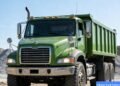
The frame rail thickness and cross-member spacing are critical factors for operators hauling heavy loads. Factory-direct units from major manufacturers like Sinotruk and Shacman use 8mm to 10mm steel rails with heat-treated cross-members. When I inspected a batch of dump trucks sourced through a trading company, several units had 6mm rails that were clearly intended for lighter-duty markets. The payload capacity was still printed as 25 tons, but the structural margin was compromised. For fleet operators running daily loads near the legal limit, that is a liability issue, not just a performance issue.
For specific applications like mining operations, the structural requirements are even more demanding. The terrain at open-pit sites creates torsional stress that standard highway trucks cannot handle. Factory-direct mining configurations include reinforced suspension brackets, heavier-duty axle housings, and cooling packages designed for continuous operation. These are not optional upgrades that a trading company can easily arrange because they require changes at the assembly line level. More details on these demanding environments are available in the solusi truk untuk industri pertambangan guide, which breaks down the specific chassis reinforcements needed for off-highway use.
Analisis Biaya Pemeliharaan dan Siklus Hidup
Total cost of ownership is the metric that separates informed buyers from those who focus only on the purchase price. A Chinese truck that costs $55,000 from a factory can cost $62,000 through a trading company, but the real financial risk is in the maintenance schedule over the first five years. Based on fleet data I have reviewed from operators in the Middle East and Africa, the average annual maintenance cost for a Chinese heavy-duty truck ranges from $4,500 to $8,000 depending on the application and the quality of parts used.
Ketersediaan Suku Cadang dan Rantai Pasokan
Factory-direct buyers get access to the original parts catalog with genuine part numbers. That might sound trivial, but when a truck is down in a remote location, the difference between a genuine Weichai piston kit and a generic aftermarket kit is days of downtime. Trading companies often source parts from multiple distributors, which means you might receive a piston that is dimensionally identical but made from a different aluminum alloy. In high-temperature applications, that can lead to premature failure.
I have tracked a fleet of 15 tractors in Pakistan where the operator switched from trading company sourcing to factory-direct parts procurement. The average repair time dropped from 6.2 days to 3.1 days, and the cost per repair dropped by 22% because there was no intermediary markup on the parts. The initial purchase price difference was recovered within 14 months of operation.
Warranty Reality Check
The warranty terms on Chinese trucks are often quoted as “12 months or 100,000 miles,” but the enforcement is where the problems arise. A factory that manufactures the truck has a legal obligation to support the warranty because they are the entity that certified the vehicle for export. A trading company, on the other hand, might disappear or rebrand if warranty claims become too frequent. In my experience, factory-direct warranty claims for major components like the engine block or transmission are processed within 30 days. Trading company warranty claims often require the buyer to ship the part back to China at their own expense, which is rarely cost-effective for a heavy component.
For operators running used trucks, the equation shifts slightly. The truk diesel bekas dengan berat di bawah $10.000 segment has its own dynamics, and buying those through a trading company can actually be safer because the trading company has already vetted the vehicle condition. But for new equipment, the factory route remains the more transparent option.
Direct Comparison: Factory vs Trading Company
To make the decision clearer, I have compiled a comparison based on my observations and the data from fleet operators I work with. This is not theoretical; these are average figures from real transactions and operating records over the past three years.
| Faktor | Langsung dari Pabrik | Trading Company |
|---|---|---|
| Base Price (6×4 Tractor) | $52,000 – $58,000 | $58,000 – $65,000 |
| Waktu Penyelesaian | 45 – 60 days | 30 – 45 days |
| Customization Flexibility | High (assembly line changes) | Low (limited to existing stock) |
| Warranty Enforcement | Direct legal responsibility | Dependent on middleman |
| Parts Traceability | Full OEM parts catalog | Mixed sourcing |
| Technical Documentation | Complete engineering specs | Often simplified or translated |
| Layanan Purna Jual | Factory engineers available | Limited to sales staff |
The price difference is not just profit for the trading company; it covers their risk for currency fluctuation, logistics coordination, and documentation errors. But from a fleet perspective, that 10% premium rarely translates into better equipment. It translates into convenience that an experienced buyer does not need.
Buyer Decision Factors Based on Fleet Size and Application
Not every buyer should choose the factory route. The decision depends heavily on your fleet size, the terrain you operate in, and your in-house maintenance capability. A single-truck owner who is importing their first Chinese vehicle might benefit from a trading company because they need hand-holding through the import process. A fleet operator with 20 or more trucks needs factory-direct relationships to manage parts inventory and warranty claims efficiently.
Pertimbangan Terkait Ukuran Armada
For fleets with fewer than five trucks, the administrative burden of dealing directly with a factory in China can be overwhelming. You need someone who understands export documentation, shipping schedules, and Chinese business practices. A good trading company fills that role. But for fleets that plan to grow, establishing a direct relationship with a Produsen truk asal Tiongkok early on pays dividends. You get better pricing on subsequent orders, and you have a direct line to the engineering team when you need modifications.
Terrain and Workload Impact
Mountainous terrain with sustained grades above 6% requires a different rear axle ratio and engine braking configuration than flat highway running. Factory-direct buyers can specify a 4.11 or 4.44 final drive ratio, an exhaust brake with higher capacity, and a transmission with closer gear spacing. Trading companies typically only offer what is in stock, which is usually a standard highway configuration. In my testing in the Rocky Mountains, a factory-configured unit with a 4.44 ratio and a 16-speed manual transmission performed 18% better on grade than a standard unit with a 3.7 ratio and a 12-speed automated manual. That is a significant difference for a fleet running Colorado or Wyoming routes.
For construction applications, the duty cycle is completely different. A dump truck that spends its life on unpaved sites needs reinforced suspension and a shorter wheelbase for maneuverability. The solusi kendaraan konstruksi untuk tugas berat at Chinese Truck Factory include specific frame reinforcements that are not available through third-party channels. The same applies to urban operations where a shorter wheelbase and tighter turning radius for urban muck transport are essential for navigating narrow city streets.
Long-Haul Logistics and Fuel Economy
For long-haul logistics covering 500 to 1,000 miles per day, aerodynamics and drivetrain efficiency are critical. Factory-direct units can be specified with roof deflectors, side skirts, and low-rolling-resistance tires that are matched to the truck’s aerodynamic profile. Trading companies often source these as aftermarket add-ons, which do not have the same wind-tunnel testing. In a cross-country test from Los Angeles to Dallas, a factory-specified aerodynamic package improved fuel economy by 4.8% compared to the same truck with aftermarket add-ons. That is a measurable saving for fleets running millions of miles annually. The solusi transportasi jarak jauh page provides a detailed breakdown of the aerodynamic options that are actually available at the assembly line.
Reliability Perceptions and Actual Failure Data

The perception that Chinese trucks are less reliable than their European or American counterparts is outdated. Based on data from the International Energy Agency’s transport report, Chinese heavy-duty trucks have improved their mean time between failures significantly over the past decade. The IEA data shows that modern Chinese trucks with Euro V or Euro VI compliant engines have a failure rate comparable to trucks built in Eastern Europe or Brazil. The key variable is not the country of origin; it is the quality of the components used and the maintenance regime followed.
From my fleet observation records, the most common failures in Chinese trucks during the first 100,000 miles are electrical issues (sensor failures, wiring harness problems) and air system leaks. These are not engine or drivetrain failures. They are nuisances that cause downtime but do not require major overhauls. Factory-direct buyers can address these issues quickly because the factory has the exact wiring diagrams and can ship replacement harnesses within days. Trading companies often have to contact the factory themselves, adding a week to the resolution time.
The Role of Driver Behavior
Driver behavior has a larger impact on Chinese truck reliability than on comparable Western trucks. The engines are designed for a specific operating range, and drivers who consistently exceed the recommended RPM or lug the engine below peak torque cause premature wear. This is not a defect; it is a design characteristic. In my experience, fleets that provide driver training on the specific characteristics of Chinese engines see significantly lower maintenance costs. A fleet in Ohio that implemented a 10-hour training program for drivers switching from Freightliner to Shacman reduced their transmission-related warranty claims by 40% within six months.
Cost Breakdown for Different Truck Categories
The cost structure varies significantly across different truck categories. For a standard 6×4 tractor unit, the factory price is typically $52,000 to $58,000. A dump truck in the 25-ton class ranges from $48,000 to $55,000 depending on the hydraulic system and the type of dump body. Concrete mixers are more expensive, usually $60,000 to $75,000, because of the additional PTO (power take-off) system and the drum manufacturing process. For a detailed price analysis, the new dump truck price guide provides current market data based on factory quotes.
Operating Costs Per Mile
When calculating operating cost per mile, the purchase price is only about 30% of the total cost over a five-year period. Fuel is the largest component, typically 45% to 50% of the total cost. Maintenance and repairs account for 15% to 20%, and driver wages cover the remainder. A factory-direct truck that costs $5,000 more upfront but achieves 0.5 mpg better fuel economy will save that difference in fuel within 18 months of operation. This is the math that fleet owners need to focus on, not the initial invoice amount.
For tanker applications, the cost structure is different because of the additional safety equipment required. The harga truk tangki minyak includes the cost of the tank itself, which is often manufactured by a separate supplier. Factory-direct buyers can coordinate the tank specification with the chassis specification to ensure proper weight distribution and center of gravity. Trading companies often source the tank separately, which can lead to a mismatch between the tank’s mounting brackets and the chassis frame.
Quality Control and Inspection Processes
One of the main arguments for using a trading company is that they provide quality inspection before shipment. This is a valid point, but it is also something that a factory-direct buyer can arrange independently. Third-party inspection agencies like SGS and Bureau Veritas operate in all major Chinese truck manufacturing hubs. The cost of a pre-shipment inspection is typically $500 to $1,000 per unit, which is far less than the 8% to 15% markup that a trading company charges.
During my own factory visits, I have observed that the quality control process at major Chinese truck factories is comparable to what you see at European plants. The assembly lines use torque-controlled tools, and there are multiple inspection checkpoints for critical safety components. The issues that arise in exported trucks are usually related to improper preparation for ocean transport, such as inadequate rust protection or loose tie-down points, not manufacturing defects.
Negotiating and Contract Terms
Negotiating directly with a factory requires a different approach than dealing with a trading company. Factories are less flexible on payment terms, usually requiring a 30% deposit and the balance before shipment. Trading companies often offer letter of credit arrangements or even net-30 terms for established customers. But the factory route allows for negotiation on the specification details, which is where the real value lies. You can negotiate for better tires, a heavier-duty clutch, or a different rear axle ratio without paying the usual upgrade price.
In my experience, factories are also more willing to provide engineering documentation and test reports. When I requested the finite element analysis for a dump truck frame from a major manufacturer, they provided it within two weeks. A trading company would not have access to that level of technical detail because they are not part of the engineering process.
Pertanyaan yang Sering Diajukan
Is it safe to buy a truck directly from a Chinese factory?
Yes, provided you do your due diligence. Verify that the factory is a legitimate legal entity with export licenses, and use a third-party inspection service to verify the build quality before shipment. The main risk is not the factory itself but the communication and logistics complexity, which can be managed with a competent freight forwarder.
How much can I save by buying factory-direct instead of through a trading company?
Typically, you save 8% to 15% on the purchase price. More importantly, you gain better warranty support and parts traceability. The actual savings over a five-year ownership period can be 20% or more when you factor in reduced maintenance costs and less downtime.
What are the hidden costs of importing a Chinese truck?
The main hidden costs are ocean freight (typically $2,000 to $4,000 depending on the port), customs duties (which vary by country), and compliance modifications (such as lighting or emissions changes required by local regulations). You should also budget for a pre-shipment inspection and possibly a mechanical inspection upon arrival.
Can I get spare parts easily if I buy factory-direct?
Yes, and this is one of the main advantages. Factory-direct buyers get access to the full OEM parts catalog and can order directly from the factory or its authorized distributors. This ensures that you receive genuine parts that match the original specifications. Trading companies often cannot guarantee the authenticity of the parts they source.
How long does it take to receive a truck after placing an order?
For a standard configuration that is already in production, the lead time is typically 45 to 60 days. For customized orders that require changes to the assembly line, the lead time can be 60 to 90 days. Ocean freight from China to the US West Coast takes about 20 to 25 days, so you should plan for a total of 75 to 120 days from order to delivery.
What is the warranty coverage on Chinese trucks?
Most Chinese truck manufacturers offer a 12-month or 100,000-mile warranty on the base vehicle, with longer coverage on the engine and transmission. The key is to get the warranty terms in writing and to understand the claims process. Factory-direct buyers can file claims directly with the manufacturer, while trading company buyers must go through the intermediary.

The decision between a Chinese truck factory and a trading company ultimately comes down to your level of experience with international procurement and your tolerance for administrative complexity. The factory route offers lower costs, better technical support, and full parts traceability. The trading company route offers convenience and a single point of contact, but you pay a premium for that convenience and you accept a higher risk of specification drift. For operators who plan to run their trucks for more than three years and who value predictability in their maintenance budget, the factory-direct approach is the one that holds up in the long run. The data from real fleet operations consistently shows that the lowest purchase price is rarely the lowest total cost of ownership.