A truck that performs well in a temperate climate can fail badly in a tropical one. Heat, humidity, salt air, monsoon rain, and unpaved roads change what matters in a specification. The short answer: the best trucks for tropical climates are those configured for high ambient temperature cooling, corrosion resistance, water intrusion protection, and reliable electrical systems — not simply the models with the highest horsepower. In practice, that usually means a mechanical or simply controlled diesel drivetrain, a heavy-duty cooling package, sealed connectors, galvanized or coated chassis components, and a suspension and tire setup matched to soft or rutted roads. This article walks through the engineering logic behind that answer, so you can match a configuration to your actual duty cycle instead of a brochure.
Why Tropical Conditions Break Ordinary Truck Specs
Tropical operation is not just “hot weather.” It is a combination of stressors that interact:
- Sustained high ambient temperature — often 35–45 °C in the shade, with radiant heat from pavement and cargo pushing surface temperatures higher.
- High humidity — accelerates corrosion, degrades wiring insulation, and encourages condensation inside fuel tanks, air tanks, and differentials.
- Heavy seasonal rain — turns haul roads into mud, floods low crossings, and pushes water into wheel bearings, electrical connectors, and cab seals.
- Salt exposure — coastal and island operations add airborne chloride that attacks frames, fasteners, and cooling fins.
- Dust and organic debris — radiator cores, charge-air coolers, and air filters clog faster than in dry temperate conditions.
Each of these stresses a different system. Cooling capacity, corrosion protection, water sealing, and filtration are the four areas where a standard export specification often falls short. Buyers who ignore this end up with derated engines, cracked wiring, seized brake components, and short hydraulic hose life — all of which raise the cost per operating hour far more than the initial purchase price difference.
Mulailah dari Siklus Kerja, Bukan Truknya
Before comparing models, write down what the truck will actually do. This single step prevents most bad decisions.
Operating scenario checklist
- Material or cargo type — sand, gravel, rock, coal, soil, construction debris, refuse, water, fuel, or general freight. Density drives everything downstream.
- Payload per cycle — the real target tonnage, not a rounded figure.
- Route length and surface — paved highway, laterite, mud, or mine haul road.
- Gradient — a 6% grade changes engine, transmission, and axle ratio selection more than ambient temperature does.
- Cycles per day and operating hours — a 24-hour quarry cycle is a different truck than a 6-hour municipal collection route.
- Metode bongkar muat — excavator, wheel loader, manual, crane, or tipper.
- Ketinggian — even in the tropics, highland operations reduce air density and engine output.
For example, a coastal quarry moving 24 tonnes per cycle over a 12 km laterite haul road with a 5% grade faces a very different set of demands than a municipal refuse contractor doing 40 km of stop-start collection. The first needs torque, cooling, and dust protection; the second needs compaction, hydraulic duty cycle, and maneuverability. Same climate, different truck.
Cooling System: The First Thing to Get Right
Engine derating in high ambient temperature is common and predictable. When intake air is hot and the radiator is working against 40 °C air, the ECU reduces fuel to protect the engine. The result is less power on grades and higher fuel consumption per tonne moved.
What to look for in a tropical specification:
- Oversized radiator and charge-air cooler relative to the engine’s nominal rating.
- High-capacity fan, ideally with a viscous or electronically controlled drive that maintains airflow at low engine speed.
- Coolant rated for high boiling point and correct concentration for corrosion inhibition.
- Easy access for daily core cleaning — tropical dust and insect debris block fins quickly.
On the drivetrain side, transmission and differential oil coolers matter more in sustained low-speed, high-load work such as quarry hauling or refuse collection. A truck that runs cool in a temperate fleet can overheat its transmission oil in a tropical stop-start cycle.
Practical rule: if the same engine is offered in both a standard and a “tropical” cooling package, the tropical package is not optional in sustained 35 °C+ operation with heavy loads. It is a specification requirement.
Corrosion Protection and Electrical Sealing
Corrosion is the slow killer in humid, coastal, and rainy environments. It rarely stops a truck on day one, but it shortens the life of frames, fasteners, brake chambers, and electrical grounds.
Chassis and body
- Galvanized or zinc-rich primed frame rails where available.
- Sealed or coated fasteners on suspension, crossmembers, and body mounts.
- Drain holes in body panels, subframes, and toolboxes so water does not pool.
- Stainless or coated hardware on hydraulic fittings and PTO components.
Electrical system
Water intrusion into connectors is one of the most common causes of intermittent faults in tropical fleets. Look for sealed IP-rated connectors, dielectric grease at terminals, and wiring routed away from areas where water collects. Battery boxes should drain freely and batteries should be selected for high ambient temperature, since heat shortens battery life more than cold does.
For municipal and sanitation work in these conditions, the electrical demands of compaction, bin lifting, and lighting make sealing especially important — the kendaraan kebersihan profesional section covers how these systems are typically configured for humid environments.
Matching Configuration to Tropical Duty Cycles
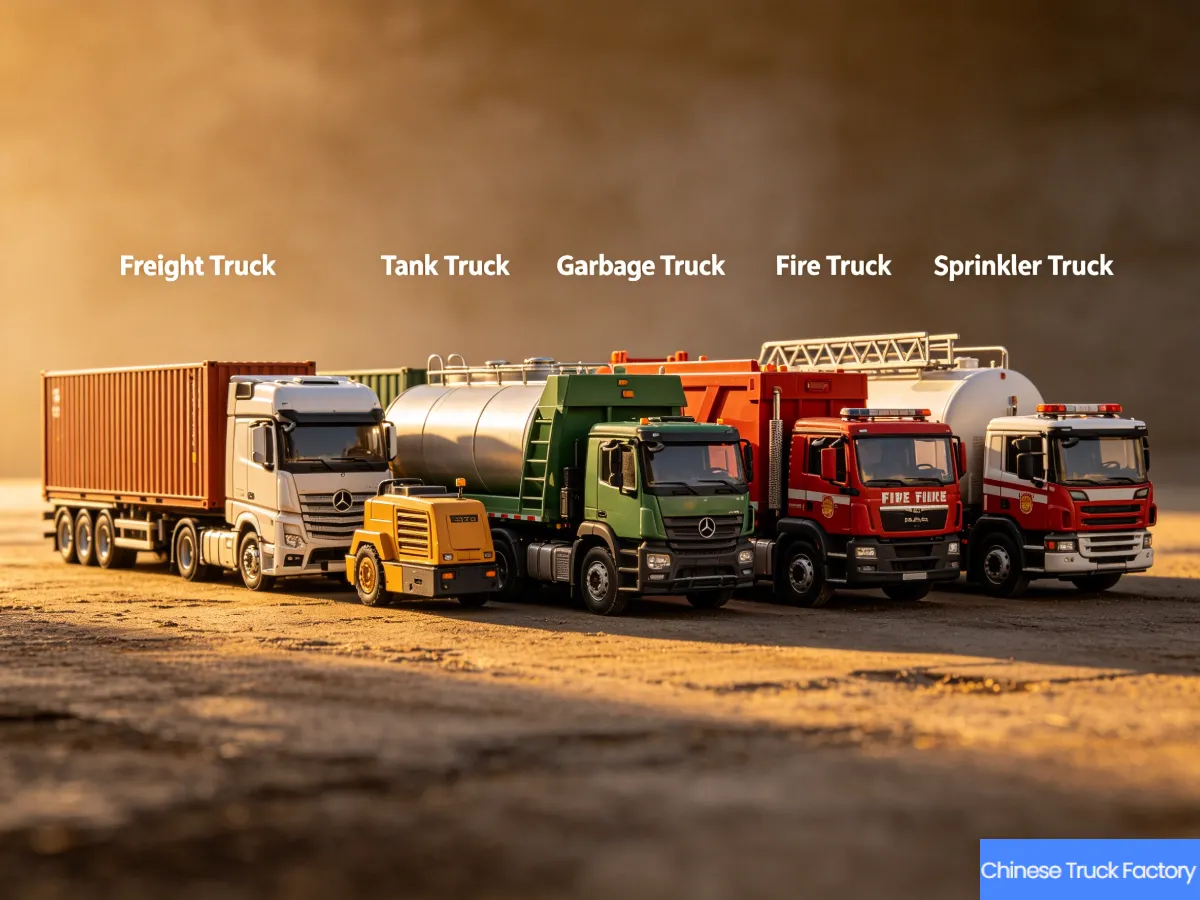
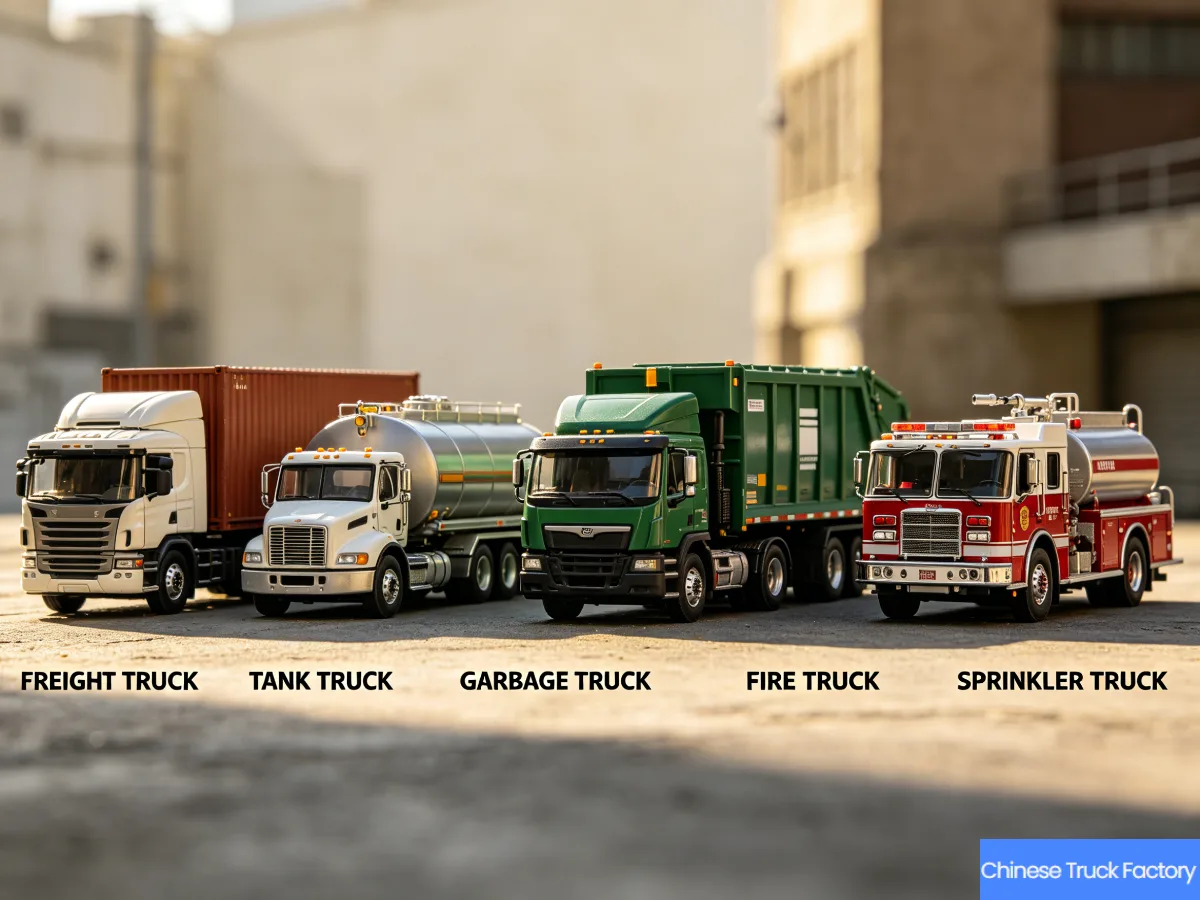
The right configuration depends on the job. The table below compares the main truck categories against the tropical stressors that matter most.
| Truck type | Contoh penggunaan terbaik | Key tropical considerations | Keterbatasan utama |
|---|---|---|---|
| Heavy-duty diesel dump truck (6×4 / 8×4) | Construction, quarry, laterite hauling | Oversized cooling, dust filtration, reinforced dump body, sealed hydraulics | Higher curb weight reduces legal payload |
| Tractor truck / prime mover | Long-haul and container transport | High-temp cooling, aerodynamic heat management, corrosion-protected cab | Less suited to unpaved or flooded routes |
| Truk pemadat sampah | Municipal and urban waste collection | Sealed electrical, hydraulic duty cycle, leachate management, corrosion coating | Compaction adds weight and reduces net payload |
| Tanker truck (water, fuel) | Dust suppression, fuel distribution | Tank coating, baffle integrity, pump sealing, center of gravity | Product compatibility and safety compliance vary by market |
| Derek yang dipasang di truk | Construction and utility lifting | Hydraulic sealing, load chart accuracy at high temperature, outrigger stability on soft ground | Crane deadweight reduces cargo payload |
| Mobil pemadam kebakaran | Municipal and industrial response | Pump reliability, water tank corrosion protection, chassis mobility on wet roads | Standards and certification are market-specific |
Notice that no single row wins across all conditions. A tractor truck optimized for long-haul highway work is the wrong tool for a flooded laterite road, and a mining dump truck is the wrong tool for urban refuse collection. The climate is one variable; the duty cycle is the other.
Payload, GVW, and the Weight Trap
This is where tropical buyers most often get into trouble. Three numbers get confused constantly:
- Berat kosong — the truck empty, with fuel and fluids.
- Muatan — the cargo the truck can legally and technically carry.
- GVW / GVWR — the maximum total weight of the loaded vehicle.
The legal payload is not the same as the factory-rated payload. It is set by the destination country’s axle-weight and gross-weight regulations, and it is enforced at registration and at weigh stations. A truck rated for 25 tonnes of payload may be legally limited to less in a market with stricter axle limits.
Body volume is a separate trap. A 20 m³ dump body does not automatically carry 20 tonnes. Multiply the material density by the body volume to estimate the load:
| Bahan | Approximate density (t/m³) | 20 m³ body load (approx.) |
|---|---|---|
| Dry sand | 1.4–1.6 | 28–32 t |
| Wet sand / gravel | 1.8–2.0 | 36–40 t |
| Crushed rock | 1.6–1.8 | 32–36 t |
| Coal | 0.8–1.0 | 16–20 t |
| Topsoil | 1.2–1.4 | 24–28 t |
These are indicative ranges; actual density varies with moisture and compaction. The point is that a body sized for coal will be badly overloaded with wet gravel. Always check material density × body volume against chassis, axle, tire, and legal weight limits before finalizing a specification. The truk diesel tugas berat range shows how these constraints translate into real configurations.
Body and Superstructure Design for Humid, Corrosive Conditions
On specialized vehicles, the superstructure often fails before the chassis does. Design choices that work in dry climates can corrode, jam, or leak in the tropics.
Truk pengangkut
- Higher-grade steel floor and sidewalls resist abrasion from wet, heavy material.
- Drainage at the body floor prevents standing water that accelerates corrosion.
- Hydraulic cylinders and hoses rated for high ambient temperature.
- Subframe and hinge points protected against mud and grit.
Truk pemadat sampah
- Compactor body coating that resists leachate corrosion.
- Leachate tank sized for the collection route and sealed against spillage.
- Hydraulic cycle time matched to the number of stops per shift.
- Sealed control system to survive washdown and rain.
Tanker trucks
- Tank material and internal coating compatible with the product and the humidity.
- Baffles to control surge on wet, winding roads.
- Pump and valve sealing rated for continuous operation in heat.
For construction and municipal buyers, the solusi kendaraan konstruksi untuk tugas berat page explains how superstructure and chassis are matched for these environments.
Performance and Productivity in Tropical Operations
Productivity in the tropics is not about top speed. It is about how many tonnes move per shift, and how many shifts the truck actually completes.
Metrics that matter
- Payload per trip — constrained by legal weight, not by body size.
- Waktu siklus — loading, hauling, dumping, and returning, including delays from mud or flooding.
- Trips per day — heavily influenced by road condition and weather.
- Kemampuan Mendaki — critical on laterite and mine haul roads.
- Fuel per tonne moved — the real efficiency measure, not fuel per kilometer.
- Availability — the percentage of scheduled hours the truck is actually working.
A truck with slightly lower horsepower but better cooling and traction may out-produce a higher-horsepower unit that derates on grades or gets stuck in the wet season. This is why cost per tonne moved, not purchase price, is the correct comparison metric.
Fuel and Energy Consumption: Why One Number Is Misleading
Fuel consumption in tropical operation depends on gross weight, average speed, terrain, idling time, driver behavior, axle ratio, tire pressure, and climate. A single quoted figure is almost meaningless across different duty cycles.
What actually drives consumption up in these conditions:
- Higher rolling resistance on soft or muddy roads.
- Frequent idling for air conditioning and hydraulic work.
- Engine derating forcing longer time on grade.
- Clogged air filters and radiator cores.
- Higher ambient temperature reducing combustion efficiency.
Rather than asking “what is the fuel consumption,” ask “what is the fuel consumption for my specific route, load, and cycle.” If a supplier gives you a range, treat it as an indicative operating range and confirm the assumptions.
Electric trucks in tropical climates
Battery-electric trucks are increasingly viable for predictable, high-cycle routes such as port and terminal operations. In tropical conditions, however, battery thermal management becomes a first-order concern, since sustained high ambient temperature accelerates degradation and reduces usable capacity. Payload is also affected by battery weight. For fleets with fixed routes and depot charging, the port logistics and electric truck solutions are worth reviewing against your charging window and electricity tariff.
Maintenance and Reliability: The Real Cost Driver
Downtime costs more than parts. A truck that is available 90% of the time versus 70% can move dramatically more material per year, and the difference is usually maintenance accessibility and parts availability, not the initial build quality.
Daily inspection (tropical focus)
- Tire condition and pressure — heat and rough roads accelerate wear.
- Fluid leaks, especially hydraulic and coolant.
- Radiator and charge-air cooler cleanliness.
- Air tank drainage — condensation is worse in humid climates.
- Lights and warning indicators.
- Cab and body seals for water intrusion.
Periodic inspection
- Engine oil and filters, at intervals set by the manufacturer for your duty cycle.
- Transmission and differential oil condition.
- Brake system — check for corrosion and moisture in air lines.
- Suspension and wheel bearings.
- Hydraulic oil, hoses, and PTO components.
- Dump body hinges, compactor mechanism, or crane pins depending on the vehicle.
Exact service intervals must come from the specific engine and component manuals for your truck. Do not assume a generic interval applies to your operating conditions.
Diagnosing a slow dump body as an example
Symptom: the dump body rises slowly. Do not jump to replacing the cylinder. Work through the sequence:
- Check hydraulic oil level and temperature.
- Check filter restriction.
- Verify PTO engagement.
- Test pump pressure.
- Inspect control valve operation.
- Check cylinder for internal leakage.
- Check hoses for restriction or kinking.
- Confirm the load is within the body and cylinder rating.
This diagnostic order applies broadly to hydraulic systems and saves both time and parts cost.
Total Cost of Ownership: What to Actually Compare
Purchase price is only one line. A realistic TCO comparison for a tropical fleet includes:
| Kategori biaya | Notes for tropical operation |
|---|---|
| Harga pembelian | Configured specification, not base model |
| Angkutan barang dan asuransi | Depends on shipping method and destination port |
| Import duties and compliance | Homologation, registration, taxes |
| Bahan bakar atau listrik | Driven by duty cycle, not brochure figures |
| Ban | Higher wear on rough, hot roads |
| Pemeliharaan terjadwal | Shorter intervals in dust and heat |
| Perbaikan yang tidak terjadwal | Corrosion and water intrusion are common causes |
| Suku cadang | Availability and lead time matter as much as price |
| Waktu henti | Seringkali, biaya tersembunyi yang paling besar |
| Nilai sisa | Affected by corrosion and condition at resale |
Two trucks with the same purchase price can have very different five-year costs. The one with better cooling, corrosion protection, and parts availability usually wins, even if it costs more up front.
Compliance and Destination Market: Confirm Before You Commit
There is no universal “global compliant” truck. Requirements vary by country and change over time. Before finalizing a specification, confirm with the relevant authorities or a qualified importer:
- Emission standard required for registration.
- Homologation or type approval requirements.
- Left-hand or right-hand drive.
- Axle-weight and gross-weight limits.
- Vehicle dimension limits.
- Lighting, braking, and safety requirements.
- Fuel quality and availability of DEF/AdBlue where applicable.
- Local service and spare-parts capability.
Regulatory information is time-sensitive and market-specific. Treat any specification claim as provisional until verified against current destination-country rules.
Hal-hal yang Perlu Diperhatikan Terkait Pengiriman dan Impor
How a truck is shipped affects cost, transit time, and risk. Common methods:
- RoRo — the truck rolls on and off; usually the simplest for complete vehicles.
- Barang curah — for oversized or specialized units that do not fit standard RoRo or container handling.
- Rak datar — for units that fit within flat-rack dimensions and weight limits.
- Kontainer — practical only for smaller units or partially disassembled vehicles.
The right choice depends on vehicle dimensions, weight, drivability, quantity, route, and destination port. Also plan for marine insurance, customs clearance, import tax, and destination-port charges. The panduan tentang cara pengiriman truk berat ke luar negeri covers these logistics in more detail.
How to Evaluate a Supplier for Tropical Operations
Not every supplier understands tropical duty cycles. Use a consistent evaluation framework rather than a brand preference:
- Kesesuaian aplikasi — does the proposed configuration match your material, route, and cycle?
- Cooling and thermal management — is the cooling package sized for high ambient temperature?
- Corrosion protection — frame treatment, fasteners, coatings, and electrical sealing.
- Payload and weight compliance — is the legal payload confirmed for your market?
- Ketersediaan suku cadang — can consumables and common spares be sourced locally or regionally?
- Maintenance accessibility — can routine service be done without special tools?
- Dokumentasi — is the specification written clearly enough to compare against alternatives?
- Layanan purna jual — warranty scope, response time, and technical assistance.
Chinese Truck Factory at chinesetruckfactory.com works within this framework: it publishes detailed configuration information, supports specification matching against destination-market requirements, and provides export documentation and shipping coordination. That approach fits buyers who need a configuration matched to a real duty cycle rather than a generic export model.
Request a Tropical-Climate Truck Specification Review
Common Mistakes Tropical Buyers Make
- Choosing on horsepower alone. Cooling and gearing matter more than peak power in sustained heat.
- Assuming body volume equals payload. Material density decides the real load.
- Ignoring legal axle limits. Registration and enforcement will catch an overloaded specification.
- Skipping corrosion protection. It is cheap at build time and expensive to retrofit.
- Comparing purchase prices across different specifications. Two “30-ton trucks” can be entirely different machines.
- Overlooking parts availability. A truck that waits weeks for a hose is not saving money.
- Treating fuel consumption as a fixed number. It is a function of your duty cycle.
Pertanyaan yang Sering Diajukan
What makes a truck suitable for a tropical climate?
Four things matter most: an oversized cooling package for high ambient temperature, corrosion protection on the chassis and body, sealed electrical and hydraulic systems against water intrusion, and a filtration setup that handles dust and humidity. The duty cycle then determines the specific configuration.
Which axle configuration should I choose for tropical haul roads?
For heavy construction and quarry work, 6×4 and 8×4 configurations are common because they distribute load across more axles and improve traction on soft ground. The trade-off is higher curb weight, larger turning radius, and higher tire cost. The right choice depends on your legal axle limits and route geometry.
How do I calculate the real payload for a dump truck?
Multiply the material density by the body volume to estimate the load, then check it against the chassis, axle, tire, and legal weight limits for your market. A 20 m³ body can be overloaded with wet gravel and underused with coal. Always confirm the legal payload, not just the factory rating.
What affects fuel consumption in tropical operation?
Gross weight, route gradient, road surface, idling time, axle ratio, tire pressure, ambient temperature, and driver behavior all influence consumption. There is no single figure that applies across duty cycles. Ask for an indicative range with the assumptions stated.
How should I plan maintenance for high heat and humidity?
Increase inspection frequency for cooling system cleanliness, air tank drainage, hydraulic hoses, and electrical connectors. Follow the manufacturer’s service intervals for your specific engine and components, adjusted for dust and heat. Downtime from a failed hose or corroded connection usually costs more than the part.
How do I confirm a truck will be legal in my country?
Check emission standards, homologation or type approval, drive side, axle-weight and dimension limits, lighting, braking, and safety requirements with the relevant authority or a qualified importer. Requirements change, so verify against current rules rather than relying on general guidance.
How are heavy trucks shipped to tropical markets?
RoRo is common for complete vehicles, while breakbulk and flat rack handle oversized or specialized units. Container shipping is practical only for smaller or partially disassembled vehicles. The right method depends on dimensions, weight, quantity, route, and destination port.
Are electric trucks practical in tropical climates?
They can work well for predictable, high-cycle routes with depot charging. Battery thermal management is critical in sustained heat, and battery weight reduces payload. Compare total cost of ownership with your actual electricity tariff, charging window, and route profile rather than range figures alone.
Kesimpulan Akhir
The best truck for tropical climates is not the one with the most horsepower or the largest body. It is the configuration that matches your payload, route, legal weight limits, maintenance capability, and operating cycle with the fewest compromises. Cooling capacity, corrosion protection, and water sealing are the specifications that separate a truck that lasts from one that spends its life in the workshop.
Before you commit, confirm four things: the real payload your route and material require, the legal weight limits in your market, the cooling and corrosion specification of the proposed truck, and the availability of parts and service. Get those right, and the rest of the specification falls into place.