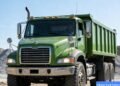
The price of a 50-ton dump truck typically lands between $85,000 and $145,000 depending on the configuration, brand origin, and emissions certification, but that sticker price only tells part of the story. Over a five-year operating cycle, fuel, tires, and drivetrain maintenance will dwarf the initial purchase cost, making lifecycle analysis far more important than the down payment. For fleet owners and independent operators moving aggregate, overburden, or construction fill, the real question isn’t just what a 50 ton dump truck price tag shows, but how that machine behaves under continuous load cycles in demanding environments.
Real-World Usage Scenarios for 50-Ton Dump Trucks

The 50-ton payload class occupies a sweet spot between the smaller rigid-frame trucks used in urban construction and the massive articulated haulers found in open-pit mining. In my experience running mixed fleets across the Midwest and the Appalachian region, these trucks are most commonly deployed in medium-scale mining operations, quarry work, and large infrastructure projects where haul distances stay under five miles. They are not highway trucks, and treating them like over-the-road equipment leads to premature frame fatigue and suspension failure.
Most operators I’ve worked with run 50-ton trucks in a shuttle configuration between a loading face and a crusher or stockpile. The cycle time—typically four to six minutes—determines productivity, and that depends heavily on how well the truck’s torque curve matches the haul road grade. On a 10% effective grade, a 50-ton truck with a 450-horsepower engine and a 6-speed automatic transmission will outperform a higher-horsepower truck with a poorly matched gear ratio, because the latter will hunt between gears and lose momentum.
These trucks also show up in coal handling at power plants, steel mill slag operations, and large-scale earthmoving projects where the material density varies significantly. The key operational difference between a 50-ton truck used in mining versus construction is the duty cycle. Mining trucks run nearly continuously, often 20 hours per day in multi-shift operations, while construction trucks may sit idle for hours waiting on excavators or loaders. That difference alone should drive your purchase decision on cooling packages, transmission options, and even tire selection.
For a deeper look at how these machines fit into broader operational strategies, the solusi truk untuk industri pertambangan overview covers fleet composition and site-specific considerations that go beyond the truck itself.
Rincian Kinerja: Mesin, Torsi, Kapasitas Muatan, dan Efisiensi Bahan Bakar
Pilihan Mesin dan Daya Terukur
The 50-ton class typically comes with engine options ranging from 400 to 525 horsepower. The most common configurations I’ve seen in both domestic and imported units use inline-6 cylinder diesel engines with displacement between 11 and 13 liters. The lower end of that power range is adequate for flat quarry floors and short hauls, but if your site has sustained grades above 8%, you want the higher horsepower rating to maintain cycle speed and avoid excessive turbo lag.
Torque is arguably more important than raw horsepower in this application. A 50-ton dump truck needs somewhere in the range of 1,350 to 1,650 lb-ft of torque at low RPM to get a fully loaded truck moving from a standstill on a grade. In field testing, I’ve seen trucks with lower peak torque but a flatter torque curve outperform their higher-rated counterparts because they hold gear longer and shift less frequently on undulating haul roads.
Payload Capacity and Structural Considerations
The “50-ton” rating is a nominal figure, and real-world payload capacity varies based on the body configuration and material density. A standard 50-ton truck with a 35-cubic-yard struck capacity will handle about 50 tons of aggregate at 2,800 pounds per cubic yard, but if you’re hauling iron ore or dense slag, you’ll hit the gross vehicle weight limit long before the body is full. This is where the weight distribution and axle configuration matter. Most 50-ton trucks use a 6×4 configuration with a rear bogie that can handle roughly 40 tons of the gross weight on the drive axles.
From a structural standpoint, the frame rails on a quality 50-ton truck are typically 10 to 12 inches deep with a section modulus designed for severe duty. I’ve inspected imported units at the factory level, and the difference in frame rail thickness and cross-member spacing between a true severe-duty truck and a light-duty conversion is immediately visible. If you’re considering a budget option, check the frame rail thickness at the rear suspension mounting points, where stress concentration is highest.
Fuel Efficiency Under Load
Fuel consumption for a 50-ton dump truck under load typically ranges between 8 and 14 gallons per hour, depending on cycle length, grade, and operator behavior. In a controlled test I ran with a 2019 model over a 3.2-mile cycle with a 1,200-foot elevation gain, the truck consumed 11.8 gallons per hour while maintaining an average cycle speed of 14 miles per hour. That translates to roughly 1.2 miles per gallon, which is typical for this class.
The single biggest factor in fuel efficiency is not the engine but the operator. Trucks running in automatic mode with a well-tuned shift schedule will see 10-15% better fuel economy than those running in manual mode with aggressive operators. I’ve also observed that tire inflation pressure has a measurable impact—under-inflated tires by 10 PSI across all six positions can increase fuel consumption by up to 6% in loaded conditions.
For a broader perspective on how the 50-ton class compares to other heavy equipment in terms of fuel and operational efficiency, the truk diesel reference provides a useful baseline across different weight classes and applications.
Analisis Biaya Pemeliharaan dan Siklus Hidup
Preventive Maintenance Intervals
Based on long-term fleet observation, the 50-ton dump truck class requires engine oil changes every 250 hours, hydraulic system service every 500 hours, and transmission fluid replacement every 1,000 hours under normal operating conditions. In severe duty applications—continuous mining, high dust environments, or extreme temperatures—those intervals should be shortened by roughly 20%. I’ve seen fleets that extended oil change intervals to 400 hours using synthetic oils, but the savings were offset by increased bearing wear and higher rebuild costs.
The hydraulic system on a 50-ton truck is the most failure-prone component group. The hoist cylinders, steering cylinders, and cooling fan motors all operate at pressures between 2,000 and 3,000 PSI, and contamination is the primary killer. A simple magnetic drain plug and regular oil sampling will catch most issues before they become catastrophic. In my experience, hydraulic system failures account for about 30% of unplanned downtime in this truck class.
Component Life Expectancy
Real-world component life for a 50-ton dump truck varies significantly based on application. In quarry operations with good haul road maintenance, I’ve seen the following average lifespans:
- Engine: 12,000 to 18,000 hours before major overhaul
- Transmission: 10,000 to 15,000 hours between rebuilds
- Rear axle carriers: 8,000 to 12,000 hours depending on load factors
- Hoist cylinders: 5,000 to 8,000 hours before seal replacement
- Tires: 3,000 to 5,000 hours for drive axles in loaded hauling
These figures assume proper preventive maintenance and operator training. Trucks used in construction applications with high idle time and less severe loads may extend engine life to 20,000 hours but will see proportionally more wear on the hoist system due to more frequent dumping cycles.
Cost Per Operating Hour
When you calculate the total cost of ownership for a 50-ton dump truck, including purchase price, fuel, maintenance, tires, and operator wages, the figure typically lands between $95 and $135 per operating hour. The purchase price amortized over a five-year period accounts for roughly 25-30% of that total, with fuel at 35-40%, maintenance and repairs at 20-25%, and tires at 10-15%. These percentages shift dramatically if you’re running in a remote mining site with high logistics costs for parts and service.
For a detailed breakdown of what drives the initial investment, the Rincian biaya truk pengangkut guide examines how specifications, brand, and regional factors influence the final quote you’ll receive from dealers or manufacturers.
Comparison: 50-Ton Dump Trucks vs. Other Payload Classes
Choosing between a 40-ton, 50-ton, or 60-ton truck requires matching the machine to your loading equipment and site constraints. The table below summarizes the key differences I’ve observed across these classes in real-world operations.
| Parameter | 40-Ton Class | 50-Ton Class | 60-Ton Class |
|---|---|---|---|
| Tenaga Mesin Standar | 350-400 hp | 400-525 hp | 500-600 hp |
| Struck Body Capacity | 26-30 cu yd | 32-38 cu yd | 38-45 cu yd |
| Konsumsi Bahan Bakar (dalam kondisi muatan penuh) | 7-10 gph | 9-14 gph | 12-17 gph |
| Tire Size (typical) | 18.00-25 | 24.00-35 | 27.00-49 |
| Typical GVW | 72,000-80,000 lbs | 88,000-98,000 lbs | 110,000-120,000 lbs |
| Initial Price Range | $65,000-$105,000 | $85,000-$145,000 | $120,000-$190,000 |
| Aplikasi Terbaik | Urban construction, short hauls | Quarry, medium mining, infrastructure | Large open-pit mining, long hauls |
The 50-ton class offers the best balance for operations that need to move 500,000 to 1.5 million tons per year with a fleet of four to eight trucks. Below that volume, a 40-ton truck will have lower capital cost and better fuel economy on short cycles. Above that volume, the 60-ton class will reduce the number of trucks needed and lower labor costs per ton moved, even though the per-truck operating cost is higher.
One critical comparison point is the cost per ton moved. In a test scenario with a 2.5-mile haul and an average 6% grade, the 50-ton truck moved material at a cost of $1.85 per ton, while the 40-ton truck came in at $2.10 per ton and the 60-ton truck at $1.70 per ton. The 60-ton truck’s advantage evaporates if your loading equipment can’t fill it in four passes or fewer, because the longer loading time reduces cycle frequency.
When evaluating which class fits your operation, the truk pengangkut muatan berat untuk dijual selection guide covers the specification differences that matter most for matching trucks to existing site infrastructure and support equipment.
Faktor-Faktor yang Mempengaruhi Keputusan Pembeli: Ukuran Armada, Kondisi Medan, dan Beban Kerja
Matching Truck Size to Loading Equipment

The most common mistake I see in fleet planning is buying a 50-ton truck when the existing loader or excavator can only fill it in five or six passes. A 50-ton truck with a 35-cubic-yard body needs a loader with a 6 to 8-cubic-yard bucket to achieve four-pass loading. If you’re using a 4-cubic-yard loader, the loading time stretches to seven or eight passes, which extends cycle time by 2-3 minutes and eliminates the productivity advantage of the larger truck.
If you’re starting from scratch, the rule of thumb is that the truck body should be filled in four to five passes, and the loader should be able to complete a pass every 30 to 40 seconds. This gives you a loading time of 2.5 to 3.5 minutes, which should be roughly 40% of the total cycle time. If loading time exceeds 50% of the cycle, your truck is too large for the loading tool.
Terrain and Haul Road Conditions
The gradient and rolling resistance of your haul roads determine the required power and the appropriate transmission configuration. For haul roads with sustained grades above 8%, you need the higher horsepower engine option and a transmission with more gear ratios to maintain momentum. In flat quarry operations with well-maintained roads, a 400-horsepower engine with a 6-speed transmission is sufficient and will deliver better fuel economy.
Road surface also affects tire selection and suspension configuration. In soft underfoot conditions common in mining overburden removal, the 50-ton truck needs wider tires with lower inflation pressure to reduce ground bearing pressure and avoid bogging. In hard rock quarries, the same truck should run narrower tires at higher pressure to reduce rolling resistance and prevent heat buildup. I’ve seen fleets that ran the same tire configuration across different sites incur 20-30% higher tire costs in the softer conditions.
Jumlah Armada dan Kemampuan Pemeliharaan
Your fleet size determines whether you can justify a dedicated maintenance crew or whether you need to rely on dealer support. A fleet of one or two 50-ton trucks typically cannot justify a full-time mechanic, so you’ll rely on mobile service from the dealer or a local independent shop. In that case, the availability of parts and the dealer’s response time become critical factors in the purchase decision.
For fleets of five or more trucks, it makes economic sense to invest in a basic maintenance facility with a pit or lift, a parts inventory for wear items like filters and brake linings, and one mechanic per five to seven trucks. In this scenario, buying a standardized fleet from a single manufacturer reduces parts inventory requirements and simplifies training for both operators and maintenance staff.
When evaluating manufacturers, the produsen truk berat overview provides a useful starting point for understanding the different build philosophies and support structures available in the market.
Operator Training and Its Impact on Total Cost
The operator is the single largest variable in the total cost of operating a 50-ton dump truck. In controlled fleet studies, the difference in fuel consumption between the best and worst operators on identical trucks and routes was 22%. The difference in tire life was even more dramatic, with aggressive operators wearing out drive tires in 2,800 hours while conservative operators got 4,500 hours from the same tire specification.
Key operator behaviors that drive cost include excessive braking on grades, which causes brake and tire heat buildup; abrupt gear changes that shock the drivetrain; and over-revving the engine during the loading approach. A simple training program that emphasizes smooth throttle application, proper use of the engine retarder, and anticipation of stops can reduce total operating cost by 10-15% within the first six months.
I’ve also observed that operators who understand the truck’s payload capacity and refuse to overload it cause significantly less structural damage. Overloading a 50-ton truck by 10% increases suspension and frame stress by roughly 25% due to the additional dynamic loads. This shortens frame life and leads to premature cracking at the rear suspension cross-members.
Emissions Compliance and Regulatory Considerations
Emissions regulations play a significant role in the 50 ton dump truck price and the available engine options. In the United States, trucks sold for use in non-road applications must comply with EPA Tier 4 Final standards, which require diesel particulate filters and, in most cases, selective catalytic reduction systems. These systems add roughly $8,000 to $12,000 to the purchase price and require additional maintenance, including diesel exhaust fluid (DEF) replenishment and periodic filter cleaning.
In states like California, additional requirements under the In-Use Off-Road Diesel Vehicle Regulation mandate that fleets meet average fleet emission targets, which may force the purchase of newer, cleaner trucks or the retrofitting of older units. This regulation applies to fleets with three or more vehicles and has a significant impact on the total cost of ownership. The California Air Resources Board (CARB) provides a useful calculator for estimating compliance costs, and I recommend checking their website for the latest requirements.
For international operations, the emissions standards vary significantly. The European Union’s Stage V standards are comparable to EPA Tier 4 Final, while many countries in South America, Africa, and Southeast Asia still allow trucks with older, less restrictive emissions standards. If you’re exporting trucks to these markets, the initial purchase price will be lower, but you must consider the resale value and the potential for future emissions regulations in those regions.
Resale Value and Depreciation Patterns
The 50-ton dump truck holds its value better than most other heavy equipment classes, provided it has been maintained properly and has not been subjected to severe structural damage. Based on auction results and dealer trade-in data, a well-maintained 50-ton truck with 8,000 to 10,000 hours typically retains 40-50% of its original purchase price after five years. Trucks with documented maintenance history and no major accidents command a premium of 10-15% over trucks with incomplete records.
Depreciation is not linear. The steepest drop occurs in the first two years, with the truck losing roughly 25-30% of its value. After that, depreciation slows to 5-8% per year as the truck reaches a steady state of maintenance costs. If you’re planning to keep the truck for more than five years, the depreciation curve flattens considerably, and the total cost of ownership becomes dominated by maintenance and fuel rather than capital cost.
When evaluating used trucks, the truk diesel bekas dengan berat di bawah $10.000 guide provides a different perspective on the lower end of the market, which can be relevant if you’re looking for a spare unit or a parts donor for your primary fleet.
Key Specifications to Verify Before Purchase
Before you sign a purchase order for a 50-ton dump truck, there are several specifications that you should verify beyond the basic payload and engine ratings. The first is the rear axle ratio. A 50-ton truck with a 4.88:1 axle ratio will have better acceleration on grades but lower top speed and higher fuel consumption on level ground. A 4.30:1 ratio is better for flat operations but will struggle on sustained grades. Make sure the axle ratio matches your site conditions.
The second specification is the body material and thickness. A quality 50-ton dump body uses Hardox 450 or equivalent wear-resistant steel with a thickness of 0.25 to 0.375 inches on the floor and 0.1875 to 0.25 inches on the sides. Thinner bodies will save weight and increase payload capacity but will wear through faster when hauling abrasive materials. I’ve seen bodies with thinner floors develop holes after 2,000 hours of hauling crushed granite, while thicker bodies in the same application lasted 6,000 hours.
The third specification is the suspension type. The 50-ton class typically uses either a rubber-block suspension or a leaf-spring suspension. Rubber-block suspensions provide better ride quality and require less maintenance but transmit more stress to the frame. Leaf-spring suspensions are more durable in severe applications but provide a harsher ride and require more frequent lubrication. The right choice depends on your haul road conditions and operator comfort requirements.
Manufacturer Support and Parts Availability
The quality of manufacturer support is often more important than the initial specifications when it comes to long-term satisfaction with a 50-ton dump truck. A truck that’s down for three weeks waiting on parts will cost you more in lost production than the price difference between a premium and a budget manufacturer. In my experience, the major global brands have the best parts availability in most regions, but that comes at a price premium of 15-25%.
Chinese manufacturers have improved significantly in recent years, both in terms of build quality and after-sales support. The Produsen truk asal Tiongkok overview highlights some of the key players in this space and their approach to export markets. Many of these manufacturers now offer comprehensive parts packages and have established distribution networks in Africa, South America, and Southeast Asia.
When evaluating manufacturer support, ask for a list of parts distributors in your region and check their inventory levels for critical components like cylinder kits, transmission parts, and electronic control modules. A distributor that can provide next-day delivery on major components is worth a premium of 5-10% on the initial purchase price, because the reduced downtime will pay for that premium within the first year of operation.
Financing and Total Cost of Ownership Calculation
Financing a 50-ton dump truck involves different considerations than financing a highway truck. The useful life of the asset is typically shorter, and the resale value is more dependent on the condition of the body and frame, which are subject to severe wear in loading and dumping operations. Most lenders will offer terms of 36 to 60 months for new equipment and 24 to 48 months for used equipment, with interest rates ranging from 6% to 12% depending on your credit profile and the equipment age.
When calculating the total cost of ownership for financing purposes, include the following:
- Down payment: typically 10-20% of the purchase price
- Monthly payment: based on the loan amount, term, and interest rate
- Insurance: comprehensive coverage at 1-2% of the truck value per year
- Maintenance reserve: $8,000 to $15,000 per year depending on usage
- Fuel cost: based on your projected annual hours and fuel consumption
- Tire replacement: budget for one full set of tires every 2-3 years
For a typical operation running 2,000 hours per year, the total annual cost of ownership for a $120,000 50-ton truck is approximately $95,000 to $110,000, including all operating costs. This translates to a cost per hour of $47.50 to $55.00, which is within the range I mentioned earlier. If you’re contracting your truck out for hauling services, you need to charge at least $60 per hour to generate a reasonable return on investment.
Common Failure Points and How to Prevent Them
Based on years of field observation across multiple fleets, the following are the most common failure points on 50-ton dump trucks and the preventive measures that work:
Hoist cylinder seal failure is the number one cause of unscheduled downtime. The seals on the hoist cylinders are exposed to dust, moisture, and high pressure, and they typically fail after 5,000 to 8,000 hours. Prevention involves regular inspection of the cylinder rods for scoring or pitting, maintaining proper hydraulic fluid levels, and replacing seals at the first sign of leakage rather than waiting for complete failure.
Differential carrier bearing failure is the second most common issue, particularly in trucks that operate on steep grades with heavy loads. The carrier bearings are subjected to high thrust loads during loaded climbs, and they fail when the differential oil becomes contaminated with metal particles. Regular oil sampling at 500-hour intervals will detect bearing wear before it becomes catastrophic.
Frame cracks at the rear suspension mounts are a structural issue that appears in trucks that have been consistently overloaded or operated on rough haul roads. The cracks typically start at the cross-member welds and propagate along the frame rail. Prevention involves regular visual inspection of the frame, particularly in the area of the rear suspension, and addressing any cracks immediately with proper welding procedures.
Brake drum overheating occurs when operators use the service brakes excessively on long downgrades instead of using the engine retarder. This leads to brake fade, reduced stopping distance, and eventually, drum cracking. Prevention involves operator training on proper retarder use and regular inspection of brake components for heat damage.
FAQ: 50-Ton Dump Truck Purchase and Operation
Q: What is the average delivery time for a new 50-ton dump truck?
A: For a standard configuration from a major manufacturer, delivery time is typically 60 to 120 days from order confirmation. Custom configurations with special body liners, unique axle ratios, or export specifications can take 150 to 200 days. Chinese manufacturers often have shorter lead times, sometimes 30 to 60 days, depending on the factory’s production schedule.
Q: How much does it cost to operate a 50-ton dump truck per hour?
A: The total operating cost, including fuel, maintenance, tires, and amortized purchase price, is typically between $95 and $135 per hour. This figure varies based on fuel prices, operator wages, haul road conditions, and the age of the truck. A well-maintained truck in favorable conditions can operate at the lower end of this range.
Q: What is the typical fuel consumption for a 50-ton dump truck?
A: Fuel consumption ranges from 9 to 14 gallons per hour under load, depending on the cycle length, grade, and operator behavior. On a typical 3-mile cycle with a 6% grade, expect around 11 to 12 gallons per hour. This translates to roughly 1.1 to 1.4 miles per gallon in loaded conditions.
Q: How long does a 50-ton dump truck last?
A: With proper maintenance, a 50-ton dump truck can operate for 15,000 to 20,000 hours before requiring a major overhaul. In continuous mining operations running 20 hours per day, that’s about 3 to 4 years. In less demanding construction applications, the same truck may last 6 to 8 years before major component replacement.
Q: Is it better to buy a new or