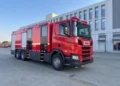
Choosing a truck for a high-temperature region is not about picking the biggest radiator or the highest horsepower number. It comes down to how the vehicle manages heat across the entire duty cycle — engine coolant, transmission oil, axle lubricants, hydraulic systems, tires, batteries, and the cab itself. A truck that performs well in a temperate climate can fail early in sustained 45°C (113°F) ambient conditions if the cooling package, lubrication strategy, and component selection were never matched to that environment. The right approach starts with application analysis, not a spec sheet.
This guide walks through the engineering decisions that actually matter when ambient temperature becomes a primary design constraint. I’ll cover how heat affects each major system, how to read a cooling package specification, what to check on the chassis and drivetrain, and how to build a total cost of ownership picture that reflects the real cost of thermal stress over a vehicle’s service life.
Why High Ambient Temperature Changes Truck Selection
Ambient temperature affects a truck in two ways that buyers often underestimate. The first is reduced heat rejection capacity. A radiator, charge-air cooler, and oil cooler are sized around a temperature differential between the coolant and the ambient air. When ambient air rises from 25°C to 45°C, that differential shrinks, and the same cooling hardware rejects less heat. The second is accelerated degradation of anything that relies on oil, rubber, or electronics.
Engines lose power density in hot conditions because intake air is less dense and because the ECU typically derates output to protect components when coolant or intake temperatures climb. Turbocharged diesels are especially sensitive — a hot charge-air stream entering the manifold raises combustion temperatures and increases the risk of detonation and thermal fatigue on pistons and valves.
Lubricants are the next concern. Engine oil, transmission fluid, and axle oil all have a viscosity that drops as temperature rises. Below a certain film strength, metal-to-metal contact increases and wear accelerates. Some oils oxidize faster above a threshold temperature, which shortens drain intervals and increases the risk of sludge and varnish.
Rubber and plastic components — hoses, belts, seals, bushings, wiring insulation — age faster under sustained heat. This is why a truck specified for a cool coastal climate may need a different hose compound, a higher-temperature-rated wiring harness, and a more robust seal package for a hot inland or desert operation.
Start With the Duty Cycle, Not the Spec Sheet
Before any component is selected, the operating profile needs to be defined. The same truck model can be perfectly adequate in one hot-region application and completely unsuitable in another, depending on how the vehicle is used.
Questions to answer before selecting a configuration
- What is the cargo or material, and what is the required payload per trip?
- What is the route length, road surface, and gradient profile?
- How many hours per day does the truck operate, and how many cycles?
- Is the truck idling heavily (urban collection, construction waiting, port queues)?
- What is the typical ambient temperature range, and how long does the hot season last?
- What is the altitude, since altitude reduces air density and compounds heat stress?
- Is the operation stop-start or sustained highway?
- What is the annual mileage or engine-hour target?
A garbage compactor running a stop-start urban route in 45°C heat has a very different thermal profile from a long-haul tractor pulling a trailer at steady speed. The compactor idles frequently, its hydraulic system cycles constantly, and its cooling airflow is often restricted by the body. The tractor spends most of its time at highway speed where airflow is high, but it works the engine harder under load.
For haulage and construction applications, buyers evaluating heavy-duty diesel trucks should map the route gradient and payload before deciding on engine rating and axle ratio. For mining and quarry work, the same logic applies with even higher loads — the selection framework for a mining dump truck is built around cost per ton moved, not purchase price.
Cooling System and Thermal Management
The cooling package is the single most important specification item in a hot-region truck. It is also the one most often compromised during procurement because it is not visible in a photograph.
What to check in the cooling package
- Radiator core size and fin density — a larger core with appropriate fin pitch handles higher heat loads, but very tight fin spacing can clog faster in dusty environments.
- Charge-air cooler capacity — critical on turbocharged engines; a larger, more efficient cooler lowers intake temperature and protects the engine.
- Fan type and drive — viscous fan clutches and electronically controlled fans reduce parasitic load but must be rated for the ambient temperature range.
- Coolant specification — ethylene glycol concentration, corrosion inhibitor package, and boiling point margin should be confirmed for the destination climate.
- Expansion tank and pressure cap — the pressure rating determines the boiling point of the coolant; a higher-rated cap increases the margin before boil-over.
- Debris screens and dust separation — essential in dusty hot environments where the radiator can clog in a single shift.
On trucks with a body or superstructure mounted behind the cab, the cooling airflow path can be disrupted by the body, the crane, or the tank. This is a common issue on specialized vehicles where the body designer and the chassis designer did not coordinate. Buyers should confirm that the final vehicle configuration, including the body, does not obstruct or recirculate hot air into the radiator.
For electric trucks, thermal management is a different problem. The battery pack, the inverter, and the motor all require active cooling, and in high ambient temperatures the cooling system works harder while the battery itself may need to be derated to prevent accelerated degradation. Battery thermal management strategy is therefore a core selection criterion, not an afterthought.
Powertrain and Drivetrain Selection for Hot Climates
Engine, transmission, and axle selection in a hot region is a balance between power density, thermal margin, and fuel efficiency. Bigger is not automatically better, but undersizing is a common and expensive mistake.
Mesin
Engine ratings should be selected with a thermal margin, not at the absolute limit of the cooling package. A truck that runs at 95% of its cooling capacity in a temperate climate will be at or beyond the limit in a hot one. Torque delivery should be matched to the grade and payload, not chosen for the highest available number.
Engine calibration matters. Some manufacturers offer hot-climate calibration that adjusts fuel delivery, injection timing, and fan strategy. This is worth confirming as a specific option, not assumed.
Transmisi
Both manual and automated manual transmissions (AMT) generate heat, and both rely on oil for lubrication and cooling. In hot conditions, transmission oil temperature can climb quickly under sustained load, especially on grades. A transmission with an external oil cooler, or one that is rated for the ambient temperature, should be preferred. On AMT units, the clutch actuation and control system also generate heat and should be reviewed.
Buyers comparing manual and automated transmissions should weigh driver familiarity, route profile, and maintenance access — in remote hot-region operations, a simpler transmission with fewer electronic components can reduce downtime risk.
Axles and final drive
Axle oil temperature rises with load and speed. A hub-reduction axle and a single-reduction axle behave differently under sustained high ambient temperature, and the choice affects both durability and fuel consumption. The final drive ratio should be matched to the operating speed and grade, not copied from a different application.
Brakes and retarders
On long descents in hot conditions, brake fade and heat soak are serious concerns. Engine brakes, retarders, and brake cooling strategies should be reviewed as part of the specification. Air dryer capacity and air system integrity also matter more in hot, humid conditions where condensation and corrosion accelerate.
Payload, Weight Engineering, and Legal Limits
High ambient temperature does not change the physics of payload, but it does interact with it in ways buyers should understand. Higher temperatures reduce air density, which reduces engine power, which in turn reduces achievable grade speed and cycle time. The same nominal payload can therefore produce a different productivity figure in a hot region.
More importantly, payload must be calculated correctly in the first place. Three numbers are frequently confused:
| Istilah | What it means | Why it matters in hot regions |
|---|---|---|
| Berat kosong (tare) | Vehicle weight with fuel, fluids, and driver, no cargo | Heavier cooling packages and larger radiators add weight |
| Muatan | Berat muatan yang dapat diangkut oleh kendaraan tersebut | Must be checked against legal axle and gross limits, not just body volume |
| GVW / GVWR | Maximum total vehicle weight | Defines the design envelope; legal GVW may be lower in some markets |
| Volume benda | Cubic capacity of the body or tank | Volume × material density gives an approximate load, which must be checked against weight limits |
A 20 m³ dump body does not automatically carry 20 tonnes. Sand, gravel, rock, coal, and construction waste have very different densities, and the actual load depends on the material. The legal payload is then further constrained by the destination country’s axle-weight and gross-weight regulations, which vary widely. Final legal payload must always be confirmed against the specific vehicle registration requirements of the destination market.
For buyers selecting a tanker or water truck for hot-region operations, the same principle applies: tank volume is a starting point, not a payload figure. The relevant selection guide for water tanker capacity explains how volume, material density, and axle loading interact.
Body and Superstructure Design Under Heat
For specialized vehicles, the body or superstructure is often where heat-related problems actually appear. Hydraulic systems, in particular, are sensitive to ambient temperature because hydraulic oil viscosity changes with temperature, and heat buildup in the circuit can cause seal failure, valve sticking, and reduced cycle speed.
Hydraulic system considerations
- Hydraulic oil specification and viscosity index — a higher viscosity index oil maintains more stable performance across temperature swings.
- Oil cooler sizing — many hydraulic systems rely on the reservoir and lines for cooling; in hot conditions an auxiliary cooler may be necessary.
- Hose and seal material — standard rubber compounds degrade faster at high temperature; higher-rated materials are worth specifying.
- PTO and pump duty rating — a PTO that is adequate for intermittent use may overheat under continuous duty in high ambient temperature.
- Filtration — finer filtration protects components but can restrict flow if the oil is hot and thin; the filter rating should match the system.
On garbage compactor trucks, the compaction cycle runs hundreds of times per shift. Heat builds in the hydraulic circuit, and the body itself can become a heat trap for the chassis behind it. Leachate management, hopper design, and hydraulic cycle time all interact with thermal performance. Buyers evaluating sanitation vehicles for hot-region municipal contracts should confirm the hydraulic cooling strategy as part of the technical review.
On truck-mounted cranes, heat affects both the hydraulic system and the structural components. Crane load charts are based on structural and stability limits, not on ambient temperature, but hydraulic performance can degrade in extreme heat. Buyers evaluating lifting capacity should compare the actual load chart at the required working radius before selecting a truck-mounted crane, and should confirm that the hydraulic system is rated for the destination climate.
On fire trucks, heat affects pump performance, water and foam systems, and the chassis itself. Pump flow and pressure ratings should be confirmed against the ambient temperature range, and the cooling system for the chassis must account for the additional load of the pump drive. Fire truck specifications are highly dependent on the destination market’s standards, so compliance should be confirmed locally rather than assumed.
Productivity and Cost Per Unit Moved
In hot regions, productivity is often limited by thermal derating rather than by nominal vehicle capability. A truck that can maintain 40 km/h on a grade in a temperate climate may only hold 30 km/h in extreme heat because the engine derates to protect itself. Over a full shift, that difference translates directly into fewer cycles and higher cost per ton moved.
The right productivity metric depends on the application:
- Dump and mining trucks: cost per ton moved, calculated from payload, cycle time, fuel consumption, and maintenance cost.
- Long-haul tractors: cost per ton-km, factoring in payload, route profile, and fuel efficiency.
- Garbage compactors: cost per bin collected or cost per tonne of waste, factoring in route density and compaction ratio.
- Tankers and water trucks: cost per cubic meter delivered, factoring in fill time, travel time, and discharge time.
Fuel consumption in hot regions is typically higher than in temperate climates for the same duty cycle, because air conditioning load increases, cooling fan duty increases, and engine derating can force more time at higher load. Actual fuel consumption depends heavily on gross weight, average speed, terrain, idling, driver behavior, and duty cycle, so any figure quoted by a supplier should be treated as an indicative operating range, not a guaranteed value.
Reliability, Maintenance, and Parts Availability
In a hot region, vehicle uptime is often more valuable than purchase price. A truck that spends an extra week per year in the workshop costs more in lost revenue than the price difference between two competing configurations.
Maintenance items that matter most in heat
- Oli mesin dan filter — shorter drain intervals may be required in sustained high ambient temperatures; follow the engine manufacturer’s guidance for the specific duty cycle.
- Coolant condition — check concentration, inhibitor package, and contamination regularly.
- Belts and hoses — inspect for cracking, hardening, and glazing; replace at the first sign of degradation.
- Transmission and axle oil — monitor temperature and condition; some operators use oil analysis to extend or shorten intervals based on actual data.
- Hydraulic oil and filters — critical on specialized vehicles; contamination and heat are the two main causes of hydraulic failure.
- Ban — heat increases tire pressure and accelerates wear; correct inflation and load matching are essential.
- Batteries — lead-acid and lithium batteries both degrade faster at high temperature; battery compartment ventilation and thermal management should be reviewed.
- Air conditioning system — not a luxury in a hot region; a failed AC system affects driver comfort, fatigue, and retention.
- DEF / SCR system — where applicable, DEF quality and storage temperature affect SCR performance; confirm DEF availability in the destination market.
Spare parts availability is a selection criterion, not a procurement afterthought. In remote hot-region operations, a truck whose parts must be air-freighted from another continent will have far higher downtime than a truck with a local or regional parts network. Buyers should ask about parts distribution, typical lead times, and whether consumables like filters, belts, and hoses are available locally.
Total Cost of Ownership in High-Temperature Operations
Purchase price is only one line in the total cost of ownership calculation. For a hot-region fleet, the operating cost profile is often dominated by fuel, tires, maintenance, and downtime — not by the initial invoice.
| Kategori biaya | How heat affects it | What to check before purchase |
|---|---|---|
| Harga pembelian | Hot-climate options may add cost | Confirm cooling package, calibration, and options are included |
| Pengangkutan barang dan impor | Not affected by heat directly | Confirm Incoterm, shipping method, and landed cost |
| Bahan bakar atau listrik | Higher AC load, fan duty, and derating | Estimate consumption from duty cycle, not from a single figure |
| Ban | Faster wear from heat and load | Match tire specification to load and ambient temperature |
| Pemeliharaan terjadwal | Shorter intervals possible in extreme heat | Confirm service schedule for the destination climate |
| Perbaikan yang tidak terjadwal | Higher risk on cooling, hydraulic, and electrical systems | Confirm parts availability and local service capability |
| Waktu henti | Seringkali, biaya tersembunyi yang paling besar | Estimate realistic uptime, not best-case uptime |
| Nilai sisa | Affected by condition, hours, and market demand | Consider resale market for the specific model in the region |
For electric trucks in hot regions, the TCO comparison is even more sensitive to assumptions. Battery degradation accelerates at high temperature, charging efficiency drops, and the cooling system for the battery and power electronics adds load. The TCO comparison must therefore state its assumptions clearly — daily mileage, charging strategy, electricity tariff, battery replacement horizon, and ambient temperature profile.
Buyers comparing diesel and electric options should not simply compare energy cost per kilometer. The relevant comparison includes payload impact, charging infrastructure investment, battery life, and the operational flexibility of each option in the specific duty cycle.
Kepatuhan dan Persyaratan Pasar Tujuan
There is no such thing as a globally compliant truck. Every destination market has its own emission standards, homologation requirements, axle-weight limits, dimensional limits, lighting rules, and registration procedures. A configuration that is legal in one country may be unregisterable in another.
Before finalizing a specification, buyers should confirm:
- Emission standard required for registration (and whether the destination accepts the emission level offered).
- Homologation or type approval requirements, and whether the supplier can provide the necessary documentation.
- Axle-weight and gross-weight limits, which determine legal payload.
- Vehicle dimension limits, which affect body size and crane mounting.
- Steering configuration — left-hand drive or right-hand drive.
- Lighting, braking, and safety requirements.
- Fuel quality and DEF availability, which affect engine calibration and aftertreatment.
- Import age limits, where applicable.
- Local service capability for the specific model and engine.
Regulations change, and the requirements for a specific market should always be confirmed with the destination country’s transport authority or a qualified local agent. Suppliers can provide technical documentation, but the buyer is responsible for confirming that the final configuration meets the registration requirements of the destination market.
Hal-hal yang Perlu Diperhatikan Terkait Pengiriman dan Impor
For buyers importing trucks, the shipping method affects both cost and risk. The main options are RoRo (roll-on/roll-off), breakbulk, flat rack, and container shipping where the vehicle dimensions allow.
The right method depends on vehicle size, weight, drivability, quantity, route, and destination port. A truck that can be driven onto a RoRo vessel is usually the simplest and lowest-cost option. Oversized or non-drivable vehicles may require breakbulk or flat rack. Container shipping is only practical for smaller vehicles or partial disassembly.
Pembeli harus memastikan:
- Incoterm (EXW, FOB, CFR, CIF) and what is included in the quoted price.
- Marine insurance coverage.
- Customs clearance requirements and import duties.
- Destination port charges and inland transport.
- Whether the vehicle can be driven at the destination port or requires a low-bed trailer.
For a detailed explanation of how heavy trucks are shipped overseas and what each method involves, buyers should review the shipping options before finalizing the commercial terms.
How to Evaluate a Supplier for Hot-Region Truck Procurement
Supplier selection is as important as vehicle selection. A truck that is correctly specified but poorly supported will underperform in a hot-region fleet.
A practical evaluation framework should cover:
- Pemahaman tentang aplikasi — does the supplier ask about duty cycle, route, payload, and climate before quoting?
- Transparansi konfigurasi — are the cooling package, engine calibration, and drivetrain specified in writing, or left to assumption?
- Dokumentasi — can the supplier provide technical specifications, drawings, and compliance documents for the destination market?
- Suku cadang dan layanan — is there a realistic parts and service plan for the destination region?
- Cakupan garansi — what is covered, for how long, and what is excluded?
- Pemeriksaan — can the buyer inspect the vehicle before shipment, or arrange third-party inspection?
- Shipping and export experience — does the supplier understand the destination market’s import requirements?
Chinese Truck Factory works within this framework by starting from the application rather than the catalog. The company’s approach is to define the duty cycle, payload, route, and destination requirements first, then match the chassis, cooling package, drivetrain, and body configuration to that profile. For buyers evaluating specialized vehicles, the company’s sanitation vehicle and specialized vehicle pages outline the configuration options and the information needed for a proper quotation. Buyers who want to move from general research to a specific configuration discussion can meminta tinjauan konfigurasi based on their actual operating conditions.
Common Mistakes Buyers Make in Hot-Region Truck Selection
Most problems in hot-region fleets trace back to a small number of recurring mistakes:
- Selecting on purchase price alone — the cheapest configuration often has the smallest cooling package and the shortest component life.
- Confusing body volume with payload — a large body does not guarantee legal payload, and overloading accelerates heat-related failures.
- Ignoring the duty cycle — a specification that works for highway haulage may fail completely in stop-start urban collection.
- Assuming the cooling package is standard — hot-climate cooling is often an option, not a default.
- Underestimating downtime cost — a truck that is 10% cheaper but spends 20% more time in the workshop is a worse investment.
- Ignoring destination compliance — a truck that cannot be registered is not a truck, regardless of its specification.
- Skipping parts planning — ordering the truck without ordering the initial spare parts package leads to avoidable downtime.
Pertanyaan yang Sering Diajukan
What is the most important specification for a truck in a high-temperature region?
The cooling package is the single most important specification, because it determines whether the engine, transmission, and hydraulic systems can operate within their design limits. A cooling package sized for a temperate climate will not perform the same way at 45°C ambient. Buyers should confirm radiator size, charge-air cooler capacity, fan strategy, and coolant specification as part of the technical review.
Does high ambient temperature reduce truck payload capacity?
Ambient temperature does not change the legal payload limit directly, but it reduces engine power through lower air density and thermal derating, which can reduce achievable grade speed and cycle time. The legal payload is determined by axle-weight and gross-weight regulations in the destination market, and must be confirmed against the specific vehicle registration requirements.
How does heat affect fuel consumption?
Fuel consumption typically increases in high ambient temperatures because of higher air conditioning load, increased cooling fan duty, and engine derating that forces more time at higher load. Actual consumption depends heavily on gross weight, average speed, terrain, idling, driver behavior, and duty cycle. Any figure should be treated as an indicative operating range, not a guaranteed value.
Should I choose a larger engine for a hot region?
Not automatically. A larger engine can provide more thermal margin and better grade performance, but it also increases fuel consumption, purchase price, and cooling load. The right choice depends on payload, grade, route profile, and the cooling package that supports the engine. Engine rating should be matched to the duty cycle, not chosen for the highest available number.
How do I estimate total cost of ownership for a hot-region fleet?
Start with purchase price, then add freight, import and compliance costs, fuel or electricity, tires, scheduled maintenance, unscheduled repairs, spare parts, downtime, and driver cost where relevant, then subtract residual value. Downtime is often the largest hidden cost, and it should be estimated realistically rather than optimistically.
What information do I need to provide for an accurate truck quotation?
At minimum: destination country and port, application, cargo or material, required payload, body or tank capacity, daily mileage, road condition, gradient, drive configuration, steering side, emission requirement, quantity, and any required options. For crane trucks, also provide maximum lifting weight, working radius, and lifting height. For fire trucks, provide water and foam capacity and pump requirements. For garbage trucks, provide waste type, bin type, and loading method.
How do I confirm that a truck will meet destination-market regulations?
Confirm the emission standard, homologation or type approval requirements, axle-weight and gross-weight limits, dimension limits, steering configuration, lighting and safety requirements, and registration procedures with the destination country’s transport authority or a qualified local agent. Regulations change, and the buyer is responsible for confirming that the final configuration meets the registration requirements of the destination market.
How are trucks shipped to hot-region markets?
RoRo shipping is the most common method for drivable vehicles and is usually the lowest-cost option. Breakbulk and flat rack are used for oversized or non-drivable vehicles. Container shipping is practical only for smaller vehicles or partial disassembly. The right method depends on vehicle size, weight, drivability, quantity, route, and destination port, and should be confirmed as part of the commercial terms.
Logika Seleksi Akhir
The most suitable truck for a high-temperature region is not necessarily the one with the highest horsepower, the largest radiator, or the lowest purchase price. It is the configuration that matches the actual duty cycle — payload, route, gradient, ambient temperature, altitude, and operating hours — with the fewest engineering compromises.
The parameters most worth confirming first are the cooling package, the engine rating and calibration, the transmission and axle specification, the legal payload limits of the destination market, and the parts and service plan. Buyers who get these right usually find that the rest of the specification falls into place. Buyers who skip them often discover the problem only after the truck is in service, when the cost of correction is far higher than the cost of getting it right at the quotation stage.
Different operating conditions genuinely call for different configurations. A stop-start urban collection route, a long-haul highway route, and a quarry haul route each have a different thermal profile and a different optimal specification. The right answer is not a single model, but a configuration matched to the specific job the truck will do.