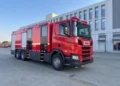
Heat and dust are the two most common killers of heavy truck reliability in the field, and they attack different systems at the same time. Extreme ambient temperature pushes engine coolant, transmission oil, hydraulic fluid and battery thermal management toward their limits, while airborne dust clogs air filters, radiator cores, charge-air coolers and cab ventilation long before scheduled service intervals arrive. The trucks that survive this combination are not the ones with the highest horsepower or the most chrome. They are the ones whose cooling package, filtration strategy, air intake routing, electrical protection and body sealing were specified for the actual duty cycle, not for a showroom. This article breaks down how to select a truck for hot and dusty environments from an engineering and fleet-management standpoint, covering application analysis, chassis configuration, powertrain matching, filtration, cooling, maintenance planning, compliance and total cost of ownership.
Mulailah dari Siklus Kerja, Bukan Truknya
Before anyone opens a specification sheet, the operating reality needs to be written down. A truck working a quarry haul road under 45°C ambient heat with airborne silica dust faces a completely different set of stresses than a municipal garbage compactor running stop-start collection routes in a hot, dry city. Both are “hot and dusty,” but the engineering response is not the same.
At minimum, a buyer should document the following before requesting a quotation:
- Material or cargo type — density, abrasiveness, moisture content, corrosiveness
- Payload per trip — actual tonnes, not just body volume
- Route profile — paved, gravel, unpaved haul road, gradient, altitude
- Cycle length and frequency — km per trip, trips per shift, hours per day
- Metode bongkar muat — excavator, loader, conveyor, manual, tipping
- Ambient conditions — peak summer temperature, dust concentration, wind, humidity
- Annual mileage and expected service life
- Maintenance capability — in-house workshop, dealer support, spare parts lead time
This information determines almost every downstream decision: axle configuration, engine rating, radiator size, air filter type, transmission cooling, body steel grade and hydraulic system design. Skipping this step is the single most common reason a fleet ends up with trucks that overheat, lose power, wear out early or sit idle waiting for parts.
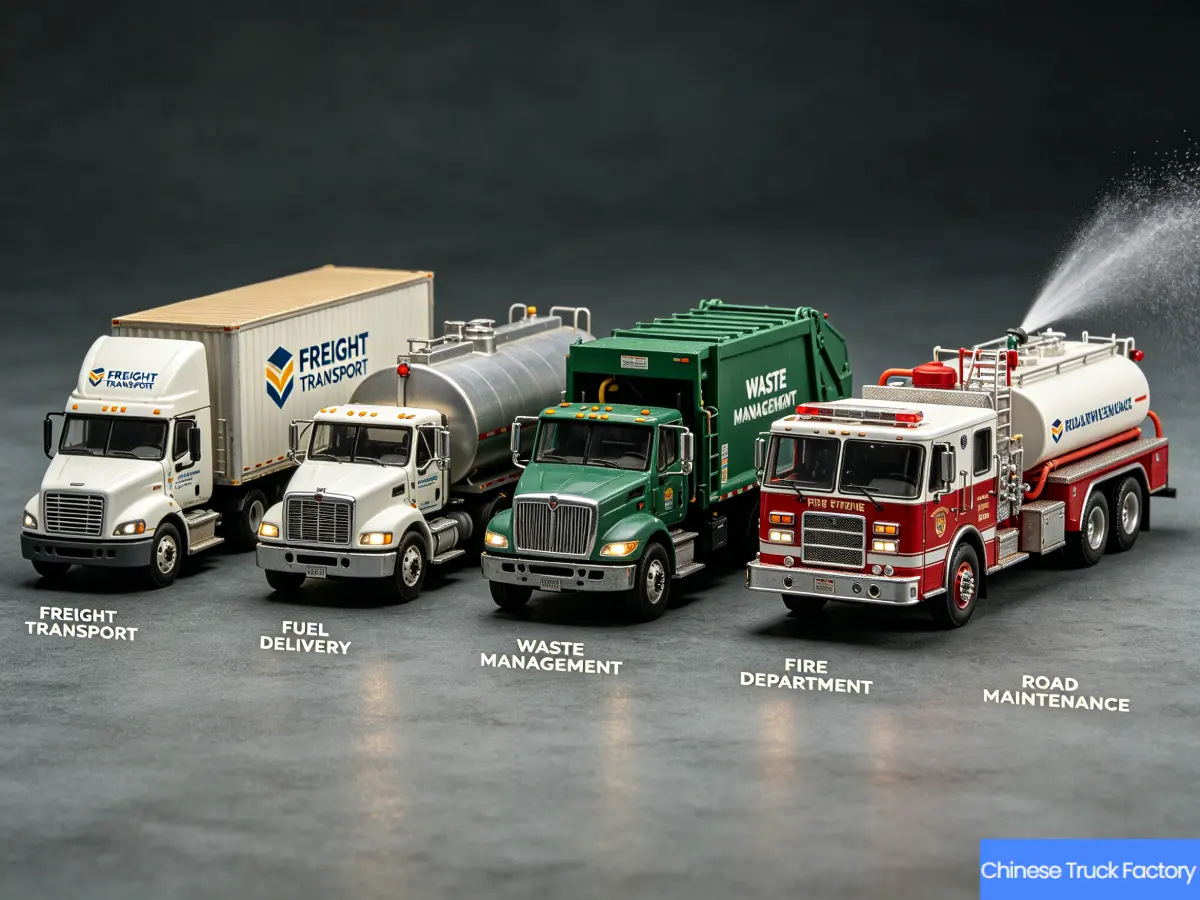
How Heat and Dust Actually Affect a Truck
It helps to think about heat and dust as two separate stressors that compound each other.
Heat Loads
High ambient temperature reduces the temperature differential between the cooling system and the outside air. A radiator that performs comfortably at 25°C may struggle at 48°C, especially under full load on a gradient. The same logic applies to:
- Engine coolant and oil temperature
- Charge-air cooler efficiency (higher intake temperature means lower air density and less power)
- Transmission and axle oil temperature
- Hydraulic oil temperature on tippers, cranes and compactor bodies
- Battery pack temperature on electric trucks
- Cab air conditioning load, which pulls additional power from the engine
Dust Loads
Dust accelerates wear in ways that are easy to underestimate:
- Engine air intake — the primary wear path for cylinder liners, rings and turbochargers
- Radiator and charge-air cooler fins — clogged fins reduce airflow and cause overheating
- Cab filters and HVAC systems
- Electrical connectors, alternators and starters
- Greased pins, kingpins, suspension bushings and fifth wheel plates
- Hydraulic cylinders and exposed rods on tipping and crane systems
Dust and heat together also degrade rubber components faster — hoses, seals, belts and cab mounts all age quicker in these conditions.
Vehicle Configuration for Hot and Dusty Duty
Configuration decisions should follow the duty cycle, not the other way around. A few general principles hold across most applications.
Tata Letak Drive
For construction, mining and quarry work on unpaved haul roads, 6×4 and 8×4 configurations are common because they distribute axle load and provide traction on loose surfaces. Where gradients are steep and traction is limited, 6×6 or 8×8 may be justified, but these add weight, cost and maintenance complexity. On paved routes with moderate dust, 4×2 or 6×4 is often sufficient.
Engine and Cooling Package
Higher horsepower is not automatically better. What matters is whether the cooling package is sized for the worst-case combination of ambient temperature, altitude, load and gradient. A derated engine with a properly matched radiator and fan often outperforms a higher-rated engine that is thermally limited.
Key items to confirm:
- Radiator core size and fin density (open fin patterns resist dust clogging better)
- Fan type, diameter and drive (viscous, electric or direct)
- Charge-air cooler capacity and location
- Coolant type and expansion tank design
- Air-to-air or air-to-water intercooling
Air Filtration
This is where hot and dusty environments are won or lost. A single-stage filter is rarely adequate. Most heavy-duty trucks intended for dusty duty use a two-stage system: a pre-cleaner (cyclone or inertial separator) followed by a primary and sometimes secondary filter element. The pre-cleaner removes the bulk of dust before it reaches the main element, extending service life and protecting the engine if the element is not changed on time.
Pembeli harus memastikan:
- Filter element type and availability in the destination market
- Restriction indicator on the intake
- Air intake height and location (higher is generally better in dusty ground-level conditions)
- Sealing of the intake path — any leak downstream of the filter bypasses filtration entirely
Transmission and Final Drive
Manual transmissions remain common in heavy-duty export trucks because they are simple, serviceable and tolerant of heat. Automated manual transmissions (AMT) offer smoother shifts and can reduce driver fatigue, but they add electronics and require proper cooling and calibration for high-temperature operation. Final drive ratio should be selected based on the route: a numerically higher ratio improves gradeability and reduces clutch and driveline stress, at the cost of top speed and fuel economy.
Suspension, Tires and Brakes
Leaf spring suspension is the default for construction and mining duty because it is robust and repairable. Air suspension is more comfortable and better for delicate cargo, but it is more sensitive to heat and dust in the bellows and leveling valves. Tire selection should match the surface: aggressive tread for unpaved haul roads, ribbed for paved routes. Tire pressure monitoring and heat management matter more in hot climates because tire temperatures rise faster and blowouts are more frequent.
Braking systems should be examined carefully. Drum brakes are common on heavy-duty trucks and are generally tolerant of dust, but they fade faster under sustained downhill braking in high heat. Engine brakes, retarders and exhaust brakes are valuable additions in mountainous hot regions.
Payload, Weight and Legal Limits
This is where many buyers get into trouble. Three concepts need to be kept separate:
- Berat kosong (tare) — the truck as delivered, with fuel and fluids
- Muatan — the weight of cargo the truck is designed to carry
- GVW / GVWR — the maximum total weight the chassis, axles and tires are rated for
Body volume is not the same as payload. A 20 m³ dump body loaded with dry sand will weigh far less than the same body loaded with wet gravel or rock. Material density must be multiplied by body volume to estimate the actual load, and that number must then be checked against axle ratings, tire ratings and the legal weight limits of the destination country.
| Bahan | Approximate Bulk Density (t/m³) | Catatan |
|---|---|---|
| Dry sand | 1.4 – 1.6 | Light, but can shift; baffles or side extensions may be needed |
| Wet sand | 1.8 – 2.0 | Heavier; watch axle load carefully |
| Gravel | 1.5 – 1.7 | Common quarry material |
| Crushed rock | 1.6 – 1.9 | Abrasive; body wear is significant |
| Coal | 0.8 – 1.0 | Low density; large body volume often needed |
| Soil / topsoil | 1.2 – 1.5 | Variable with moisture |
| Sampah konstruksi | 0.9 – 1.4 | Highly variable; mixed loads are difficult to predict |
These are indicative ranges only. Actual density varies by source, moisture and compaction, and the final legal payload is always governed by the destination country’s axle-weight and gross-weight regulations, not by the body volume or factory rating alone.
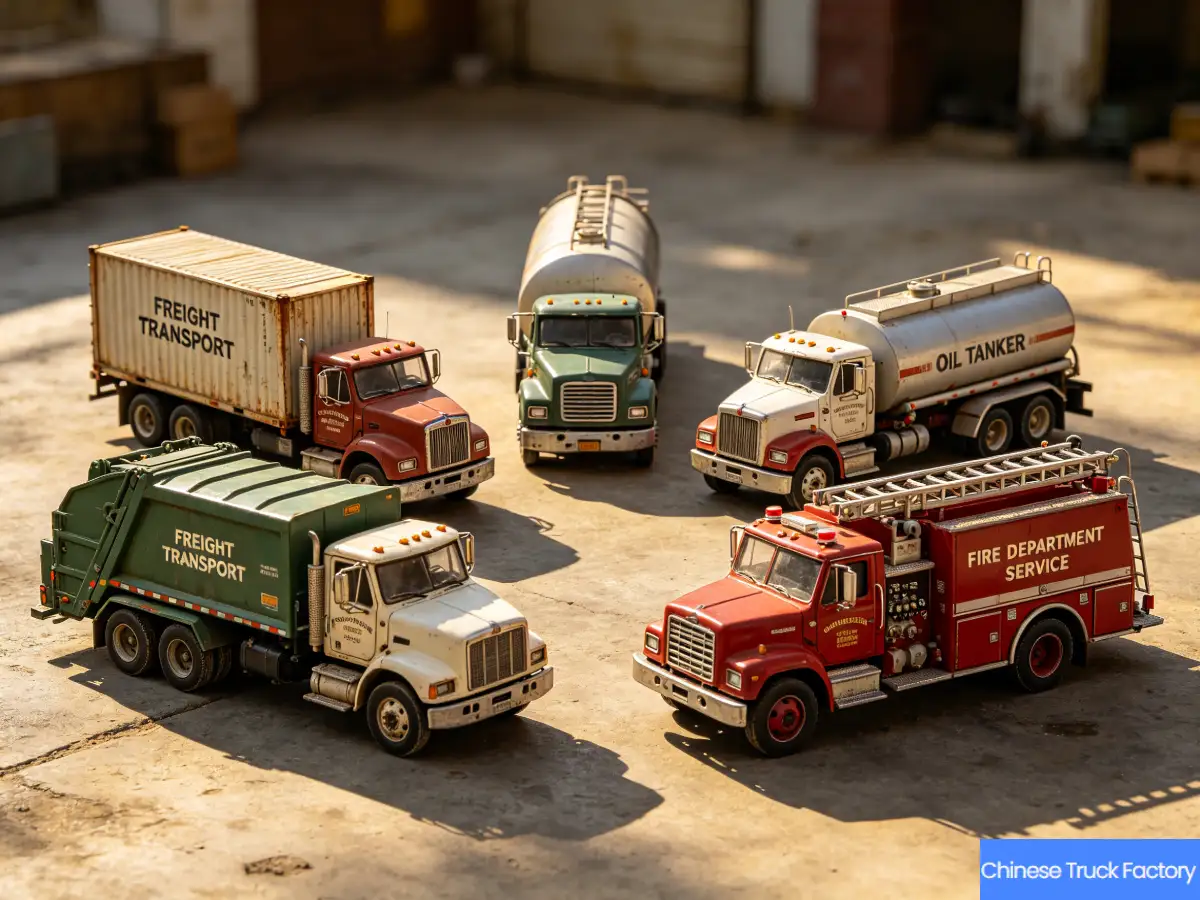
Body and Superstructure Design for Dust and Heat
In hot and dusty environments, the body and superstructure often fail before the chassis does. This is especially true for dump trucks, garbage compactors and specialized vehicles.
Badan Truk Pengangkut
Wear is driven by abrasiveness, drop height and cycle frequency. Key considerations:
- Steel grade — wear-resistant plate is common for the floor and lower sidewalls in abrasive service
- Floor thickness — thicker floors extend life but add tare weight and reduce payload
- Sidewall thickness — often thinner than the floor, but still a wear point in rock service
- Tailgate design — sealing matters where fine dust or slurry escapes
- Sudut kemiringan — must be sufficient to discharge sticky or damp material
- Hydraulic cylinder — front-end telescopic cylinders are common; cylinder seals are vulnerable to heat and dust
- Subframe — must distribute load to the chassis without creating stress concentrations
For mining and quarry applications, buyers evaluating dump trucks should compare cost per ton moved rather than purchase price. A cheaper body that wears out in 18 months is rarely a bargain. More detail on this trade-off is available in this guide on choosing a dump truck for mining.
Garbage Compactor Bodies
Compactor trucks in hot, dusty cities face a different mix of stresses: stop-start operation, hydraulic heat buildup, dust ingress into the compaction mechanism and leachate corrosion. Important items include:
- Compaction ratio and cycle time
- Hopper design and bin lifter compatibility
- Hydraulic oil cooling — often overlooked, but a major failure point in hot climates
- Leachate tank capacity and sealing
- Control system protection against dust and vibration
Because collection routes vary so much between cities, the correct body capacity and compaction system depend on waste density, bin type and route length. Buyers comparing options should review the range of kendaraan kebersihan profesional before locking in a specification.
Truck-Mounted Cranes and Specialized Bodies
For cranes, the rated tonnage on the boom is not the lifting capacity at full extension. The load chart governs, and it depends on working radius, boom length, outrigger configuration and chassis stability. Heat affects hydraulic oil viscosity and cooling; dust attacks exposed cylinder rods, pins and hoses. Buyers should confirm the load chart for the exact configuration being quoted, not rely on the nominal tonnage.
Similar principles apply to fire trucks, tanker trucks and other specialized vehicles: the body, pump or tank defines the mission, and the chassis must be matched to carry it without exceeding axle or GVW limits.
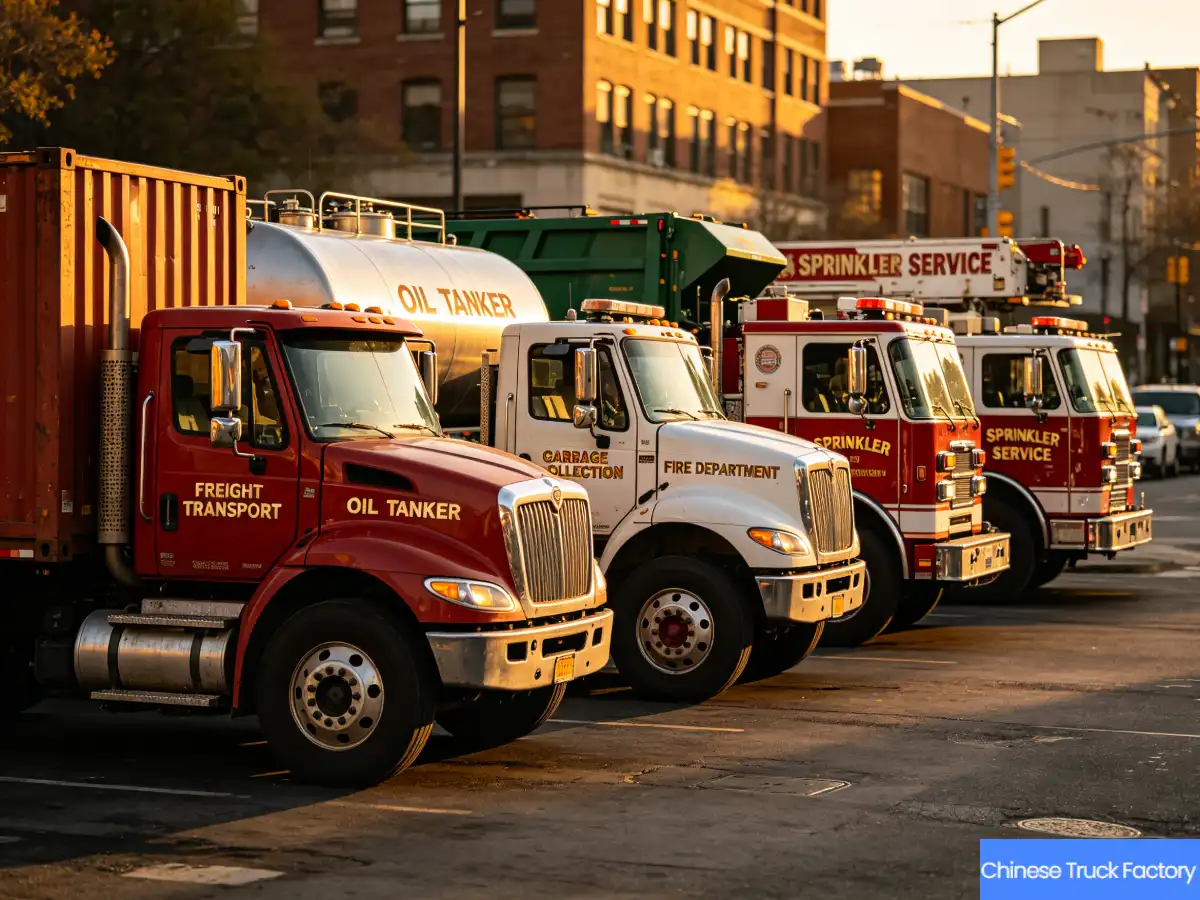
Performance and Productivity in Hot Climates
Productivity in hot and dusty conditions is rarely limited by peak power. It is limited by:
- Cooling system headroom (how much margin before derate)
- Air filter restriction buildup between services
- Hydraulic oil temperature on tipping and compaction cycles
- Tire heat and pressure management
- Driver comfort — cab heat stress reduces attention and increases turnover
- Downtime for filter changes, coolant top-ups and hose replacements
The most useful productivity metric for hauling operations is cost per ton moved, which combines payload per trip, cycle time, fuel consumption, tire life and maintenance cost. Two trucks with the same nominal payload can have very different cost per ton if one runs cooler, filters better or needs fewer unscheduled repairs.
Konsumsi Bahan Bakar dan Energi
No single fuel consumption figure applies to all hot and dusty duty cycles. Actual consumption depends on gross vehicle weight, average speed, gradient, idling time, traffic, driver behavior, axle ratio, tire pressure and ambient temperature. In hot climates, additional fuel is consumed by:
- Air conditioning load
- Increased fan engagement for cooling
- Higher rolling resistance on unpaved surfaces
- Derate events that force the driver to use more throttle for the same work
Any consumption figure quoted by a supplier should be treated as an indicative operating range, not a guarantee, and it should be tied to a specific duty cycle. For electric trucks, the equivalent concerns are kWh/km, usable battery capacity, charging power, thermal management of the pack and the availability of depot or opportunity charging. High ambient temperatures accelerate battery degradation if thermal management is inadequate, so the cooling strategy of the pack matters as much as the nominal capacity.
Pemeliharaan dan Keandalan
In hot and dusty environments, downtime usually costs more than the parts that caused it. A truck that is cheap to repair but spends three days a month off the road is more expensive than one with higher parts prices and better uptime.
Pemeriksaan Harian
- Tire condition, pressure and temperature
- Fluid leaks (coolant, oil, hydraulic, fuel)
- Hydraulic hoses and cylinder rods for damage or dust ingress
- Air filter restriction indicator
- Radiator and charge-air cooler fins for dust blockage
- Lampu dan lampu peringatan
- Air system pressure and moisture drain
Servis Berkala
- Engine oil and filters — dust increases contamination risk if intake sealing is poor
- Fuel filters — fuel quality varies widely by market
- Oli transmisi dan diferensial
- Brake system inspection, including wear and adjustment
- Suspension bushings, U-bolts and leaf springs
- Wheel bearings and hub seals
- Hydraulic oil and filter — critical on tippers, compactors and cranes
- Pemeriksaan PTO dan pompa hidraulik
- Dump body hinges, pins and tailgate seals
- Cab HVAC filters and seals
- Battery terminals and electrical connectors
Specific service intervals should always follow the actual vehicle, engine and component manufacturer’s manual. Intervals that work in a temperate climate are often too long in a hot, dusty one, and many operators shorten them based on filter restriction readings rather than fixed kilometers.
Diagnostic Logic
When something goes wrong, resist the urge to replace parts immediately. A slow-rising dump body, for example, should be diagnosed in sequence:
- Periksa tingkat dan suhu oli hidrolik
- Periksa hambatan pada filter
- Verify PTO engagement
- Check pump pressure
- Inspect control valve operation
- Check cylinder seals for internal leakage
- Check hoses for restriction or kinks
- Confirm the load is within the body and cylinder rating
This sequence avoids replacing a good pump when the real problem is a clogged filter or a partially engaged PTO.
Total Biaya Kepemilikan
Purchase price is only one line in the ownership equation. A realistic TCO model for a hot and dusty duty cycle should include:
- Purchase price (with the correct emission and configuration for the destination market)
- Asuransi kargo dan asuransi maritim
- Import duties, taxes and port charges
- Biaya pendaftaran dan homologasi
- Bahan bakar atau listrik
- Tires (a major cost in abrasive conditions)
- Scheduled maintenance — filters, oil, coolant, hydraulic fluid
- Unscheduled repairs — cooling system, hydraulic system, electrical
- Spare parts inventory and lead time
- Downtime cost (often the largest hidden number)
- Driver cost and turnover
- Residual value at planned replacement
Two trucks with similar purchase prices can have very different TCO if one has better cooling margin, easier filter access, more widely available parts and a simpler hydraulic system. In dusty environments, the maintenance and downtime lines are usually where the difference shows up first.
Kepatuhan dan Persyaratan Pasar Tujuan
There is no such thing as a globally compliant truck. Every destination market has its own requirements, and these change over time. Buyers should confirm, with the supplier and the destination authorities, at minimum:
- Standar emisi yang wajib dipenuhi untuk pendaftaran
- Persyaratan homologasi atau persetujuan tipe
- Batas beban sumbu dan batas berat kotor
- Batas dimensi kendaraan
- Setir kiri atau setir kanan
- Persyaratan penerangan dan marka reflektif
- Persyaratan sistem pengereman dan keselamatan
- Fuel quality available in the market (especially sulfur content)
- DEF/AdBlue availability if SCR is used
- Local service and spare parts capability
Because these rules vary by country and are updated periodically, the safe approach is to verify current requirements with the relevant transport and customs authorities rather than rely on general assumptions. Regulatory bodies such as the Peraturan UNECE tentang kendaraan and national transport ministries publish the authoritative texts.
Hal-hal yang Perlu Diperhatikan Terkait Pengiriman dan Impor
How a truck is shipped depends on its dimensions, weight, whether it can be driven, quantity and destination port. Common methods:
| Metode | Paling Cocok Untuk | Hal-hal yang Perlu Dipertimbangkan |
|---|---|---|
| RoRo | Complete, driveable trucks in small to medium quantities | Vehicle must be operational; port schedule matters |
| Barang curah | Large or specialized units that cannot fit RoRo ramps | Higher handling cost; careful lashing required |
| Rak datar | Oversized bodies or units that exceed container height | Weather exposure; shipping line approval needed |
| Kontainer | Partial units, CKD/SKD, or small trucks with careful packing | Tidak praktis untuk sebagian besar truk berat |
Importers should also plan for inland transport, port handling, marine insurance, customs clearance, import tax and destination-port charges. The Incoterm (EXW, FOB, CFR, CIF) determines who pays for what, and FOB prices should never be compared directly with landed costs in the destination country. A practical overview of how these units move is covered in this guide on bagaimana truk-truk berat dikirim ke luar negeri.
Evaluating Suppliers for Hot and Dusty Applications
When comparing suppliers, it helps to use a consistent framework rather than react to whichever quotation looks cheapest. A workable set of criteria includes:
- Kesesuaian aplikasi — does the proposed configuration actually match the duty cycle?
- Cooling and filtration specification — is the package sized for the ambient temperature and dust load?
- Chassis and axle ratings — do they support the intended payload with margin?
- Body and superstructure design — steel grade, thickness, hydraulic system, sealing
- Ketersediaan suku cadang — can common wear items be sourced locally?
- Kompleksitas pemeliharaan — can the buyer’s workshop handle routine service?
- Pengetahuan pengemudi — is the transmission and cab layout suitable for local drivers?
- Dokumentasi — are drawings, load charts and manuals provided?
- Cakupan garansi — what is covered, for how long, and where?
- Biaya siklus hidup — is the total cost of ownership realistic for the duty cycle?
Chinese Truck Factory works within this framework by matching chassis, cooling package, filtration and body to the specific duty cycle rather than offering a single fixed specification. Buyers can review the available platforms and configuration options at Pabrik Truk Tiongkok, and compare how different bodies and chassis are matched to applications across construction, mining, sanitation and specialized vehicle segments.
If you want a configuration reviewed against your operating conditions, you can Ajukan Permohonan Tinjauan Konfigurasi
Kesalahan Umum yang Sering Dilakukan Pembeli
- Choosing horsepower before defining the duty cycle
- Confusing body volume with payload
- Ignoring cooling margin in high ambient temperatures
- Using single-stage air filtration in heavy dust
- Comparing FOB prices with landed costs
- Assuming one specification works across multiple countries
- Underestimating downtime cost in TCO calculations
- Overlooking hydraulic oil cooling on tipper and compactor bodies
- Ordering options that cannot be serviced locally
- Skipping the destination-country compliance check
Pertanyaan yang Sering Diajukan
How do I choose the right payload for a hot and dusty environment?
Start with the material density and the body volume, then check the result against axle ratings, tire ratings and the destination country’s legal weight limits. Payload is limited by the lowest of these, not by the body volume alone. In hot conditions, running consistently at the maximum rating accelerates wear on tires, brakes and cooling systems, so it is common to leave a margin.
Which axle configuration is best for dusty haul roads?
For unpaved haul roads with moderate gradients, 6×4 and 8×4 configurations are widely used because they distribute load and provide traction. Where gradients are steep or surfaces are very loose, 6×6 or 8×8 may be justified, but they add weight, cost and maintenance complexity. The right choice depends on the route, the payload and the legal axle limits in the destination market.
How does dust affect engine life?
Dust that reaches the engine accelerates wear on cylinder liners, piston rings and turbochargers. The primary defense is a properly sealed intake path with a two-stage filtration system and a restriction indicator. Any leak downstream of the filter element bypasses filtration entirely, so sealing and regular inspection matter as much as the filter itself.
What affects fuel consumption in hot climates?
Gross vehicle weight, average speed, gradient, idling, traffic, driver behavior, axle ratio, tire pressure and ambient temperature all affect consumption. Air conditioning and increased fan engagement add load in hot weather. Any fuel figure should be treated as an indicative range tied to a specific duty cycle, not a fixed number.
What maintenance should I plan for in dusty conditions?
Plan for shorter air filter service intervals, closer monitoring of radiator and charge-air cooler cleanliness, more frequent hydraulic oil and filter changes on tipper and compactor bodies, and regular inspection of hoses, seals and pins. Specific intervals should follow the vehicle and component manufacturer’s manual, adjusted for the actual dust load.
How do I estimate total cost of ownership for a hot and dusty duty cycle?
Build a model that includes purchase price, freight, import costs, fuel or electricity, tires, scheduled maintenance, unscheduled repairs, spare parts, downtime and residual value. In dusty environments, the maintenance and downtime lines usually dominate the difference between two otherwise similar trucks.
Informasi apa saja yang perlu saya berikan agar bisa mendapatkan penawaran harga yang akurat?
Destination country and port, application, cargo or material type, required payload, body capacity, daily mileage, road condition, gradient, drive configuration, steering side, emission requirement, quantity and any required options. For cranes, also provide maximum lifting weight, working radius and lifting height. For fire trucks, water or foam capacity and pump requirements. For garbage trucks, waste type, bin type and loading method.
Bagaimana cara memastikan kepatuhan negara tujuan?
Check the current emission standard, homologation or type approval rules, axle-weight and dimension limits, steering side, lighting and braking requirements with the destination transport and customs authorities. Requirements change over time, so verify against official sources rather than relying on general assumptions.
How are trucks shipped from China to hot and dusty markets?
RoRo is common for complete driveable trucks, breakbulk for oversized or specialized units, and flat rack for bodies that exceed container height. The choice depends on dimensions, weight, quantity, route and destination port. Importers should also plan for inland transport, marine insurance, customs clearance and destination charges.
Kesimpulan Akhir
The best truck for a hot and dusty environment is not the one with the highest horsepower or the largest body. It is the configuration that matches the payload, route, legal weight limits, cooling margin, filtration strategy, maintenance capability and expected operating cycle with the fewest compromises. The most important parameters to confirm before purchase are the actual payload required, the cooling and filtration package, the axle and GVW ratings, the destination-country compliance requirements and the realistic total cost of ownership. Buyers who define the duty cycle first and the truck second consistently end up with lower downtime, longer component life and a better cost per ton moved than those who start with a specification sheet.