Rough roads punish trucks in ways that paved highways never do. Corrugated gravel, washboard surfaces, deep ruts, and seasonal mud turn every kilometer into a structural and thermal test. If you are buying heavy trucks for these conditions, the answer is not a single model. It is a configuration philosophy: high ground clearance, strong frame rails, hub-reduction or heavy-duty axles, generous cooling capacity, simple electrics, and a parts network you can actually reach. A 6×4 dump truck or tractor built for sustained overload tolerance will usually outperform a lighter highway-spec unit, even if the highway truck has more horsepower on paper. This article walks through how to match truck specification to real duty cycles, where the engineering trade-offs sit, and what to confirm before you place an order.
Start With the Road, Not the Truck
Most buying mistakes begin with a specification sheet instead of a route survey. Before you compare models, write down what the truck will actually do every day. Road condition is the single biggest driver of chassis, suspension, and tire selection, and it also determines how often the truck will be in the workshop rather than earning revenue.
Ask these questions first:
- What is the surface? Loose gravel, compacted laterite, broken pavement, sand, or mud during the rainy season.
- How long is the loaded haul? Short quarry cycles of 5–15 km behave very differently from 400 km regional runs.
- What is the maximum gradient on the loaded leg? A 6% climb and a 12% climb demand different gearing and cooling.
- How many cycles per day, and how many days per year?
- Who loads and unloads, and with what equipment?
- What is the ambient temperature range and dust level?
Two trucks with identical GVW ratings can behave completely differently on the same road. A truck doing 12 short cycles per day on a badly maintained haul road will stress its frame, springs, and driveline far more than one doing two long highway trips. The duty cycle, not the brochure, decides the specification.
Which Truck Classes Actually Fit Rough-Road Work
For unpaved and degraded roads, the practical working classes are heavy-duty construction and haulage trucks rather than light or medium commercial vehicles. The most common configurations fall into a few recognizable groups.
6×4 Dump Trucks
The workhorse for construction, quarry, and aggregate haulage. Tandem rear axles spread load, and the driven rear bogie gives traction on loose surfaces. Typical GVW bands sit in the 25–33 tonne range depending on market and axle ratings, with body volumes commonly between 16 m³ and 22 m³. The correct body volume depends on material density, not on the biggest box available.
8×4 Dump Trucks
Chosen when you need higher legal payload within axle-load limits, or when long hauls make payload per trip the dominant economic factor. The trade-off is real: an extra axle adds tare weight, raises purchase cost, increases tire spend, and reduces maneuverability in tight loading areas.
6×4 Tractor Trucks
For regional and long-haul freight on mixed surfaces. A 6×4 tractor pulls better on loose gravel than a 4×2, and the double-drive bogie is more forgiving on gradients. Fuel consumption depends heavily on gross combination weight, average speed, terrain, and idling time — not on the engine rating alone.
6×6 and 8×8 Configurations
All-wheel drive is worth the cost in genuinely difficult traction conditions — soft sand, deep mud, steep unimproved grades. It is not automatically better everywhere. All-wheel drive adds weight, complexity, and driveline losses, and many operators over-specify it for roads where a 6×4 would perform fine.
Specialized and Municipal Units
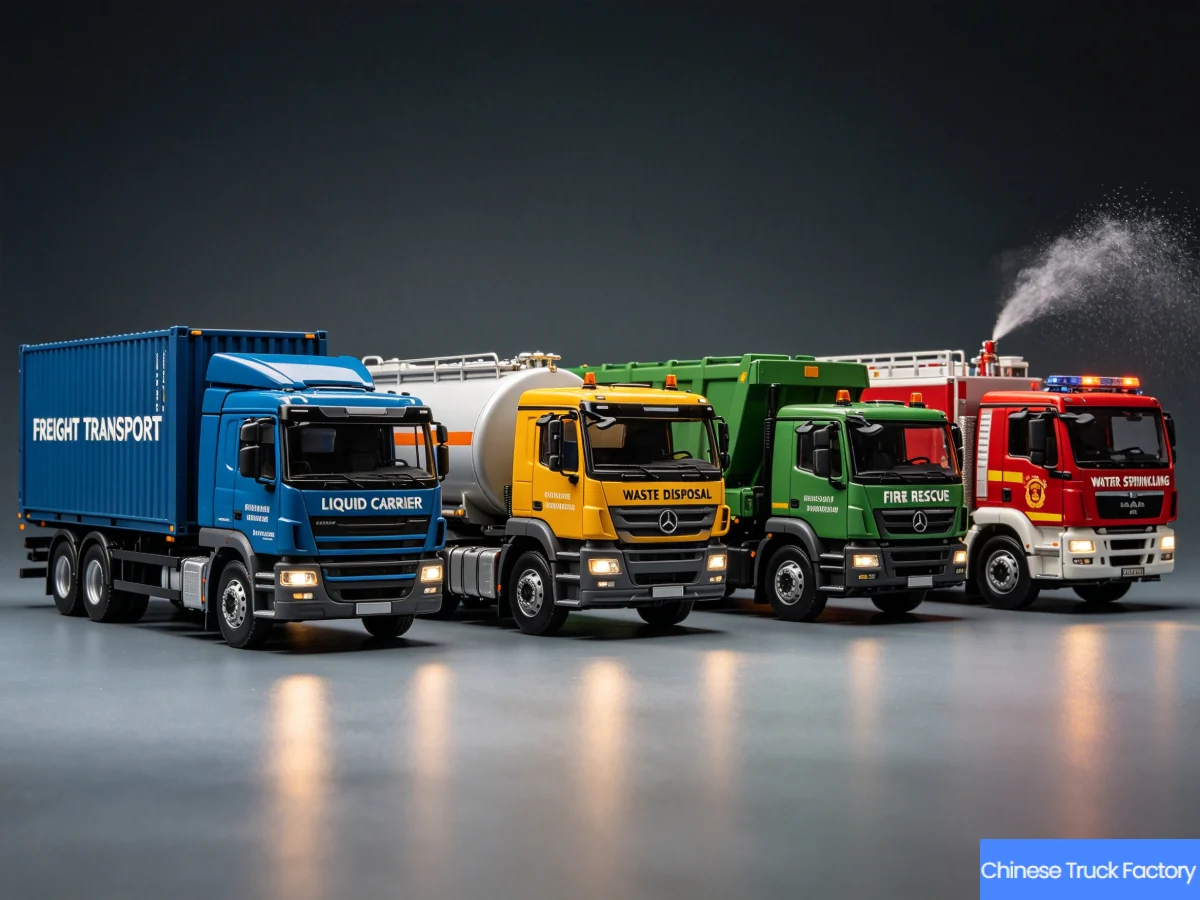
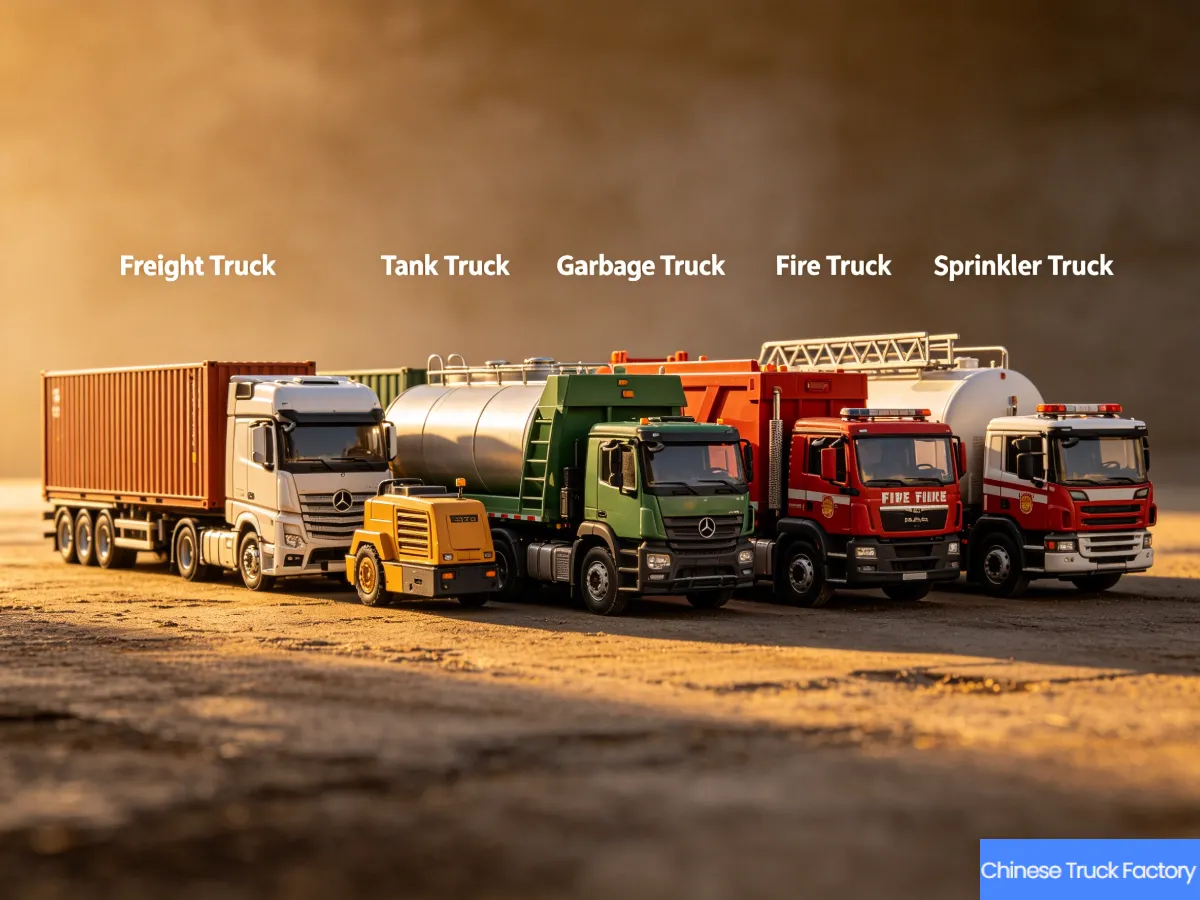
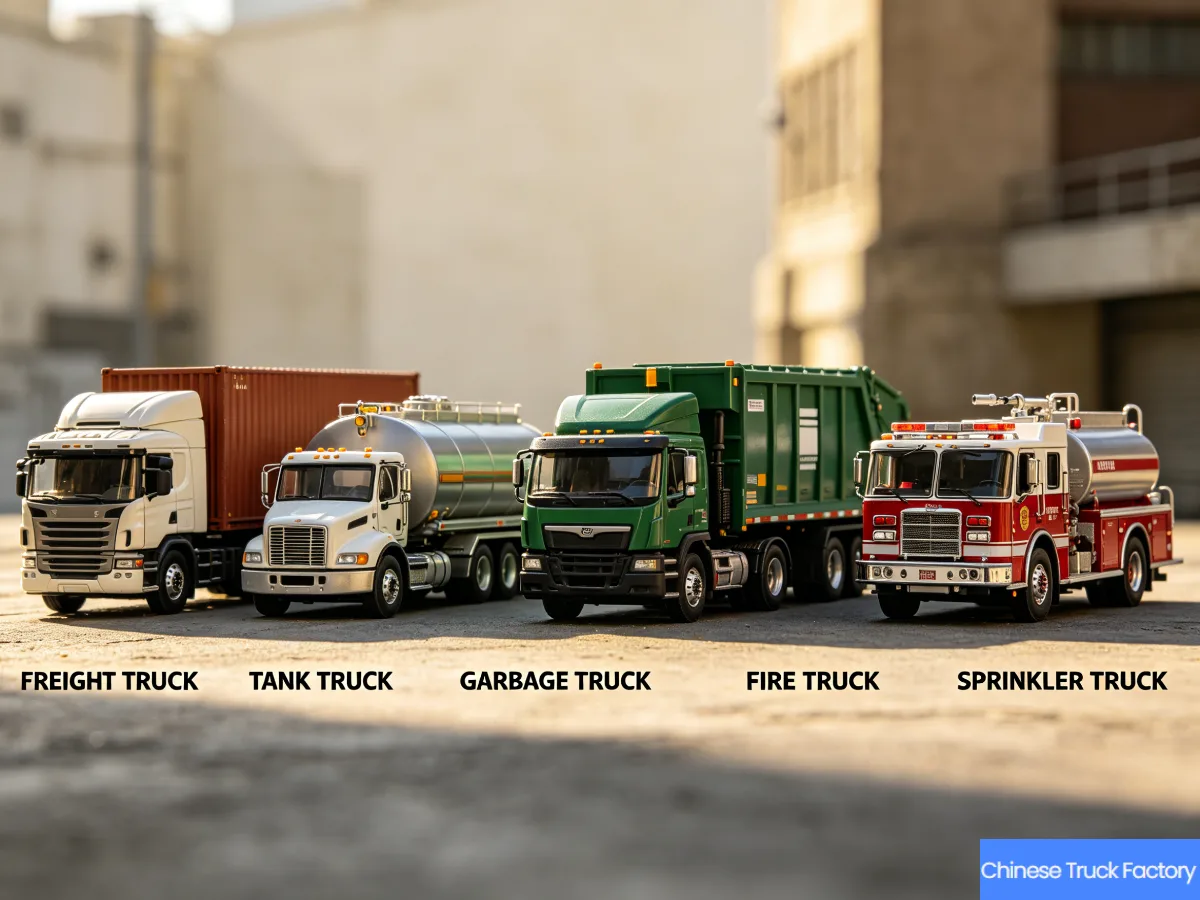
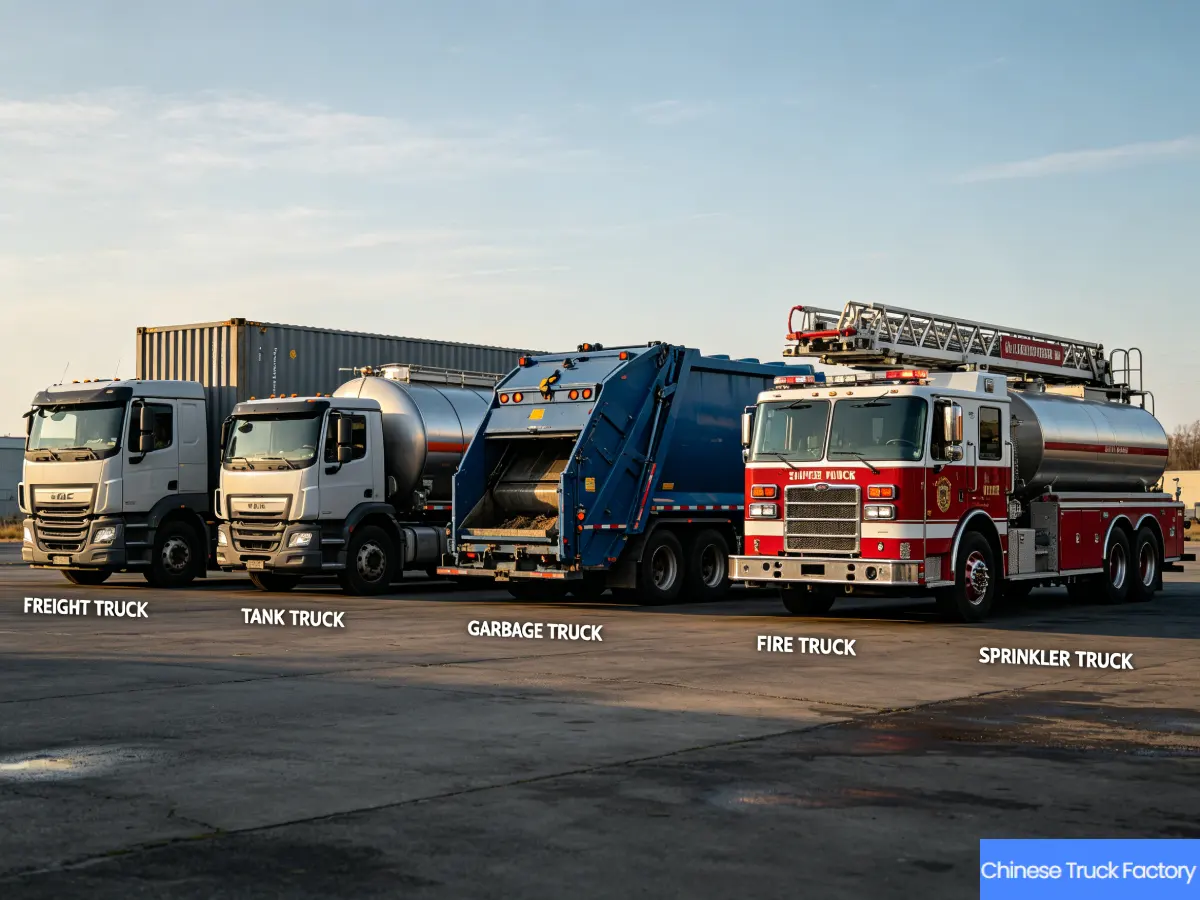
Rough-road conditions also affect kendaraan kebersihan, water bowsers, fuel tankers, and service trucks. These units face the same frame and suspension loads as dump trucks, so the chassis selection logic is identical even though the superstructure differs.
Chassis, Frame, and Suspension: Where Rough-Road Trucks Earn Their Keep
The frame is the foundation. On rough roads, the chassis experiences repeated torsional and bending loads that a highway truck rarely sees. Frame rail height, flange thickness, and the number of cross members matter more than most buyers realize. A reinforced frame and a properly matched subframe are what keep a dump body from cracking after a few thousand cycles.
Suspension choice is a genuine trade-off:
| Faktor | Leaf Spring Suspension | Air Suspension |
|---|---|---|
| Contoh penggunaan terbaik | Heavy off-road, quarry, construction | Highway, fragile cargo, tanker work |
| Ride quality | Firmer, more shock transfer | Smoother, better load protection |
| Durability on rough roads | Simple, field-repairable, tolerant of abuse | More components, more sensitive to damage |
| Pemeliharaan | Low complexity, widely understood | Requires air system care and parts access |
| Keterbatasan utama | Harsher ride, higher cargo shock | Cost, complexity, parts availability |
For most severe-duty haul roads, multi-leaf or parabolic leaf springs remain the pragmatic choice. Air suspension makes sense where cargo protection or axle-load flexibility is the priority and the road is only moderately rough.
Tires deserve equal attention. On loose gravel, tire pressure, tread pattern, and load rating all affect both traction and casing life. Overloading tires to gain payload is one of the fastest ways to destroy a tire budget. Confirm the tire specification matches the axle load and road condition, not just the rim size.
Payload, GVW, and the Weight Distinctions Buyers Confuse
This is where many purchases go wrong. Four different numbers get treated as if they mean the same thing:
- Berat kosong (tare): the truck with fuel, fluids, and body, but no cargo.
- Muatan: the cargo weight the truck can carry.
- GVW / GVWR: the maximum total weight of the loaded vehicle.
- Legal payload: the payload permitted by the destination country’s axle and gross weight limits.
A 20 m³ dump body does not automatically mean 20 tonnes of payload. Sand, gravel, rock, coal, and construction waste have very different densities. A body sized for one material may be badly matched to another. The correct check is:
Material density × body volume = cargo weight
Then compare that against chassis capacity, axle ratings, tire ratings, and the legal weight limits where the truck will be registered. Factory-rated capacity and legally permitted payload are not the same thing, and the final legal figure depends on destination-country rules. Always confirm axle-load and gross-weight limits before finalizing body volume.
If the body volume is chosen first and the axle limits are checked later, the truck is usually wrong. Work from legal payload backward to body size, not the other way around.
Powertrain Selection for Rough Terrain
Horsepower gets the attention, but torque delivery and gearing do the work. On rough roads and gradients, what matters is how the engine, transmission, and final drive work together to keep the truck moving without excessive clutch slip or overheating.
Mesin
Look at rated torque and the engine speed at which it is produced, not just peak power. A torque curve that delivers usable pull at low rpm reduces downshifting and heat buildup. Cooling capacity must be sized for sustained low-speed climbing in high ambient temperatures — this is where under-specified cooling systems fail.
Transmisi
Manual transmissions remain common in rough-road fleets because they are simple, serviceable, and understood by drivers. Automated manual transmissions (AMT) offer smoother shifting and less driver fatigue but add electronics and require diagnostic support. If local service capability is limited, that is a real consideration.
Axles and Final Drive
Hub-reduction axles provide higher ground clearance at the differential and better torque multiplication, which helps in soft ground and steep grades. Single-reduction axles are lighter, cheaper, and more efficient on good roads. The final drive ratio must match the intended average speed and gradient — a ratio chosen for highway economy will feel weak on a loaded climb.
Konfigurasi Drive
| Konfigurasi | Contoh Penggunaan Terbaik | Keunggulan Utama | Keterbatasan Utama |
|---|---|---|---|
| 4×2 | Light duty, paved routes | Lower cost, lower weight | Poor traction on loose surfaces |
| 6×4 | General construction, haulage | Good traction, higher payload | Larger turning radius |
| 8×4 | High legal payload, long hauls | More payload within axle limits | Higher tare, cost, tire spend |
| 6×6 / 8×8 | Severe traction conditions | Maximum traction | Weight, complexity, cost |
Body and Superstructure: Where the Abuse Actually Lands
On rough roads, the superstructure takes the punishment that the frame does not absorb. For construction trucks, this means the dump body, subframe, and hydraulic system.
Key body considerations for severe duty:
- Steel grade and floor thickness: Thicker, harder floors resist impact from large rock. The trade-off is added tare weight, which reduces payload.
- Sidewall and tailgate: Reinforced sides reduce deformation from uneven loading.
- Subrangka: Must be matched to the chassis to spread load and allow controlled flex.
- Hydraulic cylinder: Front-end or underbody cylinder selection affects tipping stability and cycle time.
- Tipping angle: Must be sufficient for the material to discharge cleanly, especially wet or sticky loads.
For tanker and water units, tank baffles, compartment design, and center of gravity become the priority because liquid movement on rough roads affects stability. For lifting equipment, the load chart — not the nominal tonnage — is the deciding document. Buyers evaluating lifting capacity should compare the actual load chart before selecting a derek yang dipasang di truk, because rated capacity at minimum radius says little about real working reach.
Productivity: The Numbers That Decide Profit
Rough roads reduce average speed, increase cycle time, and raise fuel and maintenance consumption. Productivity should therefore be measured in tonnes moved per day and cost per tonne moved, not in trips scheduled.
Useful productivity metrics:
- Payload per trip (legal, not theoretical)
- Cycle time including loading, hauling, dumping, and return
- Trips per day at realistic average speed
- Tonnes moved per operating hour
- Fuel consumed per tonne-km
- Vehicle availability (uptime percentage)
A truck with slightly lower payload but higher uptime often beats a higher-payload truck that spends two days a week in the workshop. This is the core reason fleet operators eventually standardize on configurations they can maintain locally.
Fuel and Energy Consumption: No Single Number Applies
Actual fuel consumption depends heavily on gross weight, average speed, terrain, idling, driver behavior, axle ratio, tire pressure, and duty cycle. Any single figure quoted without context should be treated with caution. For a loaded heavy truck on rough roads, consumption can rise substantially compared with the same truck on paved highway, mostly because of lower average speed, more gear changes, and higher rolling resistance.
Factors that consistently push consumption up:
- Higher gross combination weight
- Steep or repeated gradients
- Frequent stops and idling
- Poor tire pressure maintenance
- Aggressive driving and unnecessary revving
- Wrong final drive ratio for the route
For electric trucks used in these conditions, range depends on usable battery capacity, payload, route profile, ambient temperature, and charging availability. Depot charging and predictable daily routes matter more than headline range figures. Where electricity supply is unreliable, the charging plan becomes a bigger constraint than the truck itself. Buyers exploring this route can review solusi truk listrik untuk pelabuhan dan logistik for duty cycles that suit electrification.
Maintenance and Reliability: Uptime Beats Repair Cost
Downtime usually costs more than the repair that caused it. A truck waiting three weeks for a hydraulic hose or a wheel bearing is not just a repair bill — it is lost production, idle drivers, and broken customer commitments.
Practical maintenance planning for rough-road fleets:
Daily inspection
- Tire condition, pressure, and cuts
- Fluid leaks under the truck
- Hydraulic hoses and fittings
- Lampu dan lampu peringatan
- Tekanan sistem udara dan respons rem
Periodic inspection
- Oli mesin dan filter
- Oli transmisi dan diferensial
- Brake system and wheel bearings
- Komponen suspensi dan baut-U
- Hydraulic oil, PTO, and cylinder condition
- Dump body hinges or compactor mechanism
Exact service intervals should always follow the specific vehicle, engine, and component manufacturer manuals — not a generic schedule. The most important maintenance decision is whether the parts and skills exist locally. A truck with excellent components but no local parts supply will spend more time parked than working. Confirm spare parts packages and local service capability before committing to a model.
Total Biaya Kepemilikan: Satu-satunya Perbandingan yang Adil
Purchase price is the smallest part of the story over a truck’s working life. A meaningful TCO comparison includes:
| Kategori Biaya | Apa Saja yang Harus Disertakan |
|---|---|
| Harga pembelian | Chassis, body, options, emission configuration |
| Freight and logistics | Metode pengiriman, biaya pelabuhan, angkutan darat |
| Impor dan kepatuhan | Duties, taxes, registration, homologation costs |
| Bahan bakar atau listrik | Based on actual duty cycle, not brochure figures |
| Ban | Consumable, heavily influenced by road and load |
| Pemeliharaan terjadwal | Parts, labor, fluids |
| Perbaikan yang tidak terjadwal | Failure risk, parts lead time |
| Waktu henti | Lost production and idle resources |
| Nilai sisa | Resale market for the model and configuration |
Two trucks with similar purchase prices can have very different lifetime costs if one has better parts availability, simpler maintenance, or a stronger resale position. Cost per tonne moved is the metric that ties it all together.
Compliance and Destination-Market Checkpoints
There is no such thing as a single “global compliant” heavy truck. Requirements vary by country and change over time. Before ordering, confirm with the relevant authority or a qualified local agent:
- Standar emisi yang wajib dipenuhi untuk pendaftaran
- Persyaratan homologasi atau persetujuan tipe
- Batas beban sumbu dan batas berat kotor
- Batas dimensi kendaraan
- Persyaratan kemudi di sebelah kiri atau kanan
- Lighting and braking requirements
- Kualitas bahan bakar dan ketersediaan DEF/AdBlue di tempat-tempat yang membutuhkannya
- Local service and parts support
Regulatory information is time-sensitive and country-specific. Do not rely on memory or general claims — verify against the destination country’s official transport and customs sources. Organizations such as the Peraturan UNECE tentang kendaraan and national transport ministries publish the frameworks that apply regionally, but the final answer always comes from the destination market.
Hal-hal yang Perlu Diperhatikan Terkait Pengiriman dan Impor
How trucks move from the factory to the destination affects both cost and delivery time. The main methods are:
- RoRo: cost-effective for rolling units, requires drivable condition and port access.
- Barang curah: flexible for oversized or non-running units.
- Rak datar: useful for units that fit dimension limits but not standard containers.
- Kontainer: practical only where the vehicle or its components fit within container dimensions.
The right choice depends on vehicle dimensions, weight, quantity, route, and destination port. Importers should also plan for customs clearance, duties, port charges, and inland transport. A clear understanding of bagaimana truk-truk berat dikirim ke luar negeri dari Tiongkok helps avoid surprises at the destination port. Pricing should always be quoted with a defined term — FOB, CFR, or CIF — because these are not interchangeable.
How to Evaluate a Truck Supplier
Model selection is only half the decision. The supplier determines whether the truck arrives as specified, whether documentation is complete, and whether support exists after delivery. A practical evaluation framework:
- Transparansi spesifikasi: Can they explain why a configuration fits your duty cycle, or do they only quote numbers?
- Engineering support: Do they match chassis, body, and axle ratings, or simply bolt a body onto whatever chassis is available?
- Dokumentasi: Are export documents, inspection reports, and technical files complete and consistent?
- Parts planning: Do they help build a spare-parts package suited to your operating conditions?
- Komunikasi: Are they responsive and specific during the quotation stage, before any deposit?
- After-sales clarity: Is the warranty scope and support process clearly defined in writing?
Chinese Truck Factory works within this framework: the focus is on matching configuration to application, providing clear technical documentation, and supporting international buyers through the export process. Buyers can review the available truk diesel tugas berat and request a specification discussion based on their actual route and payload requirements.
Request a Truck Specification Review
Pertanyaan yang Sering Diajukan
How do I choose the right payload for a rough-road truck?
Start with the legal axle and gross weight limits in the destination country, then subtract curb weight to find the maximum legal payload. Next, check the material density and required body volume. The lowest of these three figures is your real payload. Do not choose body volume first and check axle limits later.
Which axle configuration is best for unpaved roads?
For most rough-road haulage, 6×4 offers the best balance of traction, payload, and cost. 8×4 makes sense when higher legal payload is needed within axle limits. 6×6 or 8×8 is justified only where traction genuinely limits production, because all-wheel drive adds weight, complexity, and cost.
Bagaimana kondisi jalan memengaruhi pemilihan truk?
Rough roads increase frame and suspension loads, reduce average speed, raise fuel consumption, and accelerate tire and brake wear. This pushes specification toward reinforced frames, durable leaf-spring suspension, hub-reduction axles where clearance matters, and higher cooling capacity. It also makes local parts availability more important than on-road fleets.
What affects fuel consumption on rough-road trucks?
Gross weight, average speed, gradient, idling time, tire pressure, final drive ratio, and driver behavior all matter. Any single consumption figure quoted without these variables is unreliable. The most useful approach is to estimate consumption from your own route profile and load, then track actual figures once the truck is working.
Perawatan apa saja yang sebaiknya saya rencanakan?
Plan daily inspections of tires, leaks, hydraulics, lights, and air pressure. Plan periodic service of engine oil, filters, transmission, differential, brakes, suspension, wheel bearings, hydraulic oil, and PTO. Follow the specific manufacturer manuals for intervals, and secure a spare-parts package before the truck enters service.
Bagaimana cara menghitung perkiraan total biaya kepemilikan?
Add purchase price, freight, import and compliance costs, fuel or electricity, tires, scheduled maintenance, unscheduled repairs, downtime, and driver cost, then subtract residual value. Express the result as cost per tonne moved or cost per operating hour so different configurations can be compared fairly.
What information do I need to provide for a quotation?
Destination country and port, application, cargo or material type, required payload, body capacity, daily mileage, road condition, maximum gradient, drive configuration, steering side, emission requirement, quantity, and any required options. The more specific the input, the more accurate the quotation.
Bagaimana cara memastikan kepatuhan negara tujuan?
Check emission standards, homologation or type-approval requirements, axle and gross weight limits, dimension limits, steering side, lighting, and braking requirements with the destination country’s official transport and customs authorities. Requirements change, so verify current rules rather than relying on general guidance.
Kesimpulan Akhir
The best heavy truck for rough roads is not the one with the highest horsepower or the largest body. It is the configuration that matches the actual payload, route, legal weight limits, maintenance capability, and operating cycle with the fewest compromises. Start with the road and the duty cycle, work back to legal payload, then select chassis, driveline, suspension, and body to suit. Confirm compliance and parts availability before you commit, and compare total cost of ownership rather than purchase price alone. Get those fundamentals right, and the truck will spend its time working instead of waiting for parts.



